

Excursions and accommodations that take you deep into Daufuskie’s ecology, history, and culture.
Written by Kiki Dy
Photography by Blake Crosby/Crosby Creative
Take a Tour
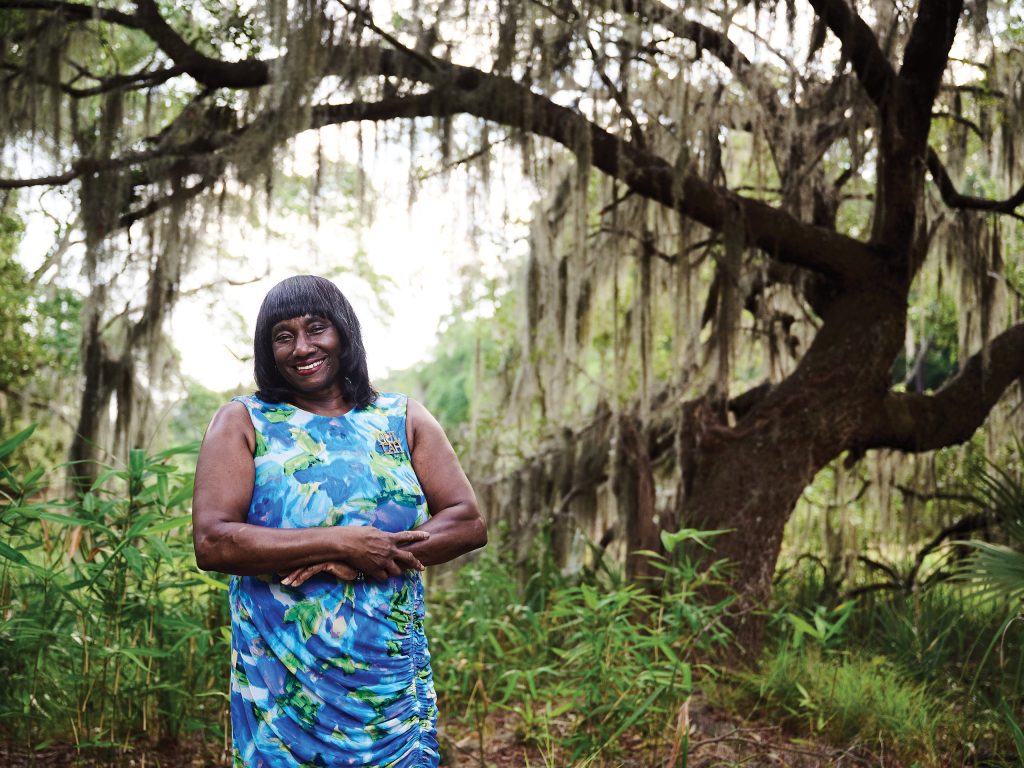
Few names surface more frequently during reporting on Daufuskie Island than Sallie Ann Robinson. The sixth-generation Daufuskie native is a cookbook author, television personality, and cultural keeper. On her tours, she relishes introducing visitors to the foodways, stories, and traditions that continue to shape Daufuskie Island.
A day spent navigating Daufuskie under Robinson’s edification on a Sallie Ann Authentic Gullah Tour is a day spent recalibrating your lens on land and life.
Her tours stay true to the island’s Gullah roots, sharing her practical knowledge of living off the surrounding land and water and her healthy dose of humor. For travelers hoping to understand more than where they are — to understand who came before and how the island became what it is today — no one is better equipped to set the record straight.
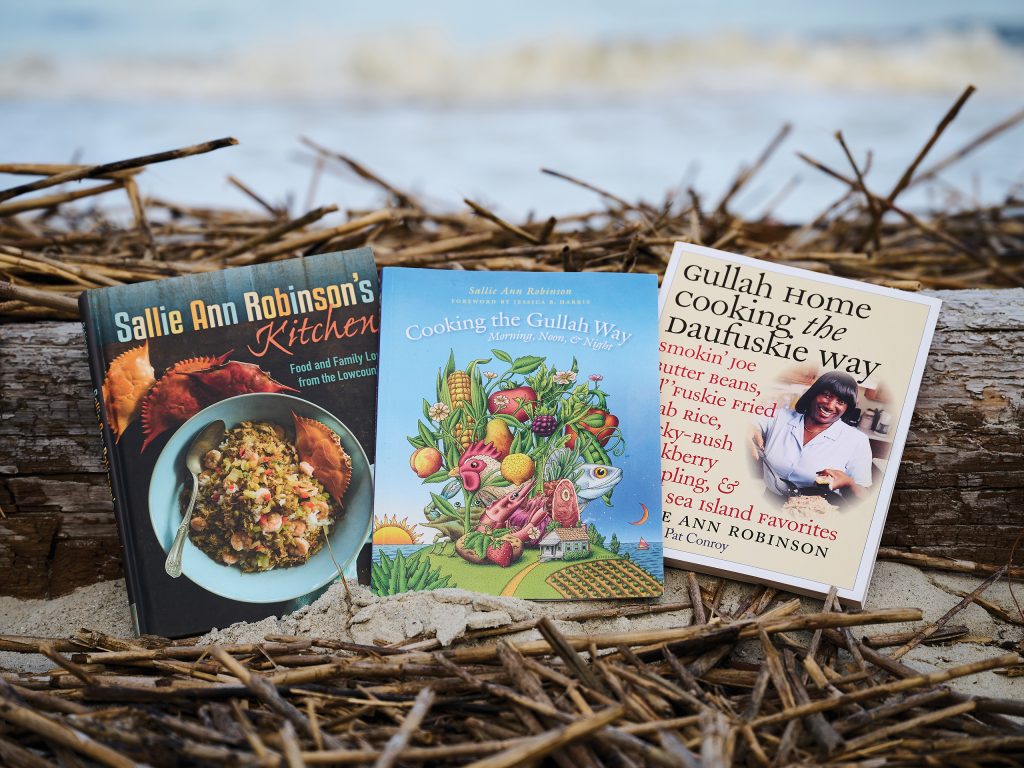
Robinson is also the author of several cookbooks, including “Sallie Ann Robinson’s Kitchen,” “Gullah Home Cooking the Daufuskie Way,” and “Cooking the Gullah Way, Morning, Noon & Night,” as well as a contributing author to multiple other titles on Daufuskie traditions and cuisine.
For visitors interested in understanding the island beyond its beaches and backroads, few guides are better positioned than Captain Chez “Fuskie” Simmons. A seventh-generation member of the Daufuskie Island Gullah Geechee community, Simmons observes his family’s roots through the same waterways many visitors now cross for recreation.
The name of his company, SetWake Savannah, references routes traveled by his forefathers between Daufuskie, Hilton Head, and Savannah — a reminder that the water separating these places has also long connected them.
Today, visitors can join Simmons for excursions that blend ecology, history, and personal narrative, offering a perspective difficult to glean from a golf cart map alone. Through family stories and lived experience, he helps plunge the deeper currents that buoy a changing life on Daufuskie. “Once people come once, they come again,” Simmons says.
*After this issue went to press, it was announced that Sallie Ann Robinson was inducted into the James Beard Foundation‘s Cookbook Hall of Fame at the 2026 Media Awards ceremony held at the Art Institute of Chicago.
Stories in this Feature
Daufuski Island: Deep & Wide: It makes for a pleasant day trip, true, but there’s so much more to this South Carolina sea island.
Total Island Immersion: Excursions and accommodations that take you deep into Daufuskie’s ecology, history, and culture.
The Faces and Places of Daufuskie: A few home-grown businesses that represent the quintessential nature of island life.
The Legacy of Daufuski Island: A museum complex of three historic buildings ensures the island’s history isn’t forgotten.
Stay Awhile
A seventh-generation member of the Daufuskie Island Gullah Geechee community, Captain Chez grew up hearing stories of an island where oyster houses sustained families, midwives delivered generations of children, and news traveled through the woods from neighbor to neighbor. His grandmother often told him, “True Daufuskie will never exist again.” Yet traces remain. Some survive in stories; others in places you can stay.
The Oyster Cottage
From Daufuskie to Pin Point, for the Gullah Geechee community along Savannah’s Moon River, oyster shucking created vital food security, economic independence after emancipation, and a heritage of sustainable harvesting.
As Pin Point Heritage Museum site manager David Jones notes, the work was communal and often female-fortified. “In oyster houses and seafood houses,” he says, “women did the majority of work and were partners in breadwinning while raising children.”
On Daufuskie, the blue-trimmed Oyster Cottage is among the last oyster houses to stand on the island and the only one where you can book a stay for the night.
Tucked beneath a sprawling live oak estimated to be more than 500 years old, the home dates to the early 1900s. The respectful restoration retains heart pine floors, beadboard walls, and one of the island’s earliest staircases. Overnight guests have a great ground zero (and included golf cart) to explore nearby landmarks including First Union African Baptist Church and Mary Fields School.
The Sarah Hudson Grant Home
If you’ve spent any time in the Daufuskie Island History Museum, the name Sarah Grant should already hold admiration.
Although not originally from Daufuskie, she married island undertaker Joseph Grant and later began her midwifery practice in 1932. Long before childbirth became institutionalized, Black “granny midwives” combined herbal knowledge, spiritual practice, and hard-earned practical expertise to guide mothers through labor and delivery.
The story most often told about Sarah Grant is also one of the island’s most revealing. Residents recall that when a woman’s water broke, the news would be whispered through the woods until it reached Grant, passed from neighbor to neighbor with kindred care.
Today, indications of Grant’s effect on the community abound in the 1890s-built four-bedroom home, which is available for short-term rental. Guests can view artwork and artifacts depicting her life, walk through the yard to the shoreline, and contemplate a bygone South as the sun slips behind the marsh.
“Sarah Grant’s legacy extends beyond the house itself and reminded me about the urgency of preserving a way of life rooted in presence and care for one another,” shares a prior visitor to the home, Kelsey Wohleben.
The Frances Jones House
Born in 1903, Frances Jones served as Daufuskie’s elementary school teacher for 39 years before becoming principal of Mary Fields School and devoting herself to a range of civic and social programs supporting island residents.
“The Frances Jones House is a modest 950-square-foot vernacular dwelling dating to approximately 1865,” says Joanna Rothell of Preservation South Carolina. Built by Jones’ great-grandmother shortly after emancipation, the home remained in the family for generations before becoming the residence of one of Daufuskie’s most beloved educators and community advocates.
After Jones’ passing in 2001, the cottage fell into disrepair. It later became the first Daufuskie property restored by Palmetto Trust for Historic Preservation, helping establish a preservation model that allowed descendants to retain ownership while safeguarding historically significant Gullah homes.
Today, guests can spend the night in a home whose story stretches from Reconstruction to the present day. Original architectural details remain, while modern comforts make it possible to rest your head and read a book without a bug to bother you.
Don’t miss
At only 5 miles long and 2.5 miles wide, Daufuskie Island is small in size but steeped in history. While we can’t fit all the destinations into this article, a few other places to put on your list include the Oyster Union Society Hall, Cooper River Cemetery, the restored 19th century First Union African Baptist Church (it still has an active congregation), and Bloody Point Light House & Museum. You can also swing by Daufuskie Island Distillery for lunch and to sample the handcrafted small-batch rum, vodka, tequila, and bourbon made on-site.