


Here are a few home-grown businesses that represent the quintessential nature of island life.
By Mary Cornetta and Kathryn Drury Wagner
Photography by Blake Crosby/Crosby Creative
Daufuskie Blues
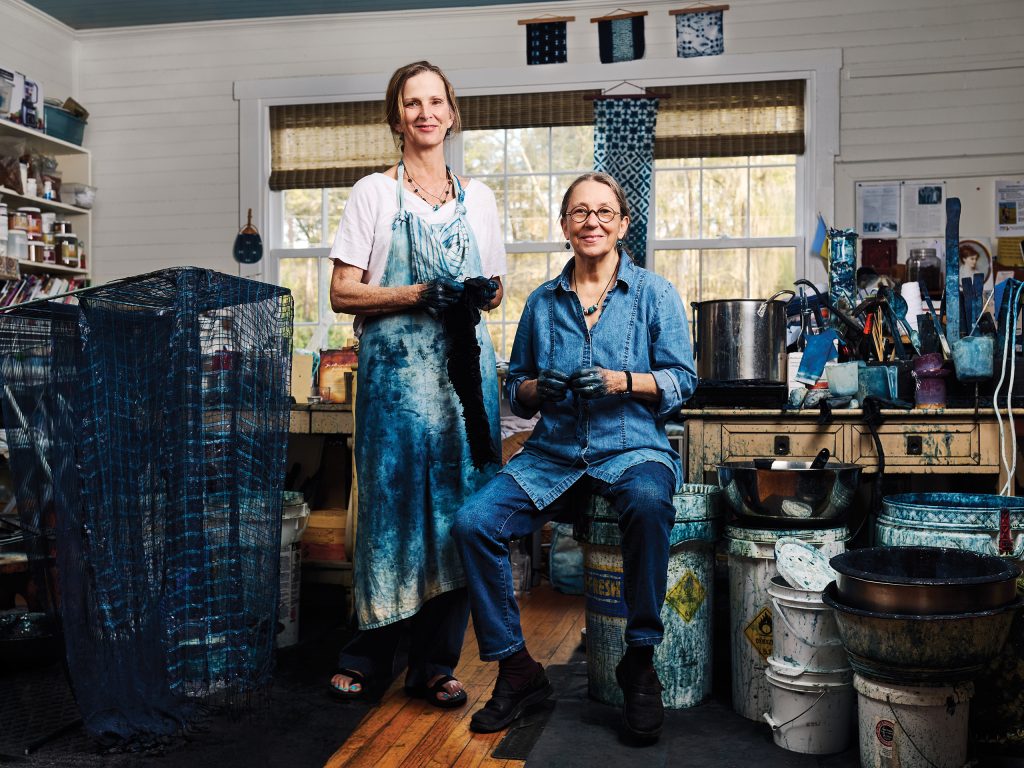
After moving to Daufuskie Island 13 and 14 years ago, respectively, Rhonda Davis and Leanne McJunkin Coulter became fast friends. Sharing a love for Daufuskie’s nature and history, they began exploring the use of indigo, which still grows wild on the island.
Today, they are the owners of Daufuskie Blues, a studio housed inside the historic Mary Fields School that offers one-of-a-kind, hand-dyed textiles made with organic indigo.
“Indigo is a slow and complex process, unlike all other natural dyes,” says Davis. It has an ancient and fascinating history, not only in colonial South Carolina, but throughout the world,” says Davis. “The blue hue truly reaches through time and across cultures of the world.”
People are often surprised, she notes, that natural indigo provides such a distinct and captivating color compared to the flat pigments of synthetic dyes. Moreover, they can’t believe the dye comes from a green leaf.
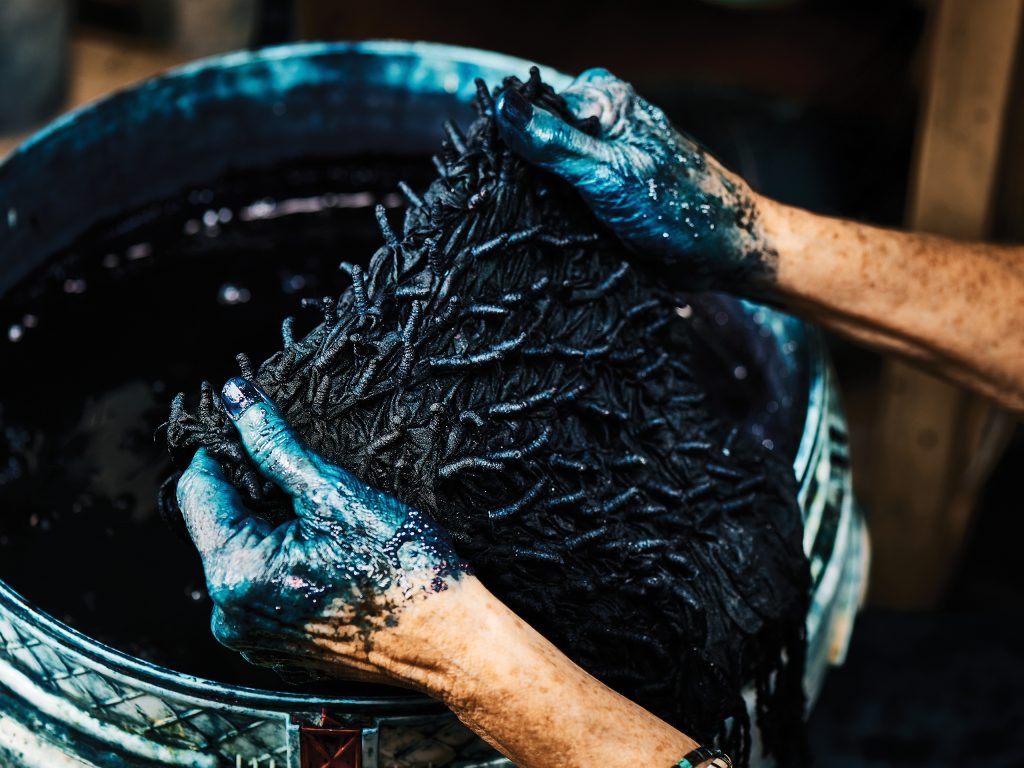
Stepping into their studio and shop, visitors find a variety of textiles. The natural fiber scarves are especially popular, says Davis. “We really love the meticulous work of advanced Japanese shibori techniques.” The hand-dyed pieces can take weeks to make and are dip-dyed 15 times or more for the most beautiful color.
Davis and Coulter have hands that betray how much time they work with indigo. “It is a question we hear many, many times every day: ‘Are your hands always blue?’ People are amazed, awed, enchanted, or curious about our ‘ever-blue hands,’” says Davis. The two conduct workshops, so hopefully “blue hands” are spreading as more people rediscover the magic of working with indigo.
Daufuskie Soap Co.
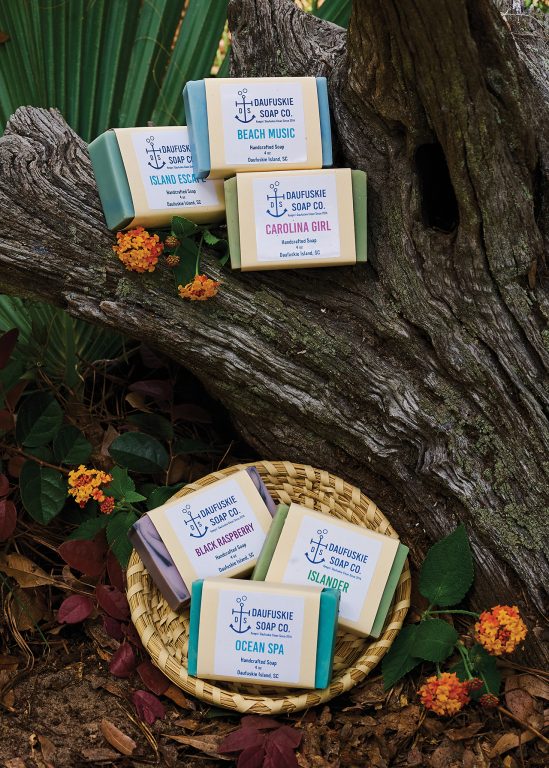
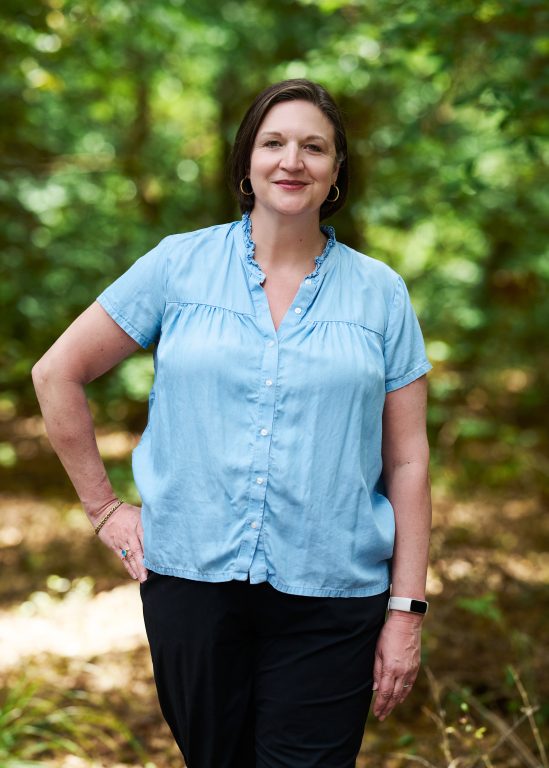
Daufuskie Island is the kind of place where directions might be, “Turn left at the John Deere tractor.” That laid-back, peaceful feeling extends to Daufuskie Soap Co., tucked around the back of the home of the company’s owner, Jan Crosby. She also makes her products there onsite.
Crosby first moved to Daufuskie in 2005 with her young family. “It was an amazing place to raise our daughters,” Crosby says. “The natural beauty and close community on the island have made it such a special place to live.”
In 2014, she started crafting soaps with organic shea butter. It soon grew into a business selling bath and body products, including the soaps as well as scrubs, lotions, body butters, lip balms, and more.
The OG soaps are still her favorite, she says. “They are the cornerstone of my business,” she notes, despite being the most challenging product she makes. While her product line includes a large variety of scents — everything from Sea Island Cotton to Georgia Peach — the most popular is Ocean Spa. “It sells exceptionally well across all product lines,” Crosby says. It combines florals with sea salt to create a crisp, spa-inspired scent.
There’s good news and bad news about these creamy, addictive body products: The bad news is they are sold exclusively on Daufuskie Island. The good news is Crosby has an online store, so if you need an Ocean Spa moment in your life, she can ship a little bit of Daufuskie Island over to you.
School Grounds Coffee
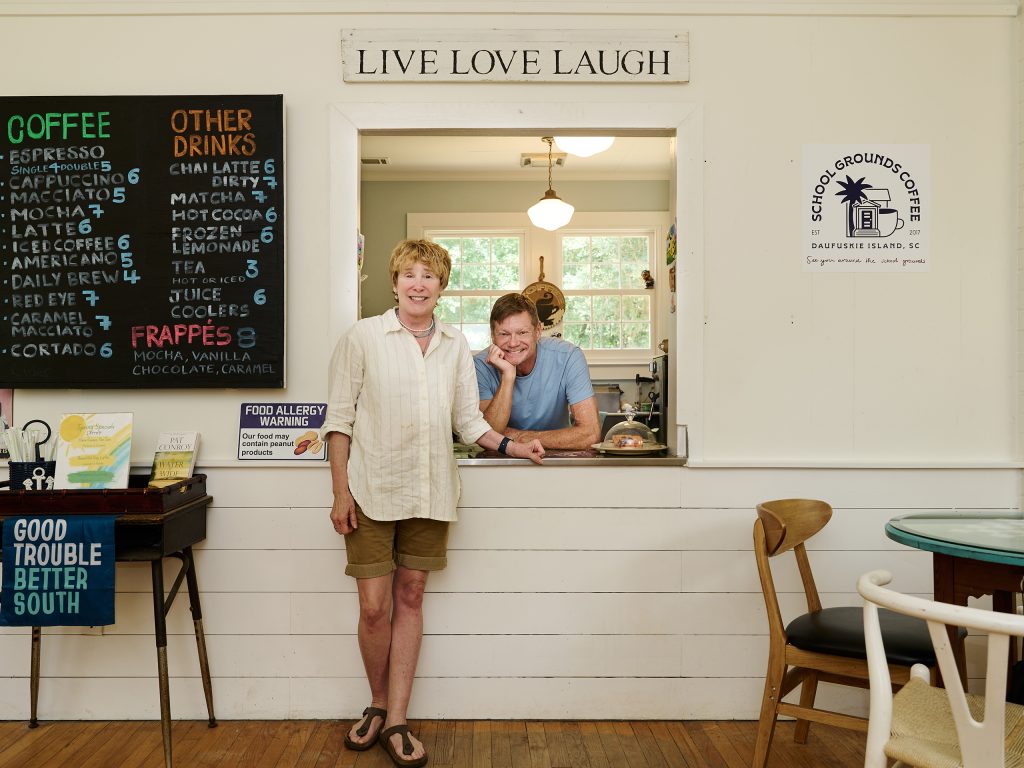
Tucked into the back of the historic Mary Fields School, School Grounds Coffee serves more than caffeine. Inside the former schoolhouse, visitors will find local history information displayed on the walls, friendly conversation across the counter, and a beloved community gathering spot with an unexpected beginning.
Owners Pam and Brian Cobb arrived on Daufuskie Island in 2016 after relocating from Raleigh, North Carolina. Both are Georgia natives and graduates of the University of Georgia, and they spent their first year on the island cleaning houses while searching for a long-term opportunity.
The Mary Fields School property, owned by the First Union African Baptist Church, already housed an indigo dye studio (Daufuskie Blues) and an art gallery (Studio D’awfoskee) when the Cobbs were offered the chance to open a coffee shop in the back of the building. There was just one small catch: neither of them drank coffee.
“We did not even own a coffee pot,” Pam says. Undeterred, the couple spent nearly two months learning everything they could about beans, brewing, and operating a cafe before opening their doors in 2017.
The name School Grounds Coffee was chosen as a tribute to the generations of students and teachers who passed through Mary Fields School. Historic photographs fill the shop, including reminders of one of the school’s most well-known educators, author Pat Conroy, who taught there in 1969.
The Cobbs’ creativity extends to their rotating menu. This summer’s offerings include the Summer Breeze latte, featuring white chocolate and cherry flavors; Lovely Day, flavored with lavender and vanilla; and Sugar Magnolia, a blend of coconut and caramel pecan.
Visitors with a sweet tooth should save room for one of Pam’s homemade baked goods. Baking under the auspices of South Carolina’s cottage food law, she regularly prepares customer favorites like lemon pound cake, lemon sugar cookies, and a decadent triple-chocolate cake.
The Cobbs also make sustainability a priority. The shop uses compostable cups and corn-based straws to help protect Daufuskie’s environment and wildlife, including the island’s sea turtles.
In many ways, School Grounds Coffee reflects the resourceful, welcoming, and often surprising spirit of Daufuskie Island. And in a place where life tends to already move a little slower, Pam and Brian have created a space where locals and visitors alike can sit and savor coffee and conversation before getting on with the rest of their day.
Frye’s Corner
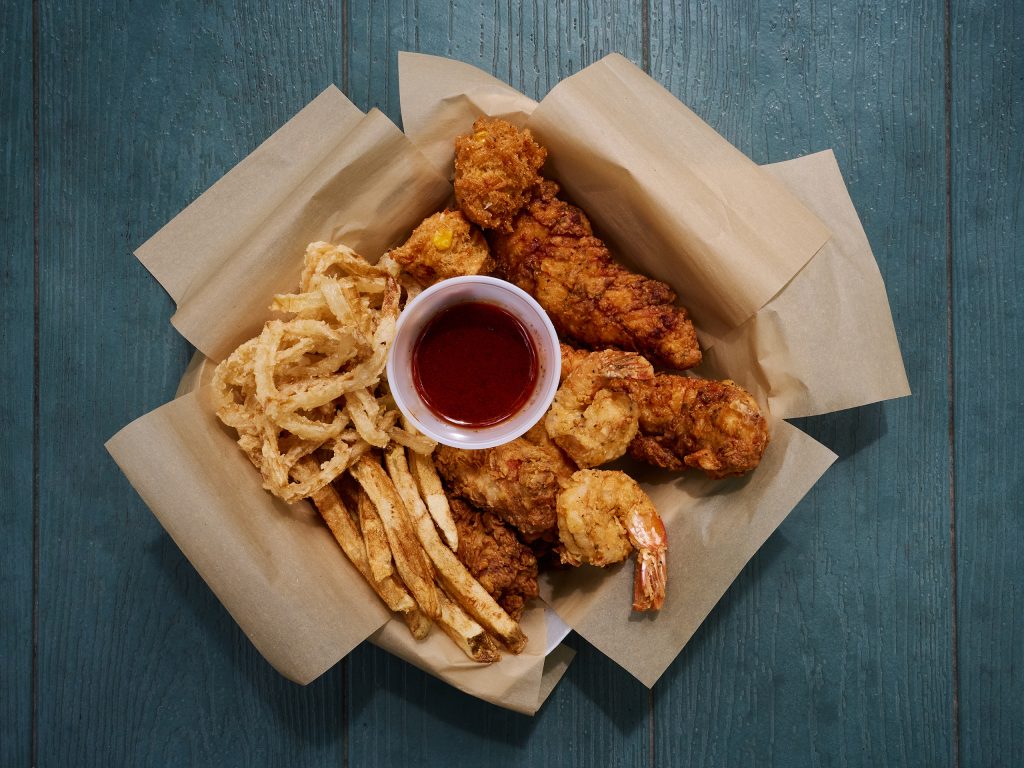
It’s easy to find Tricia and Haywood Frye’s popular “chicken shack,” Frye’s Corner, on School Road. Just look for the gaggle of parked golf carts, where hungry customers have thronged the place for delicious fried chicken, oysters, and shrimp, plus fixins like coleslaw and fresh-cut Vidalia onion rings. The cold beer and friendly, family-run service don’t hurt either.
The couple opened Frye’s Corner in 2022. They’d had a second home on Daufuskie Island since 2014, and after retiring in 2021, they wanted to try something different. “We came up with the idea of Frye’s Corner because the island needed more food options, and we have the right last name,” jokes Tricia. “Haywood and I were inspired because of our love for Daufuskie and its people.”
When they bought the corner lot for the restaurant, it was wooded. “Haywood brought over his own equipment and cleared the lot and built the structure that is there now,” says Tricia. “It took him almost two years to get all the permits from Beaufort County to make it a legal commercial food establishment.”
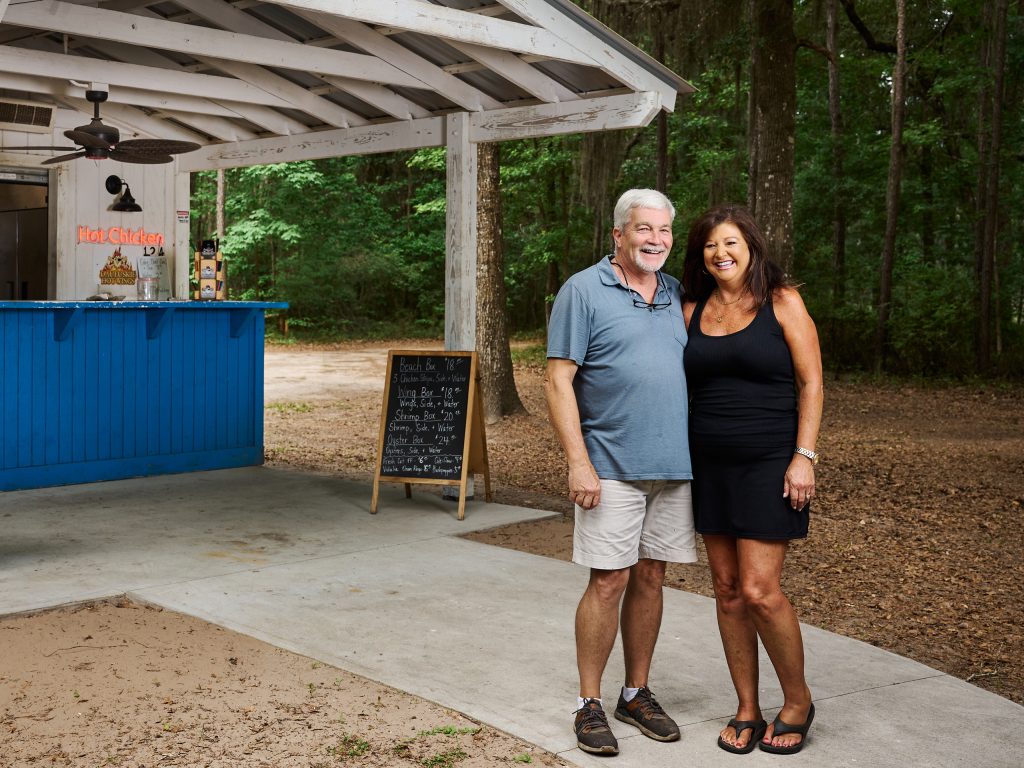
Tricia says the Daufuskie locals have become like family to them. It can be challenging, though, doing business in a place where everything has to come in via a 30-minute boat ride. Still, the food they serve is fresh, never frozen. “We don’t even have a freezer,” she says. “You can taste the freshness in our food. Haywood says that’s the reason we run out of food!” It’s true, and word to the wise: Arrive early for lunch.
What to order? Tricia’s favorite item is the chicken strips with their homemade Frye’s Daufuskie hot sauce and fresh-cut Vidalia onion rings, while Haywood’s favorites are the fried oysters and his homemade hush puppies.
Frye’s Corner is open seasonally, from mid-March through mid-October, from 11 a.m. to 2 p.m. Thursday to Saturday.
Stories in this Feature
Daufuski Island: Deep & Wide: It makes for a pleasant day trip, true, but there’s so much more to this South Carolina sea island.
Total Island Immersion: Excursions and accommodations that take you deep into Daufuskie’s ecology, history, and culture.
The Faces and Places of Daufuskie: A few home-grown businesses that represent the quintessential nature of island life.
The Legacy of Daufuski Island: A museum complex of three historic buildings ensures the island’s history isn’t forgotten.