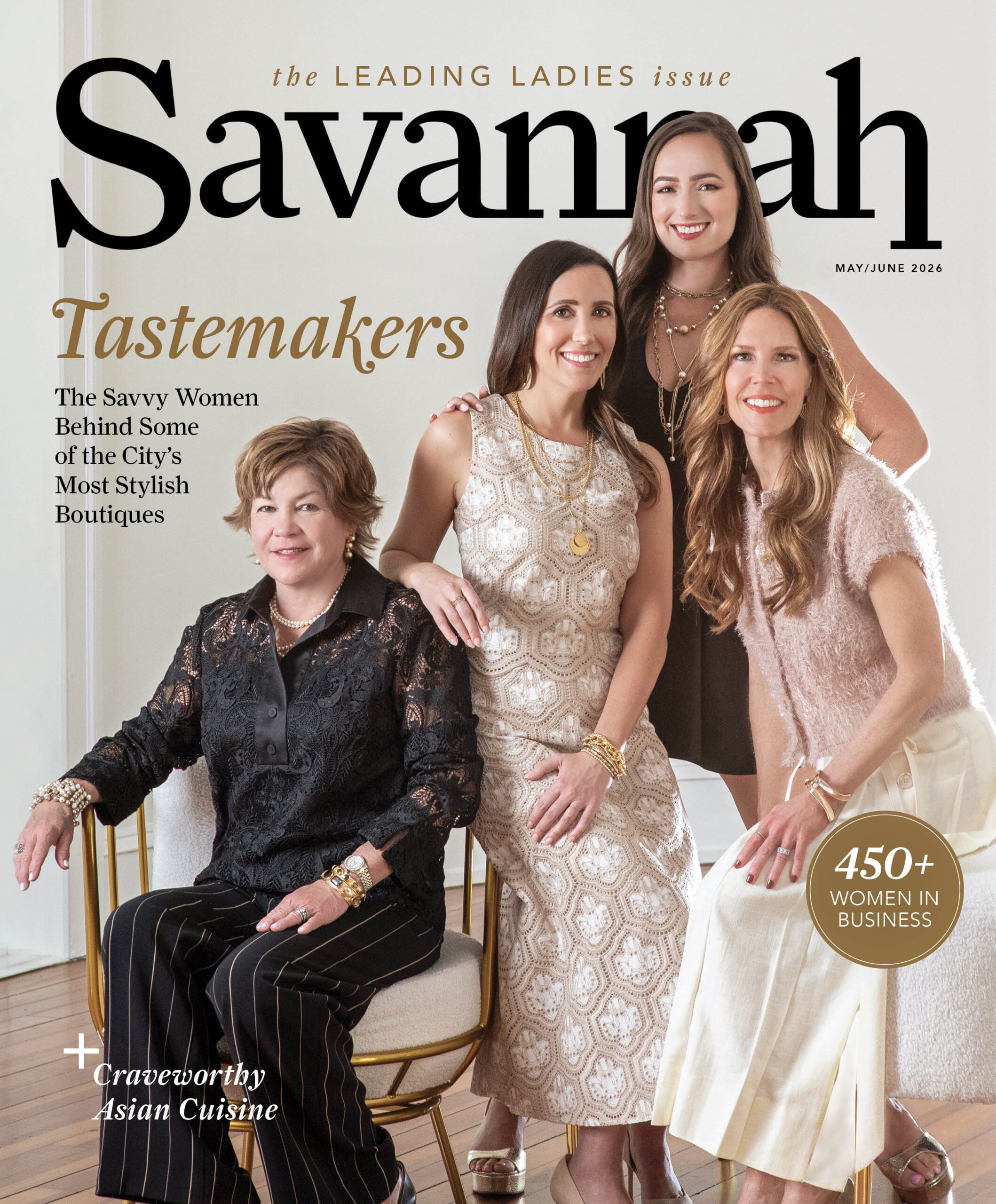


Through restaurants, our Asian community has been able to introduce their traditions to our shared city.
Written by Kiki Dy
Photography by John Alexander
Savannah has long asked more of its international restaurants. Here, food has had to do double duty. It has had to nourish, yes, but also translate, persuade, soften, convene. For minorities, community has had to be built and flavors served and shared with people who may not yet know what they’re tasting.
That work has often fallen to women.
Many of our city’s favorite outposts for a date night or family dinner out were built by women navigating immigration, entrepreneurship, and identity all at once. Their dining rooms harbor more than flavors. They hold memory, adaptation, and the quiet labor of making themselves visible in a city still learning how to tell their stories.
Here are four local stalwarts who have expanded our city’s palate.
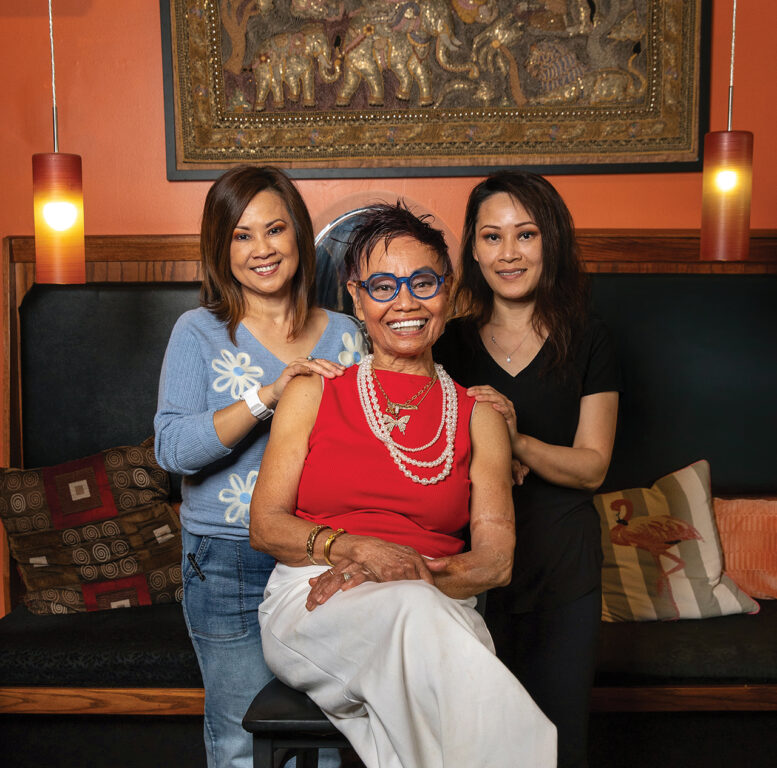
Photo by John Alexander
Giving Thunderbolt a Jolt of Flavor: Chiriya Moore
One would not suspect Chiriya Moore, with her megawatt grin and revolving door of regulars who swing by her Thai-Hawaiian restaurant, Chiriya’s Thai Cuisine, twice a week to get their fix of the crave-worthy food, has ever been unhappy. But when she arrived in Savannah in 1987, she felt alone.
There was no ready-made Thai community waiting for her in the Hostess City. Family became the first infrastructure instead. Over time, she helped move her sisters here. Nieces then joined the fold. Her son, trained in culinary school, helped sharpen her cooking techniques. “I was good before him,” she says with a laugh. “But now I’m better.”
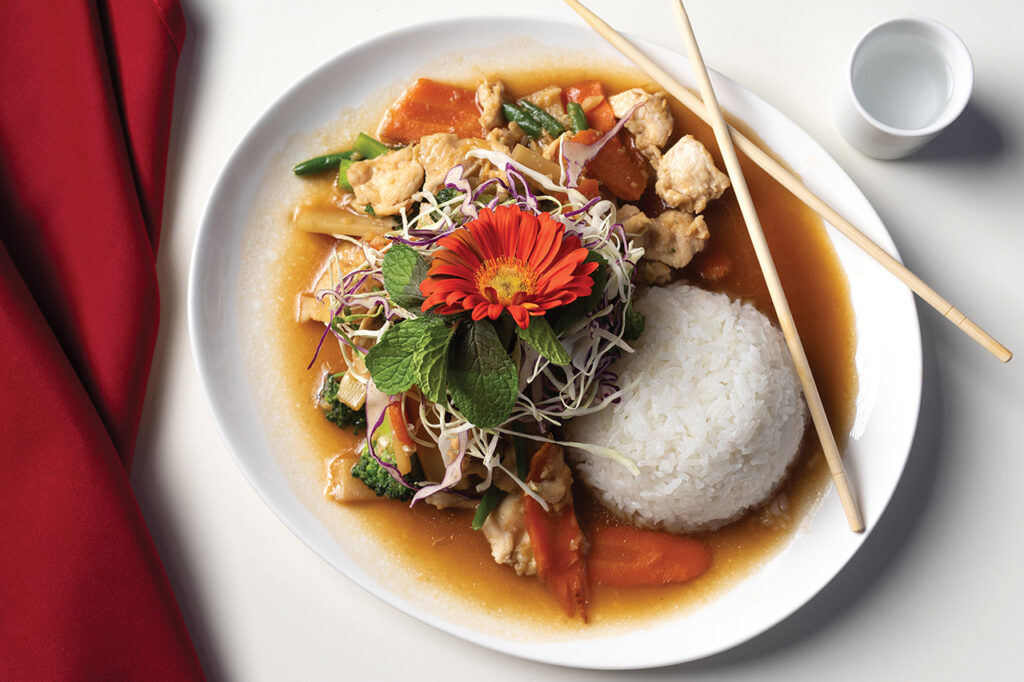
That line says more than it seems to. Moore’s story is one of staying long enough in one place to watch a city learn. When she started out, diners often flattened Asian cuisines together into one fuzzy category. Thai food had to be distinguished again and again from some vague catchall idea of “Asian food.” “No, no, not Chinese,” she recalls telling customers. The point was not dismissal; it was specificity. It was asking Savannah to understand that each cuisine had its own grammar, balance, and logic.
The little things matter most now, she says: more tamarind, more shallot, a touch of lime, the tiny calibrations that make a dish sing instead of just sit there. She grows herbs, tinkers constantly, and still thinks in terms of improvement.
At one point she notes with characteristic candor, “I only have Asians come here for holidays because they can cook for themselves.” Her audience, especially early on, was often not a built-in co-ethnic community, but everyone else. That made the work doubly demanding. Moore was preserving something meaningful while also instilling culinary curiosity in her new home. In a city where Thai food once needed constant explanation, Moore helped turn that curiosity into appetite and appetite into admiration.
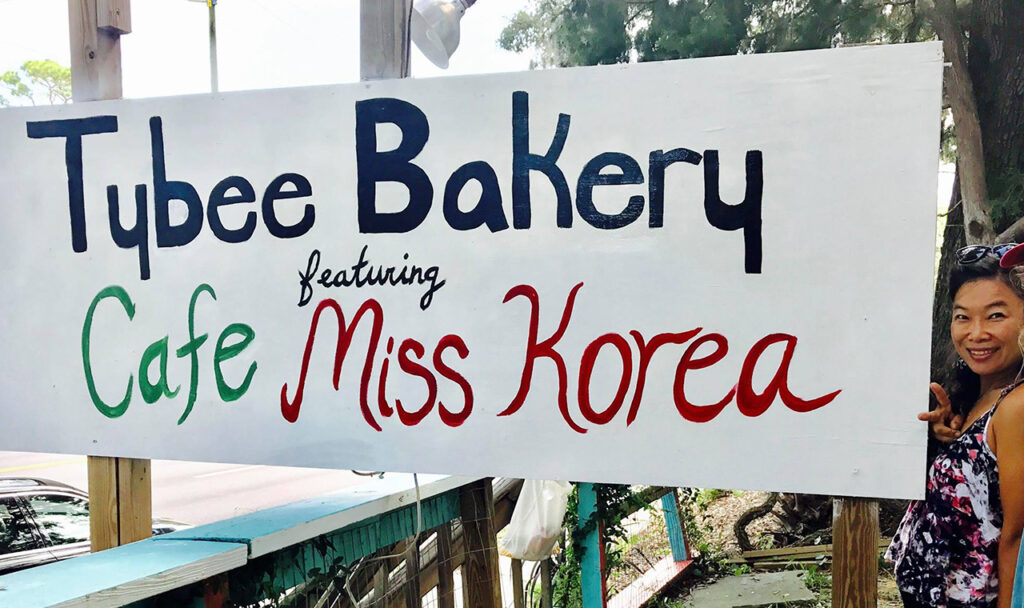
Photo courtesy Jeeyun Lee
Energizing a City: Jeeyun Lee
When Jeeyun Lee of The Tybee Bakery featuring Café Miss Korea first began selling bibimbap, she says, no one knew what it was.
Around 2010, after working for another local restaurateur, she started knocking on doors and delivering homemade food to nurses and doctors around outer Savannah’s medical campuses. She had clocked how badly people were eating through their long shifts and began pitching her food in practical, bodily terms. “You guys need to eat better food,” she recalls telling them. Eat this and you will feel better. Eat this and you can make it through the day.
“One week, I started going house to house and asking, ‘Who wants bibimbap?’” she recalls, half laughing at the audacity of it now. Before Korean food had much footing here, before kimchi had enough local familiarity to move on name recognition alone, there was the repetitive labor of making, delivering, explaining, and coming back to do it again. By her count, it took 15 years for the work to grow into her current success.
Today, Lee is in high demand and high spirits, holding court at her Forsyth Farmers’ Market stall and hosting reservation-only group dinners (booked months in advance) at The Tybee Bakery. But what she describes is not simply a business arc; it is a social one. “My kimchi is not only my kimchi,” she says. “It’s our talking, our energy.” She has spent years meeting families, watching children grow up, and listening to stories of illness, recovery, and ordinary life.
The farmers’ market, in her telling, is not just a place to sell food. People are paying, she believes, for family time, happiness, and a different relationship to nourishment and to one another.
Lee also speaks plainly about what it meant to be an early arrival in the city’s Asian food scene. In those first years, being one of the only Asian women in certain public spaces heightened her sense of difference. But she describes the role as powerful, too. “As a woman, it’s great. I’m very proud,” she says. “I feel like I’m a good influencer to eating healthy.”
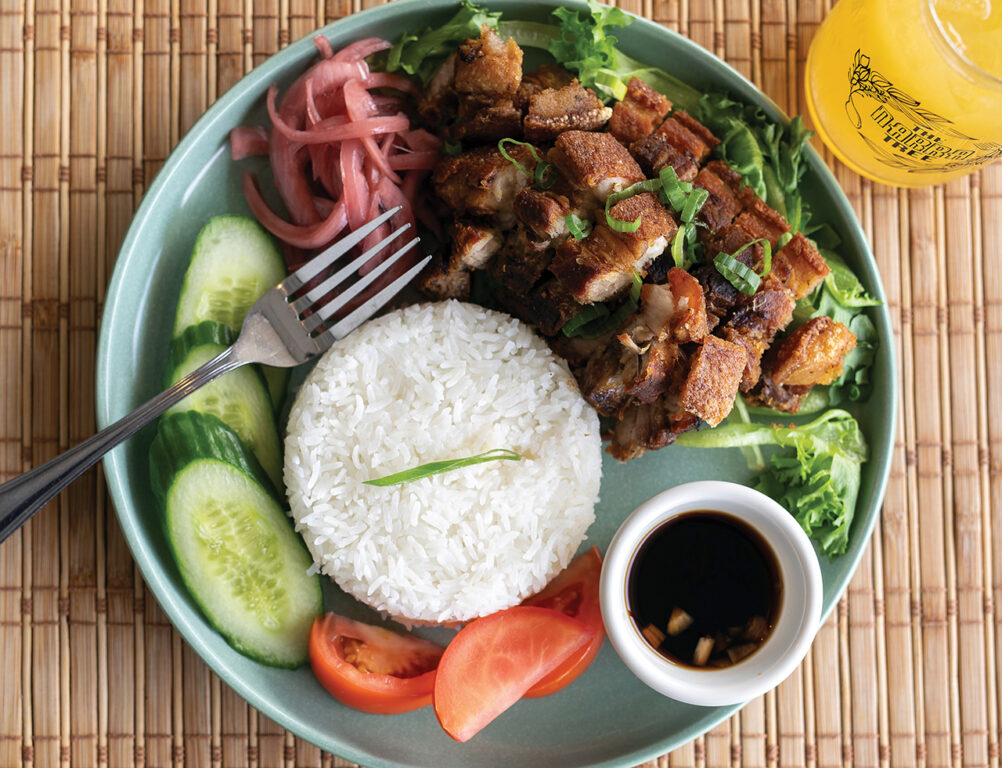
Photo by John Alexander
Another Branch on the Tree: Maebelle Alolong
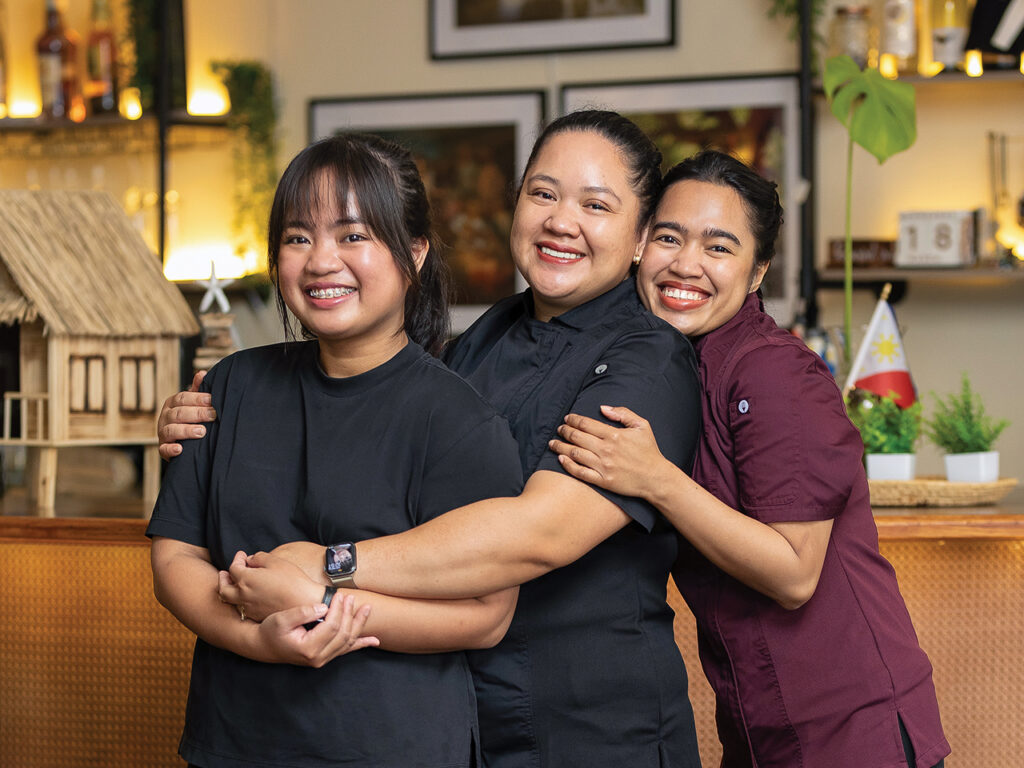
Maebelle Alolong of Southside Filipino restaurant Narra Tree belongs to a younger generation of owners, and her language is sharper for it. “What surprised me most,” she says, “is how much you have to prove yourself before you’re even heard — not just as a woman but as a young Asian woman with a strong point of view.”
Alolong’s predecessors often had to absorb that reality without naming it so directly. Alolong is bold enough to note it, but she is also building on what came before. Her project is not only to run a restaurant but to build visibility. “I want people to see that we’re here,” she says, “and we’re part of Savannah’s story, not just existing in the background.”
At Narra Tree, that visibility is not hers alone. It is collective, carried by the women cooking beside her and by the memories and techniques they bring into the kitchen. Chef Julie de Vera, who moved to Savannah eight years ago, says the hardest part of the adjustment was being away from family and friends. Still, the city gave her room “to grow into who I wanted to be.” On the menu, dishes like sisig and kare-kare feel most personal — foods tied to her father’s hometown, to celebration, to the kind of family table where, as she puts it, Filipinos “always find a reason to come together and share a meal.”
At the managerial helm, Chef Psych Canonero (lovingly called “Mama” by Alolong and many others in appreciation for her deep care) describes a similar push and pull between rootedness and reinvention. In Savannah’s azaleas and live oak trees, she sees a city shaped by endurance — one that reminds her to stay grounded even in a foreign land. The dishes that bring her most fully back to herself, like kare-kare and bulalo, are not solitary foods but communal ones, meant for sharing, conversation, and deeper bonds. For her, cooking is not just about flavor. It is “an offering,” she says, “a way of serving with purpose and heart.”
Alolong and the team achieve their aspirations of Narra Tree serving as a mustering center where the sisig-curious can feel welcomed rather than intimidated and someone who grew up with Filipino food can feel seen. “Narra Tree is deeply tied to my journey as an immigrant building something that represents home while creating space for others to feel seen and connected,” says Alolong. “Food becomes both business and storytelling.”
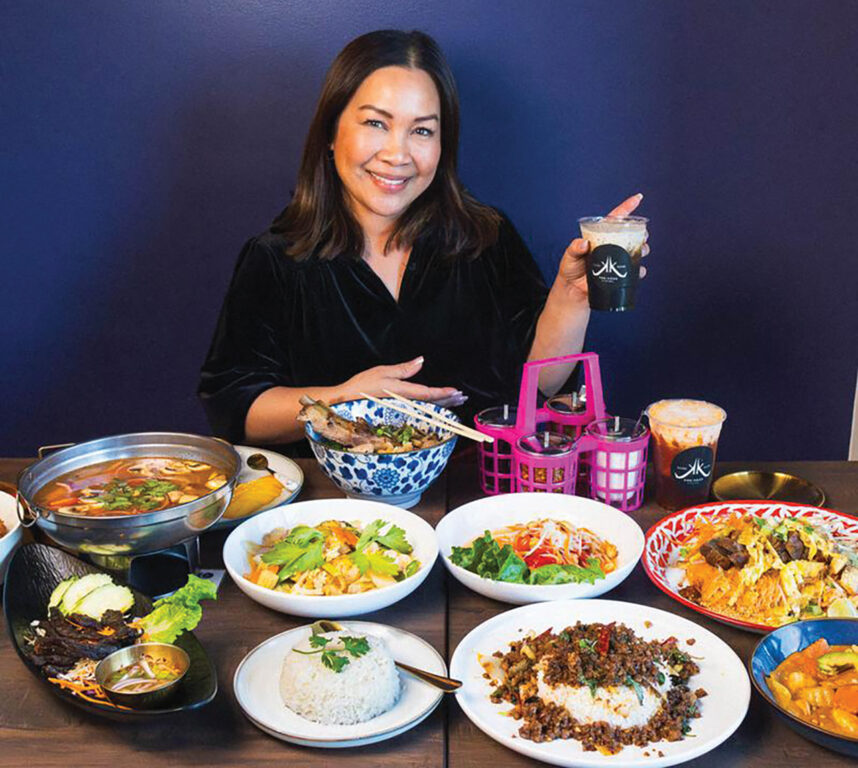
Photo courtesy Ann Healy
The Climb to Klom Klom: Ann Healy
Walking through the red doors of PJ’s Thai is a formative food memory for many Savannahians. Now Ann Healy, along with her husband (the eponymous PJ), have expanded further with the smaller, more intimate Klom Klom.
When Healy came to the United States from Thailand in 2008, Savannah, she says, was “a completely new world.” The language was unfamiliar, the culture disorienting, and the community nearly invisible. Like many immigrant women before her, she turned to food as a first vocabulary. She shared meals, cooked for friends, and, over time, let those small moments accumulate into connection.
That instinct eventually became Klom Klom, a restaurant she describes as deeply personal. If PJ’s Thai was an essential opening chapter, Klom Klom is “more of my heart,” she says. It has given her room to tell a fuller story through home-style flavors and the regional influences she has come to love, especially those shaped by Isan cuisine (a distinctive style from northeastern Thailand). “It wasn’t just about serving food,” she says. “It was about telling a story, creating a feeling, and giving people a real experience of Thai culture the way I know it.”
At Klom Klom, Healy spends time with each table, explaining the origins and nuances of dishes that don’t appear on other Savannah menus, like boat noodles and duck khao soi.
What has changed most, she says, is not just her own position but the landscape around her. “When I first arrived, it felt very small, almost quiet,” she says of Savannah’s Asian community. “Now, there’s a sense of pride.” Restaurants, she believes, helped make that shift possible, because food moves across barriers faster than biography can. “Through food, we’ve been able to introduce our traditions, our stories, and our identity,” she says. “Restaurants have become bridges between cultures.”
That bridge-building is made, as ever, of small things: a shared meal, a warm room, a menu that lowers somebody’s guard. Healy also points to the quiet support that exists among other women doing this work — check-ins, kind words, a piece of advice passed across the industry. “That support, even when it’s small, feels very powerful,” she says.