

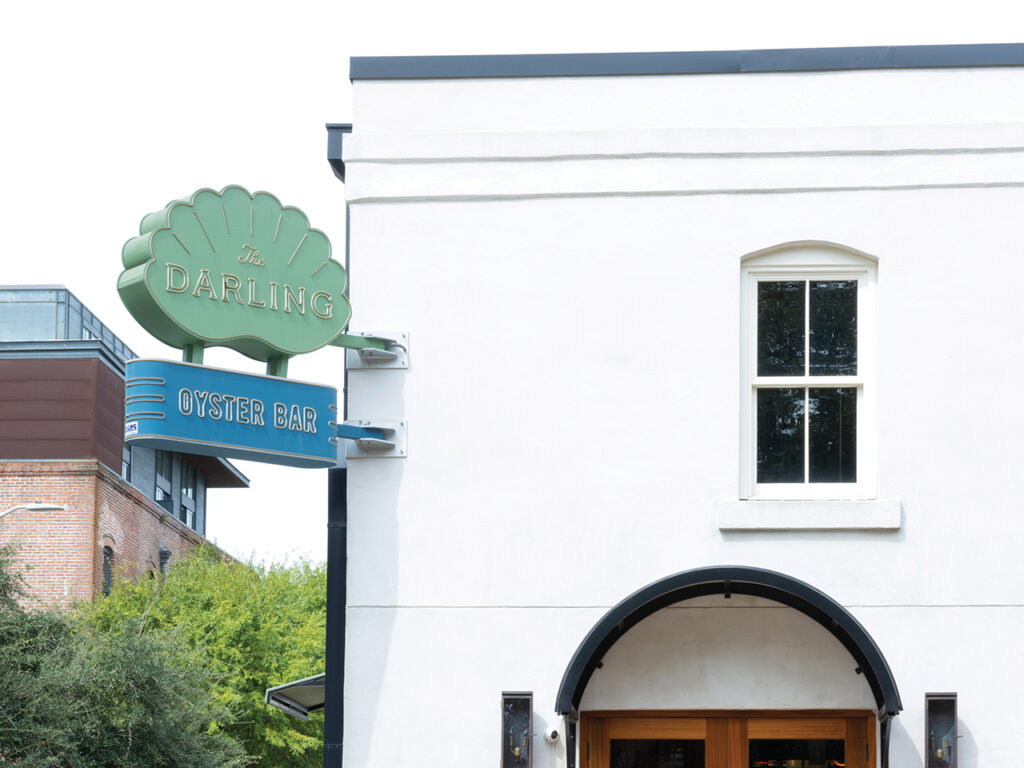
The chef discusses the restaurant’s long-awaited opening and his favorite way to eat oysters.
Written by Allison Arbuthnot Sanders
Raised in Buffalo and trained at the prestigious Culinary Institute of America, Chef Dan Witwer’s career path has traversed the East Coast. He came to town to open the Savannah location of popular Charleston restaurant The Darling Oyster Bar. Previously, he’d been working in Nashville, where he was immersed in the world of beef. The hard left from land to sea has opened up a world of new knowledge and possibility for him. Now, he’s channeling years of kitchen experience, a mix of regional flavors, and a deep appreciation for local farmers, fishermen, and oyster growers into creating a restaurant that may be a second location, yet feels deeply rooted in place.
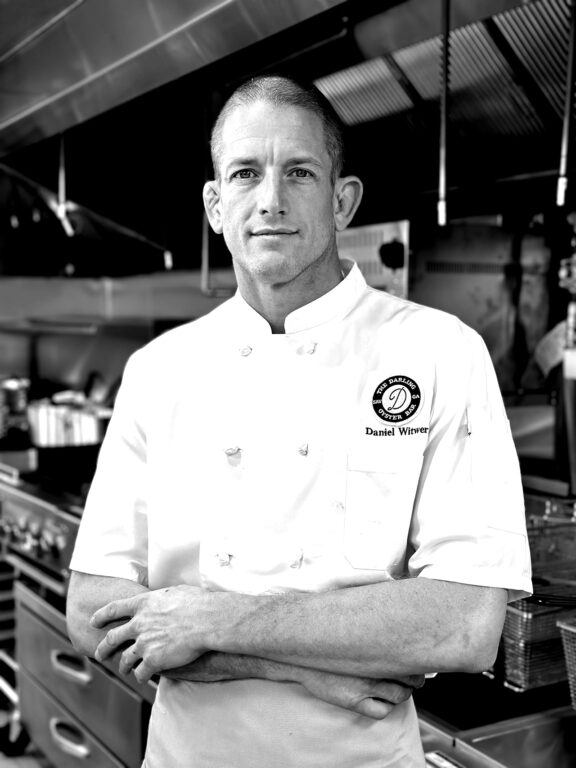
What excites you most about opening The Darling Oyster Bar?
As far as restaurant openings go, it’s been very good. We took the time to do it right instead of rushing into it. In the time that we were waiting for it to open, I got to cultivate relationships with local farms and vendors. It’s cool to have that personal connection with them and to be able to spend our money here. Instead of buying big-box distributor burgers, I get them from Hunter Cattle Co. [grass-fed beef raised in nearby Brooklet, Georgia]. Better Fresh Farms [a hydroponic, non-GMO, herbicide- and pesticide-free farm in Metter, Georgia] does some of our greens. It has created a little support structure, where if I need something, [a local vendor] will tell me, ‘Hey, I know a guy who grows that.’
What are the differences between The Darling Oyster Bars in Charleston and Savannah?
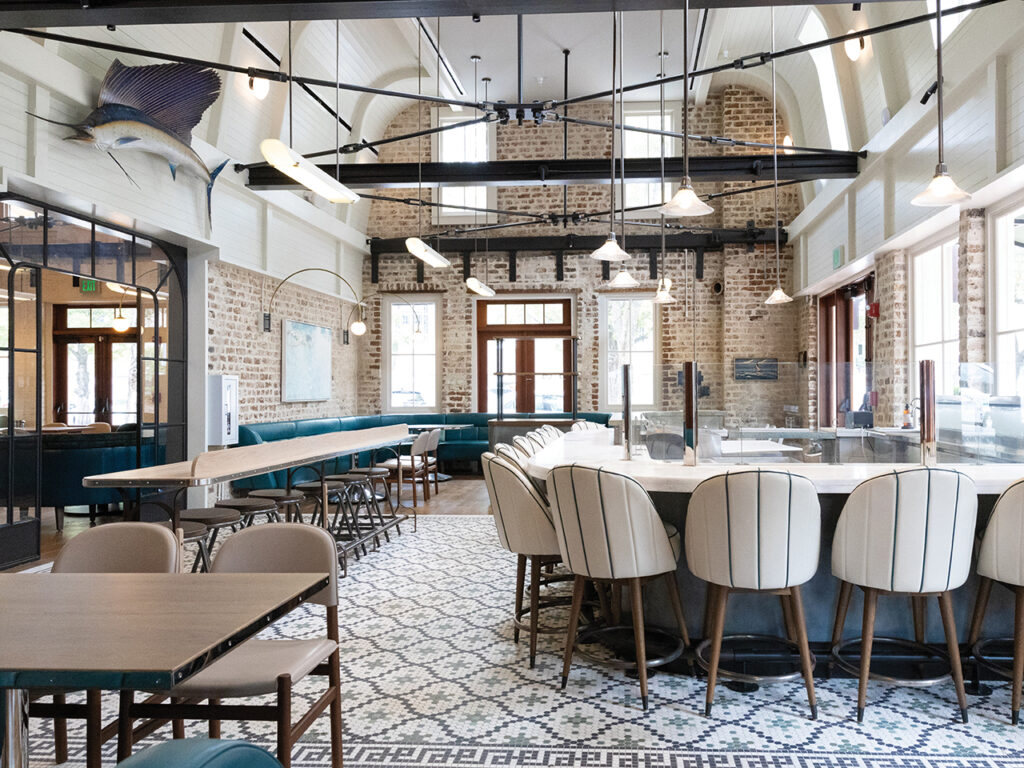
In Savannah, local and regional is the focus. All the decor has been purchased from small shops locally, and everything in there — the lighting, the tables, the booths — was made in Georgia. As for food, we have two menus. The white menu is our core menu for both restaurants. The pink menu is our daily offerings in Savannah only. We run three or four specials a day showcasing whatever is coming in off the boat. The local Georgia oysters [Salt Bombs and Bull River Oysters] have a permanent spot on our menu. There will always be a Georgia oyster on our raw bar menu. We’re repping that Savannah name hard!
On the star of the show: the oyster …
We run six oysters a day, and we try to hit different regions. We always have our James River house oyster, Little Darlings, from Virginia. And then we’ll run the local oysters: the Bull Rivers and the Salt Bombs. Next, we hit different regions: a South or North Carolina, a Canadian, or a Northeast. It’s all the same animal, but there’s a significant difference in oysters from different regions. Some are blades and some are cups; some are very briny; some are more subtle. We give flavor notes at the raw bar. You try one, or you can try them all. We offer a ginger mignonette, cocktail sauce, and we bottle our own hot sauce. I like to eat an oyster for what it is: cold on a half shell, not masking the flavor. It’s like you’re eating the ocean. Oysters are filter feeders, so they’re not only a sustainable food source, but they also help care for the environment. We just started working with a shell recycling program: they pick them up twice a week, process them, and introduce them back into the environment.
What should people eat if oysters don’t float their boat?
The lobster roll. It’s simple: lobster meat, split-top brioche bun, celery, mayo, seasonings. Simple is good. We also have whatever fresh fish options are available daily from the fishermen, and the scallops and the mussels are very popular. The Hunter Cattle fried chicken and burgers are great non-seafood options. And we offer poutine with a little twist: it’s topped with clam chowder instead of gravy. It’s really good. When I’m hungry, and I want something fast, that’s my go-to.