


Take a slow ride to explore the hidden gems and hot spots along U.S. Highway 80 from Thunderbolt to Tybee Island. Whether you’re escaping for a quick diversion or spending all season, we’ve got you covered like SPF on where to find sunshine, brisk surf, fresh seafood and plenty of summer fun.
Photography by JASON B. JAMES
Tybee Food Tour
Drink, dine and relax like a Tybee regular with these tips from a local foodophile
Written by SKYE ESTROFF
TYBEE IS NOT YOUR TYPICAL BEACH TOWN. This place is no frills, friendly as all get-out and, most certainly, food-focused. In the high season of summertime, it’s the destination where you want to be to dig your heels in the sand and find a standout seafood-centered meal. But if you’re arriving sometime between May and September, you better come with a strategy in mind to beat the crowds.
I’ve spent my summers on Tybee since 2001, and it has been incredible to see this barrier island boom into a vibrant food scene. My first experience cracking crab legs was at Fannie’s on the Beach with my Nini in my elementary school days, I embarrassed myself by falling back in a chair at The Crab Shack in my preteen years and I’ve eaten more “kid plates’’ of grouper at Stingray’s than I can even attempt to count.
Here’s a guide to how I would navigate the busy season while tasting some of the best local bites in town. I promise this Tybee-proud foodie in the know wouldn’t steer you wrong.
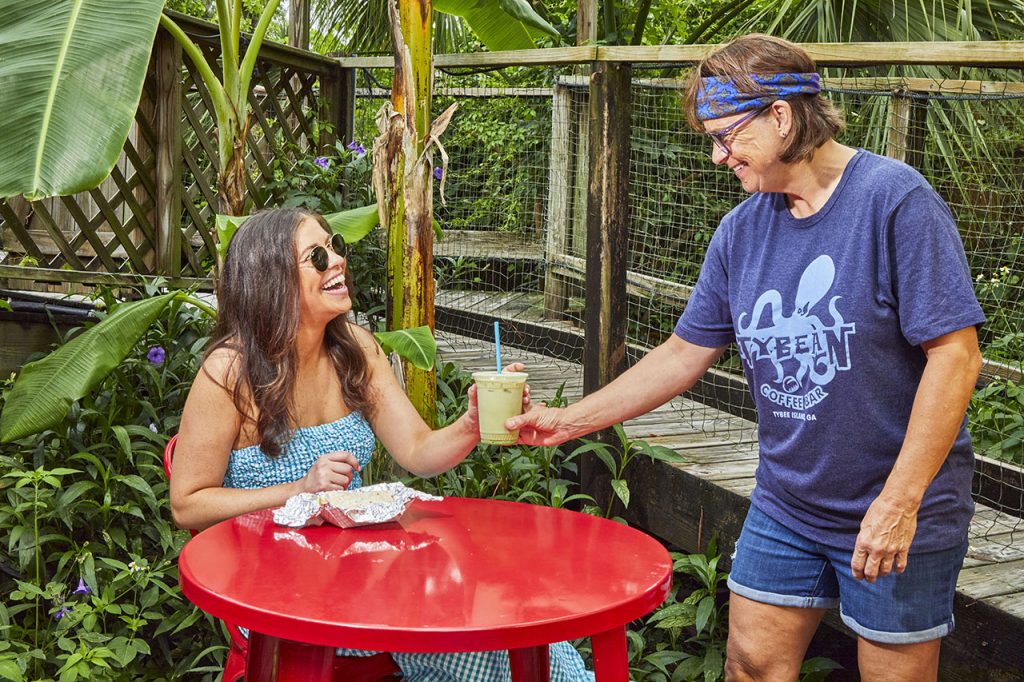
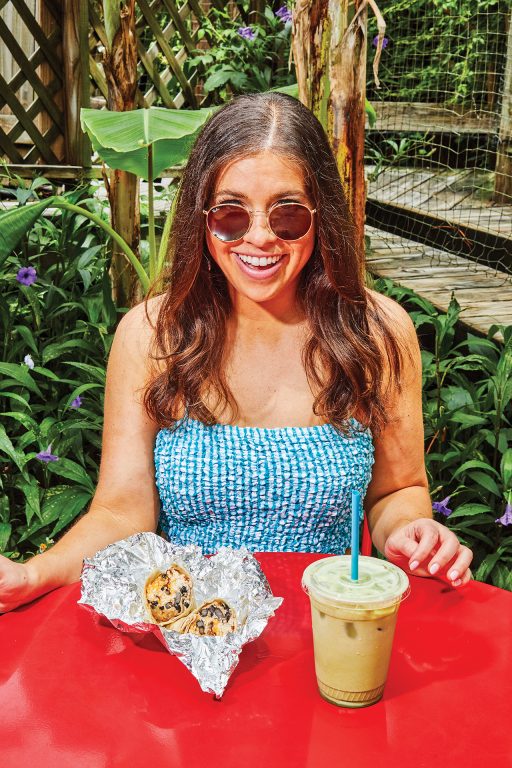
TYBEAN ART & COFFEE BAR (1213 U.S. Highway 80)
If you’re staying on the island, get your steps in and take a little morning walk up to The Shops at Tybee Oaks complex where this little gem lives. Dancing Goats coffee beans from Atlanta make for a robust and awakening blend. Pair your custom-crafted coffee with the breakfast burrito of the day (typically a tortilla filled with eggs, beans, bacon and cheese) for a filling combination that’s less than $10. Beach town food with a small-town price tag is a pleasant Tybee surprise that can’t be beaten.
TYBEE MARKET IGA (1111 Butler Ave.)
Yes, IGA is a grocery store. And yes, it’s the only one on the island, serving locals since 1934. But did you know that you can pre-order cinnamon rolls for pickup? This has been my grandma’s pro tip for feeding a large family the past two decades, and it is one I’m willing to share with the class. These cinnamon rolls are freshly prepared and served warm with a classic vanilla glaze. Call ahead or walk in to place your order then assign a day and time for pickup. Ensure your household doesn’t have a moment of “hanger” during their beach vacation and have breakfast on lock.
SEAWEED’S SNO-BALLS & ICE CREAM (1405 Butler Ave.)
End cap your vacation day with something sweet. Sno-balls is an essential stop on your Tybee food tour. My family and I never miss the opportunity to cool down from a hot beach day with some of Sno-balls signature treats. Disclaimer: There will be a line. But this kind of line is much friendlier than your big-city counterparts. Chat with other ice cream aficionados about the difference between Sno-balls and water ice, debate the “best” way to stack a sundae and get inspiration for scoop combinations you never knew you needed. Bananas Foster and Pirates’ Treasure, anyone?
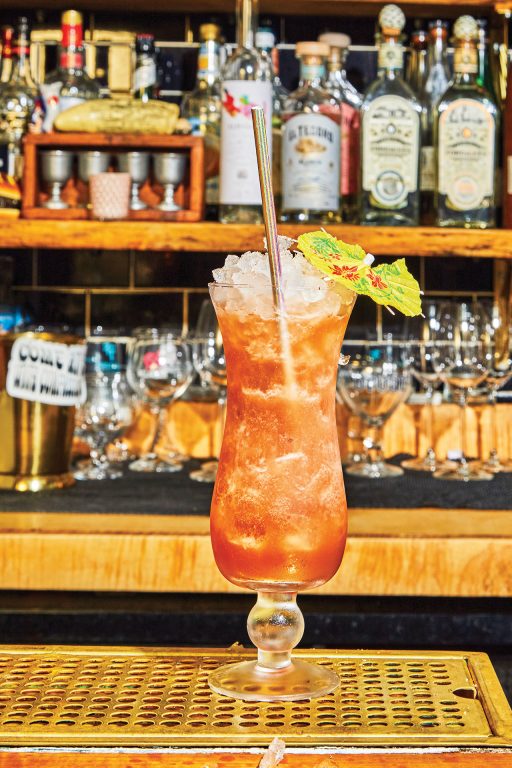
Highway 80 Hurricane
Sea Wolf owner Andrew Jay Ripley shares his Tybee take on the New Orleans original. While the cocktail became famous at Pat O’Brien’s and is known for its signature red hue from the fassionola — a fruit punch-type syrup used by Tiki legend Don the Beachcomber — Ripley uses a beautifully crafted version of the syrup made by Louisiana-based Cocktail & Sons, bringing flavors of strawberries, hibiscus, passionfruit and lime to the party. Save this recipe for a rainy day to enjoy a tropical taste at home.
INGREDIENTS
3/4 oz. fresh lime juice
3/4 oz. Cocktail & Sons fassionola syrup
1 oz. white rum (Planteray 3 Star is complex and dry.)
1 oz. dark rum (Hamilton Jamaica Black Rum is super funky in a great way.)
2 dashes of Angostura bitters
Ground nutmeg for garnish
Combine all liquid ingredients in a shaker tin with ice, and shake vigorously until the tin feels uncomfortably cold (about 15 seconds) Strain into your favorite glass filled with chewy ice and top with ground nutmeg. This deserves a cocktail umbrella. You get extra credit for distressing the umbrella, as if by high-force winds.
Will Brake for Boiled Peanuts
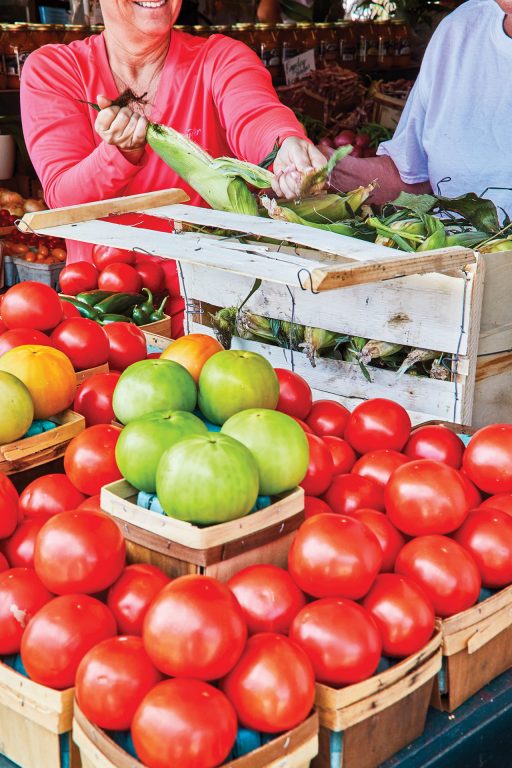
Located on Talahi Island, Davis Produce turns 30 this year.
“Davis Produce has its staples, and that’s always what brings people in the door,” says owner Sherry Davis. “The beauty is the magic that happens when locals and visitors alike get to experience the wide array of jarred okra or Brussels sprouts (we will pickle anything), beautiful plants and flowers, and goodies made especially for Davis Produce.”
To celebrate, here’s a rundown of the tried-and-true items she suggests picking up on your next pass.
1. If I had to say our top five favorites, it would be close, but of course, TOMATOES would be at the top. We travel around the Southeast to make sure that all year long, our customers have vine-ripe tomatoes. Our nickname, “Home of the Killer Tomato,” is well-earned.
2. Our PEACHES are unmatched. We have the sweetest peaches found in the region.
3. Our local WATERMELONS come in all varieties, including seeded, which to me are always
the sweetest.
4. The SILVER QUEEN CORN is perfect for Lowcountry boils, but it’s so perfect and sweet, you can eat it raw.
5. Finally, I can’t leave off our FAMOUS BOILED PEANUTS. You just can’t find boiled peanuts cooked with more history and love than those at Davis Produce. None of this would be possible without Hezekiah “Big Da” Polk, my grandfather, who started the family tradition in City Market in the 1940s.
Still Hungry?
Add these locally owned spots to your Tybee itinerary
NORTH BEACH BAR & GRILL (33 Meddin Drive) Can’t make it to the Caribbean this summer? North Beach Bar & Grill may be as close as you can get without leaving Georgia. Steps from the Tybee Island Light Station & Museum and the shore, the large outdoor bar is a popular destination for frozen drinks and live music.
MI VIDA (1315 Butler Ave.) Stay hydrated and healthy with these cold-pressed juices. Adjacent to the QuikMart, this grab-and-go spot also sells its bottled beverages at the Tybee Island Farmers Market.
PIER 16 SEAFOOD RESTAURANT (1601 Inlet Ave.) A short walk from the Tybee Pier & Pavilion, this relaxed restaurant boasts a rooftop deck overlooking Tybrisa Street.
SALT ISLAND FISH & BEER (101 Lovell Ave.) This bright and colorful spot gets its name from the Euchee Tribe who inhabited the islands around the 14th century — “Tybee” is the Euchee name for “salt.”
THE SURFING GOAT (15b Tybrisa St.) A newer addition to the island’s main street, this coffee and bagel shop shares a building with Lighthouse Pizza and channels a laid-back vibe inspired by Southern rock music.
— Colleen Ann McNally
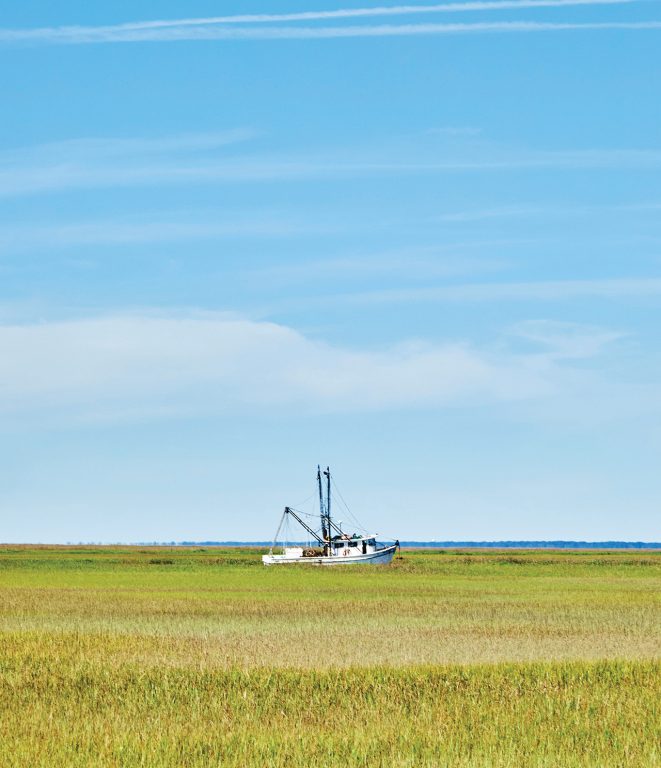
You’re Shrimply the Best
Buying imported seafood in coastal Georgia isn’t a criminal offense, but in certain social company be prepared to answer to a jury of your peers about where you source your shrimp. And when you can get fresh catch right off the dock, why settle for frozen bags from the supermarket? Here are four places to get your shellfish fix.
Written by COLLEEN ANN MCNALLY
BG’S SEAFOOD CO-OP
5 Old Tybee Road, U.S. Highway 80
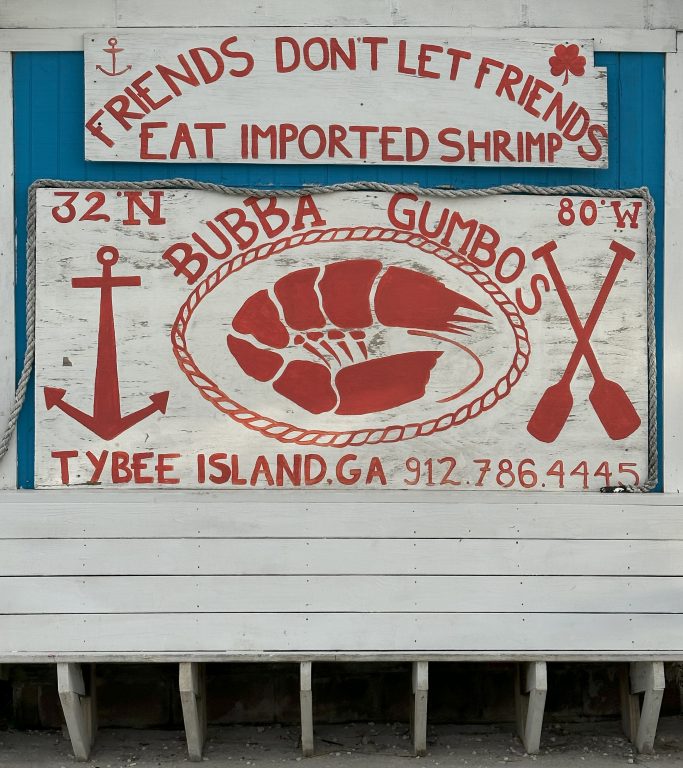
Just over the bridge to Tybee Island on Lazaretto Creek, Bubba Gumbo’s is tucked down a long gravel driveway. Head past the decades-old signs for Captain Derek’s Dolphin Adventures on your right and a boatyard on your left. When you see the large yellow smiley face with palm trees for eyes, you know you’re in the right place. Another sign, painted in bold red letters, reminds locals and visitors alike that “Friends Don’t Let Friends Eat Imported Shrimp.”
That message has been instilled in owner Caitlin Burns since childhood. “This marina has been in my family since 1997, and my parents had seafood restaurants on Tybee for my whole life,” says Burns, who owns and operates both the restaurant and BG’s Seafood Co-Op.
While the kitchen at Bubba Gumbo’s can do the cooking for you, the real hidden gem is the co-op. With views overlooking the tidal creek, the colorful seafood counter is stocked with a wide variety of fresh fish, including local flounder, mahi mahi, tuna, red snapper and, of course, shrimp. There are also some Northern Atlantic salmon and diver scallops and prepared foods on ice — familiar Southern fare like pimento cheese, gumbo and crab dip.
“We started the co-op about five years ago, shortly after the last seafood market, which was next door to us at Coco’s, closed down,” says Burns. “It was a no-brainer. Obviously the island needs a place to source fresh seafood, and we had the space and the ability, so we went for it.”
The provisions are sourced from shrimp boats off their dock, fishing charters that sell whatever their crew doesn’t keep, and distributors up and down the East Coast. “I don’t source anything from Alaska, because when a product like that has to fly over land, that is when they pump it full of all the preservatives,” she adds.
Burns recently bumped up staffing for the summer season so the co-op can stay open daily and “stocked to the gills” from noon to 6 p.m. (She suggests following the Facebook page or calling ahead to check availability.) This stability is a big win for an industry that has been navigating difficult waters in recent years, made more challenging by the pandemic and rising housing costs.
“Tybee has shifted to more support from visitors and tourists, as most of the housing is now vacation rentals,” Burns says. “There aren’t a lot of places left for locals to live, so we have to source employment from Savannah.”
And yet, she doesn’t shy away from the challenge. Rather, she feels it’s more important than ever to remind neighbors and tourists alike to choose local. (She even sells T-shirts to this effect.)
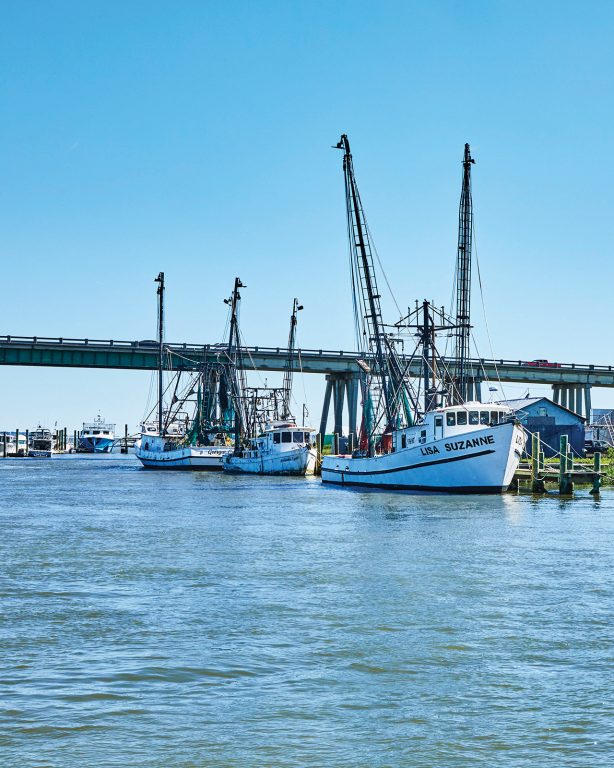
“I can tell you that as a kid, Lazaretto Creek was lined with dozens and dozens of shrimp boats. When you look at it now, there are probably 8 to 10,” she says. “That is because, sadly, a lot of places choose to save a buck — bringing in farmed shrimp from Ecuador or Thailand or wherever — over supporting the local fishermen and shrimpers that we have at our fingertips. That, in turn, is killing the shrimp industry.
“We still encourage other places to maybe turn back toward using the local shrimp and fish because it’s the best in the world,” she adds. “And there’s plenty of shrimp to go around.”
NELSON’S QUALITY SEAFOOD COMPANY (3516 Old Tybee Road)
Near Desposito’s along the Intracoastal Waterway, under the shadow of Highway 80, this place is the real deal. The structure has been around longer than most of us. Don’t be fooled if the parking lot appears to be deserted upon arrival. Look for the sign that reads “We’re open — and we’re awesome.” Within minutes, you are likely to see a steady stream of vehicles pull up, patrons popping out and stocking up on pounds of shrimp. Just inside, the goods are kept on ice in a cooler and sell for $12 per dozen. (Bring cash or a check. This place is card-free.) While the occasional post on their Facebook page alerts followers when a shipment is on ice, the extent of marketing for Nelson’s is pretty much word of mouth. If you know, you know. Families have been getting wild Georgia shrimp here for generations, and while the building itself may not have changed very much, the number of shrimp and fishing boats lining the dock has dwindled drastically — echoing what Burns is experiencing at Bubba Gumbo’s.
RUSSO’S SEAFOOD MARKET (201 E 40th St.)
Located by the train tracks a few blocks from Victory Drive, this family-owned Savannah staple is no frills but has plenty of charm. Charles J. Russo Sr. and Antoinette Russo first opened in 1946, becoming the city’s first seafood market offering cut-to-order fish. Seven decades later, the third generation keeps the business going strong.
ERICA DAVIS LOWCOUNTRY (3209 E. Victory Drive)
The granddaughter of the Russo clan, Erica Davis offers her own take on the family tradition at her Thunderbolt eatery and catering business. Rather than selling the raw products, guests can order Southern classic dishes like fried green tomatoes, barbecue shrimp, Lowcountry boil, crab cakes, fried fish, banana pudding and much more for dine-in or to-go.
Need More Island Time?
Don’t miss these roadside mainstays near the Bull River Bridge
SANDERS GIFTS & HOME ACCENTS (7908 U.S. 80 E.) Unfortunately, the best thing in this shop — a cat named Biscuit — isn’t for sale. Fortunately, they have just about anything else you can think of available for purchase.
FLYING FISH BAR & GRILL (7906 U.S. 80 E.) Take a page out of the late, great Jimmy Buffett’s playbook on Thursdays, when “The Fish” serves burgers and fries for under $10 and Landshark beers for $3. Or, ask the kitchen about their cook-what-you-catch charter fishing program.
FREEDOM BOAT CLUB (8020 U.S. 80 E.) Some people grow up on the water and learn the ropes — literally — of boating from a young age. For others who are new to coastal living, getting into boating can be intimidating, not to mention expensive — both in terms of time and money. That’s why Freedom Boat Club aims to take the fear and unaffordability out of the equation by making boating more accessible to more people. While certainly not a secret — Freedom Boat Club touts more than 400 locations across the globe, making it the world’s largest boat club — some may be surprised to learn that the Talahi Island location, based out of the Savannah Boathouse Marina, boasts one of the biggest and fastest-growing fleets. Members have access to top-notch vessels, like Boston Whalers, and unlimited training to stay safe and sound. Once aboard, crews can explore miles of the local waterways with less maintenance and more time for fun.
The Victorious Comeback of Desposito’s
A historic waterfront dive has new owners, a new menu and even new walls, floors and roof — but the same classic seafood recipes longtime Savannahians love
Written by ALEXANDRA MARVAR
THE FIVE-LANE BRIDGE that carries U.S. Highway 80 over the Wilmington River is a long, gentle arc. On the incline, all that’s visible through the windshield are pavement and sky. Cresting the apex, the monolithic beige box of Thunderbolt Marine appears on the southern horizon. The bright green marshes between the river and Grays Creek unfurl ahead. Tiny marsh crabs scurry around on the roadside. At the bottom of the incline, you touch earth again.
You could ride the momentum, keep cruising east, to Tybee. Or you could make that hairpin turn — it happens fast — and double back on ruddy, floody, forgotten-feeling roads between palmetto patches and boatyards, onto the Isle of Armstrong.
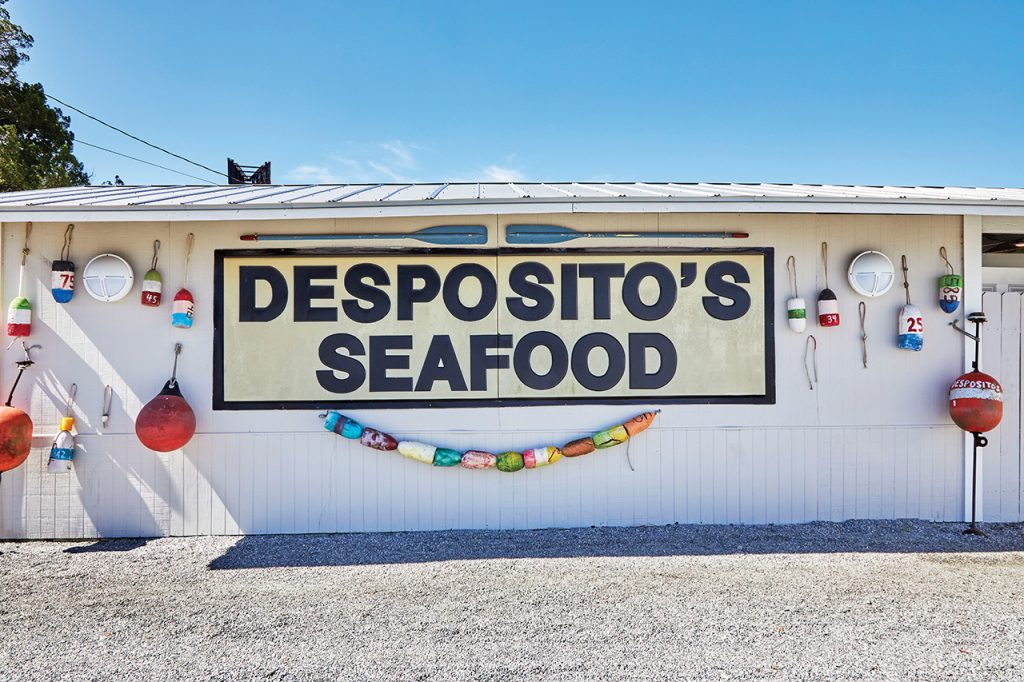
This is where you’ll find Desposito’s, which has held its soggy little patch of ground for decades. At once, it’s one of the oldest places in town and one of the newest — the 2024 winner of “Best New Restaurant” according to Connect Savannah (and “Best Seafood,” ousting The Crab Shack from its long reign). For Desposito’s, its storied history has been its saving grace.
The Wilmington River used to be lined with fish shacks like Desposito’s — where you could get local seafood freshly caught from the shrimpers, crabbers and fishermen pulling into Thunderbolt and in the olden days, even bring your catch and have it cooked for you. Now, those places are all but extinct. As of 2018, when then-owner David Boone was thinking of putting the place up for sale, Desposito’s was the last of its kind.
The tables were covered in old copies of the Savannah Morning News. Patrons picked apart boiled shrimp and deviled crab with their fingers, ate corn on the cob and drank Miller High Life at the long bar, lit by neon beer signs — same as they’d been doing for the past half-century. When Boone finally sold, stepping into his hard-earned retirement from the restaurant world, it was the end of an era.
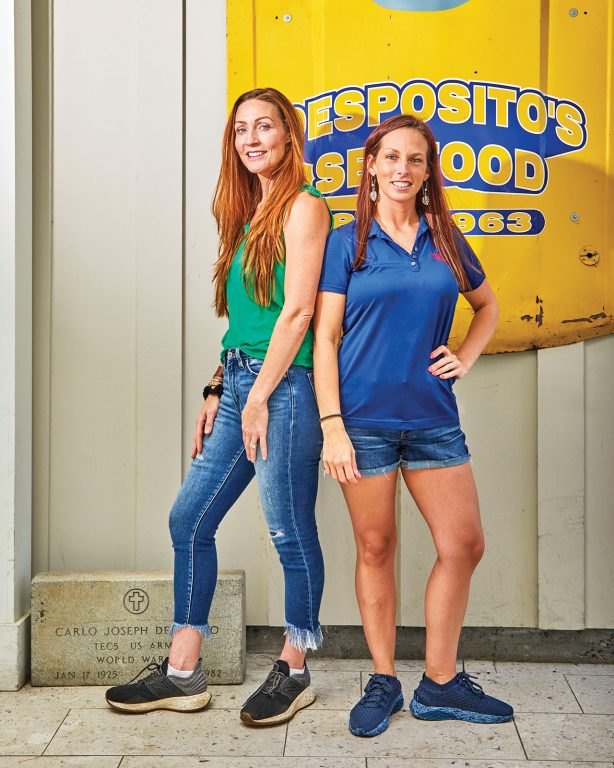
Enter Michelle Smith, who had been working for years in hospitality, for national brands like Hyatt and for local businesses like Leopold’s Ice Cream. She and Savannah developer Jeff Notrica were looking to partner on a restaurant project. For them, Boone’s timing was fortuitous.
“We were already looking for restaurant space — we were actually looking to develop a location close to Forsyth — and this one came up on the market,” Smith recalls. For these two history buffs, the long, sweet and sometimes salty Savannah story of Desposito’s seized their imaginations. They changed course. They went all in on the Isle of Armstrong.
Sure, this shack was in a scenic spot, and the structure needed a lot of work. But the pair wasn’t out to raze the past and build the future. They were excited about breathing new life into something old.
Their revamp of Desposito’s took longer than they’d expected. (The building needed more work than they could ever have guessed.) It opened after much anticipation in September 2023 in an expanded and fully refurbished building, with new walls, roofing, flooring and a new kitchen — not to mention the city’s largest outdoor bar. But fans of its earlier iteration will feel right at home.
They’ll see the same memorabilia on the walls, from Boone’s family photographs to neon beer signs to the mounted marlin hooked by a regular. They’ll even find the original staple menu items: the deviled crab, pasta salad, Lowcountry boil. Smith learned the recipes straight from Boone, who in turn had learned them from his mother, Walton, who took over the place from Carlo Desposito himself when he passed away in 1982.
Of course, that menu is now twice the size with new fixtures like shrimp scampi and crispy chicken sandwiches, not to mention more than two dozen wines by the glass and as many beers by the can, plus a list of festive cocktails fit for a summer on the water.
“I expected a little bit of pushback, just because we have changed so much,” Smith says. But honestly, the people that experienced it when they were a child, I think, are appreciative that somebody put some time, money and effort into the building.”
It may have been updated floorboard by floorboard, but it’s still a keeper of all the memories made there, from the 1930s onwards: of lunch after a beach day with parents, of young love. “I’ve had a ton of people that are probably late 80s, early 90s telling me that this is where their first date was,” she adds.
And for every newcomer discovering this fresher, brighter Desposito’s for the first time, there’s a lifelong patron revisiting those memories.
“Just last weekend we had someone celebrate their 102nd birthday party here,” Smith says. “It’s different than anywhere I’ve ever worked. You’re not normally seeing so many people from age 80 to 105 having their birthday at your restaurant. But that’s Desposito’s.”
Aloha Y’all
Popular surf instructor Hot Sushi keeps his kids’ camps rolling through August
Written by COLLEEN ANN MCNALLY
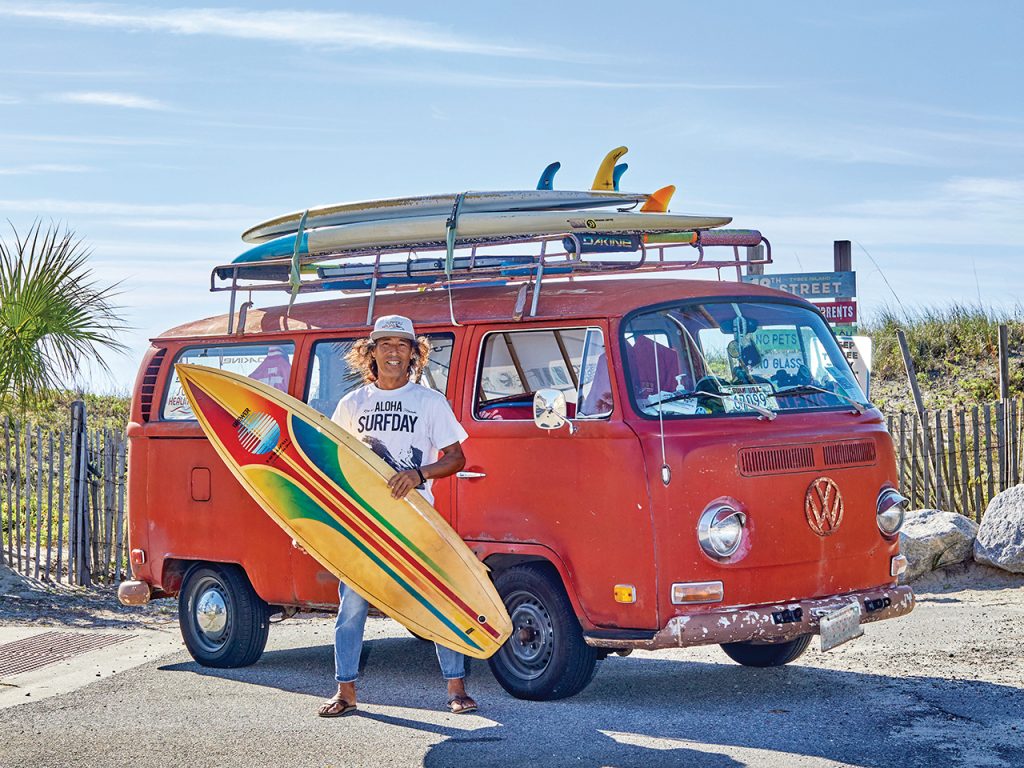
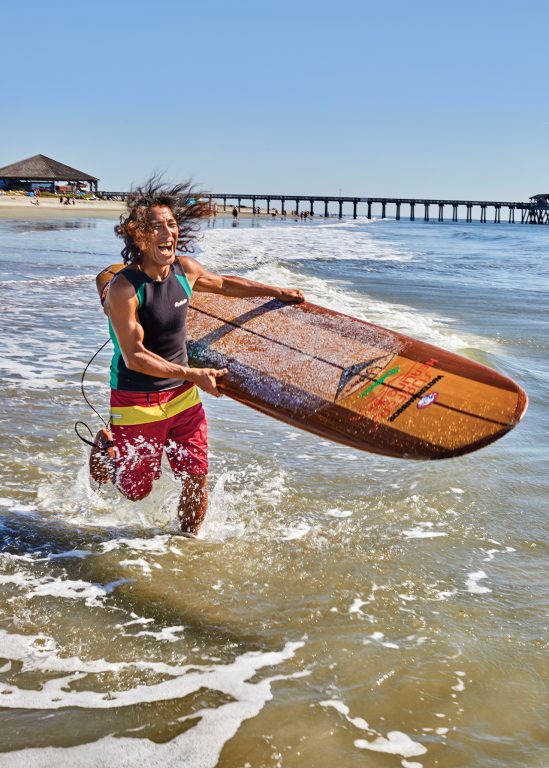
IT SEEMS ANYONE WHO KNOWS Yamada Atsushi — particularly those who’ve participated in his surf camp — breaks into a smile upon mention of his name. Perhaps that’s partly due to the silly nature of his nickname “Hot Sushi.” Or maybe it’s what he calls the Aloha spirit — something he picked up in his younger years, while living on the islands of Hawaii and Guam as a professional soccer player. (He is also a former competitive racing snow skier, making surfing his shortest career so far.)
In the Hawaiian language, Aloha is an expression with many meanings: love, compassion, mercy, peace, kindness and even gratitude. To Atsushi, it means “to love, to say thank you, to be respectful, to be humble, to share and much more.” At age 61, Atsushi not only can still catch a wave but is also coaching others on how to surf. “It does not matter how old you are. I really love to encourage our precious future generations to learn how to harmonize with the ocean water,” he says.
While he lives in midtown Savannah, he heads out to Tybee Island most mornings in the summer to lead camps for kids ages 5 to 15. Sessions are held weekly, Monday through Friday, from 9:30 a.m. to 12:30 p.m. from late May through early August. He also offers private lessons, available to book through his website (happy-surfing.info), with all equipment included.
Sushi moved to Savannah from Guam 22 years ago — “Wow, time flew,” he says. Not much slows him down, including a bite from a shark (what he calls “the big fish”) in the summer of 2021. Local artist Panhandle Slim has even immortalized the local legend on canvas, documenting Atsushi’s quote in response to returning to the water just two days after the attack: “It’s part of the deal; part of the sport we love. I can’t do this without going in the ocean.”
When Sushi is not on the water, he is on the turf coaching youth soccer or getting in a few drills for himself. “I do still play every Sunday as the second-oldest active player in the league,” he says. Otherwise, he is home, taking care of his four foster dogs. Aloha, indeed.
Honoring Black History
A year after launching virtually, Tybee MLK Human Rights Organization, Georgia Southern University and Tybee Island Historical Society together recently unveiled physical markers on the Tybee Island Black History Trail in an effort to respectfully recognize and remember a more inclusive island history. This free, digital resource is available online via ArcGIS StoryMaps and outlines 13 places of significance. Through collected oral history, the trail explores the legacy of enslaved people who arrived at the Lazaretto Creek Quarantine Station, efforts to desegregate Tybee Island’s beach during the Civil Rights Movement and the contributions of fishermen with strong Gullah-Geechee roots, seasonal and domestic workers and successful entrepreneurs. Hard copies of the map are also available at the Tybee Island Visitor Center (802 1st St.).
— Colleen Ann McNally

Will Also Brake for Turtles
Coastal Georgia is already well known for its sea turtles, and now, thanks to the dedicated efforts of local scientists, diamondback terrapin turtles are getting some much-deserved attention
Written by JOSEPHINE JOHNSON
SPRING’S SWEET BREEZES not only bring the return of birds, flowers and longer days, but as the earth warms, diamondback terrapins begin awakening from their winter slumbers. Every spring, these reptiles emerge from the mud of nearby tidal creeks to cruise the marshes in search of mates. After weeks of pitching woo in the shallows, the terrapin pairs go their separate ways.
While males stay behind, in early May females head to higher ground to prepare their nests. And that’s when marine biologist Dr. Kathryn Craven and Tybee Island Marine Science Center Executive Director Chantal Audran step in with their team of community volunteers, research scientists and governmental agencies to study and protect the elusive, yet resilient, diamondback terrapins along U.S. Highway 80.
When females lay their eggs, the habitat they need is often on the other side of the highway, requiring them to cross a deadly gauntlet of traffic. For nearly 20 years, Craven and Audran have worked to recover turtles from the road from May through early July. Sometimes, an injured female can be rehabilitated and released. Other times, only eggs can be retrieved and incubated, and, eventually, baby turtles are set free. Although not listed as endangered, in Georgia, the diamondback terrapin is considered a species of concern, and each one recovered from the highway holds important scientific clues for the conservation of the species.
“There was no study, no baseline data for diamondback terrapins when we began in 2005,” recalls Craven, who is also a professor in the biology department at Georgia Southern University. “So, we never knew how many there were to start with. Now, the more we know, the more we can share. Our data [tracks] the mortality numbers, which help in finding strategies to manage causes of death. Whatever threatens these terrapins will threaten the coastal environment. They are an important indicator species, and a loss of them would alter the coast in a profound way.”
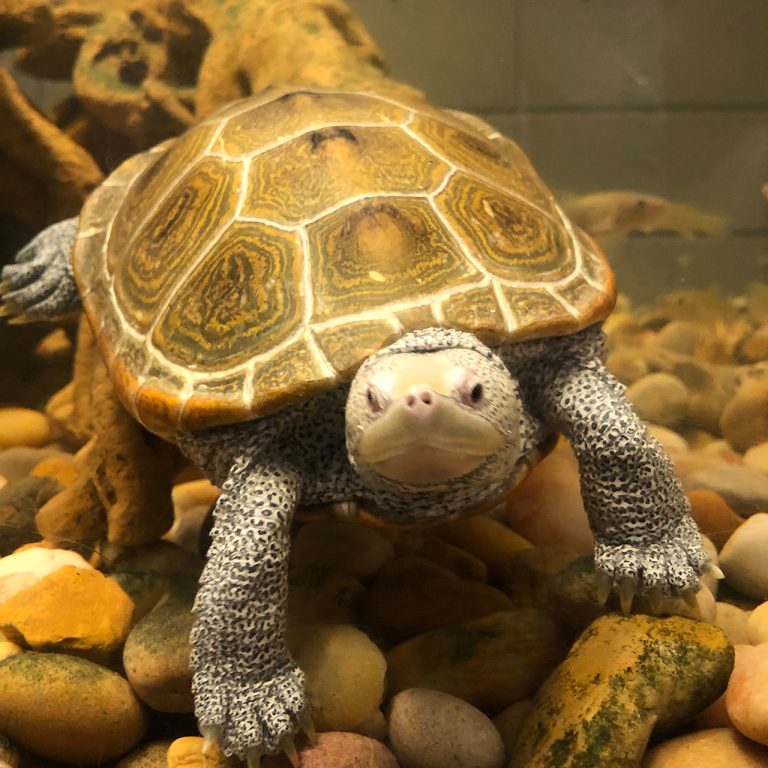
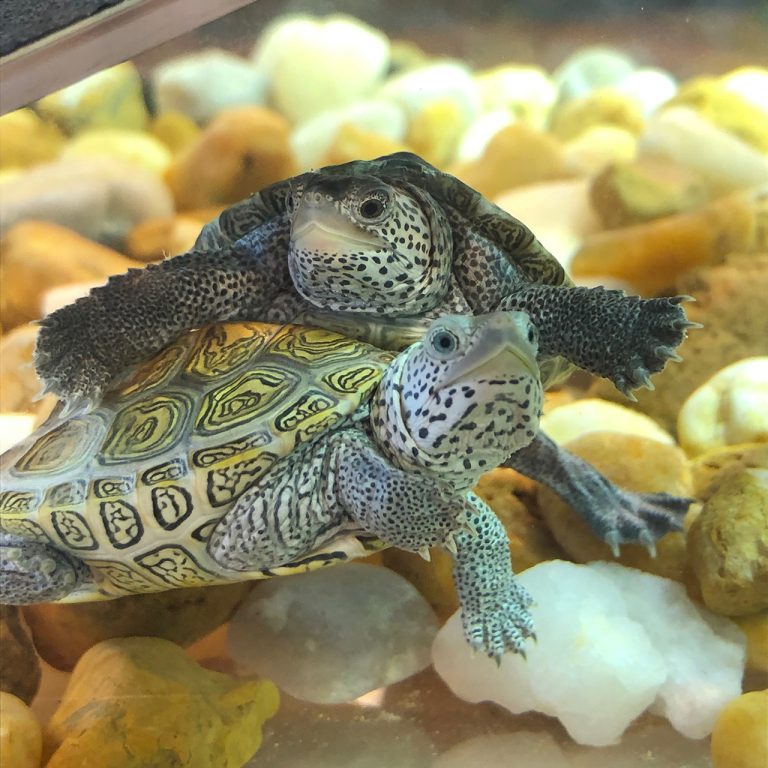
Specifically adapted to survive in a narrow range of conditions, diamondback terrapins live in a ribbon of habitat that extends from Cape Cod, Massachusetts, around the tip of Florida, and along the Gulf Coast to Corpus Christi, Texas. These turtles never venture into the ocean. And they never stray into freshwater. Their only home is the brackish coastal marsh — regions that in recent years have experienced extreme growth with the construction of roads, vacation homes and high-rise hotels. Habitat loss and climate change are the primary drivers threatening diamondback terrapins.
“2023 was the worst,” Audran says. “We collected 256 dead terrapins on the road between the McQueen’s Island Trail and Lazaretto Creek Boat Ramp, and half of those were females. Since we started this study, the mortality rates have risen almost exponentially. This data is crucial because we use it to validate turtle crossing hotspots on Highway 80 and then work with the Georgia Department of Transportation to manage and reduce mortality.”
WATCH FOR TURTLES: Be vigilant and mindful when traveling to and from Tybee Island. If you see an injured turtle on the road, report it to the Tybee Island Marine Science Center at 912-786-5917.
Some management solutions include constructing roadside barriers at points where most fatalities occur and then funneling the terrapins to cross at other places. Craven and Audran, though, point out that this would likely shift vehicle strikes to a different section of the highway. Another possibility entails retrofitting the road with terrapin tunnels so that they can pass beneath traffic. They say the best-case scenario, and most expensive, would be to rebuild and elevate the causeway entirely off the marsh. In the meantime, Craven and Audran are staying focused on educating the community about the importance of diamondback terrapin conservation.
“Working with the terrapins was an unexpected challenge,” Craven says. “They taught me about the resilience it takes to fight for what is necessary to live. They need a place to nest, and they are going to continue to try to find it. And we are going to take a page from their book. We are going to fight to keep Tybee Island safe from climate change, fight to keep them safe from the road, fight to conserve their dwindling habitat, and do our best to increase their population levels in Coastal Georgia.”
The Trail Less Traveled
Did you know that in the late 1880s, a railroad commuted passengers between Savannah and Tybee before a highway was built in 1923?
Built on a 6-mile stretch of what was once the Savannah & Atlantic Railroad line, the McQueen’s Island Trail runs along the South Channel of the Savannah River. If you’re lucky, you may see dolphins or cargo ships pass by as you walk along the saltwater marshes, cord grass, cabbage palms, yaupon holly and coastal cedars.
Today, the scenic path is maintained by Chatham County Parks & Recreation and, while open to all ages, isn’t for the faint of heart. Visitors may spot wildlife, including the eastern box turtle, American alligator, diamondback terrapin, bobcat, osprey, red-tailed hawk and brown pelican.
To access the trailhead, look for the sign for Fort Pulaski National Monument. Parking is available along the road or at the fort, which provides more historical context about the region, particularly its role during the Civil War. To reach the western trailhead, follow the directions above, but continue a few miles along U.S. 80 to a small roadside parking area just before the turnoff for Fort Pulaski. Before heading out, check the weather and call ahead to 912-652-6780 to check accessibility conditions.
— Colleen Ann McNally
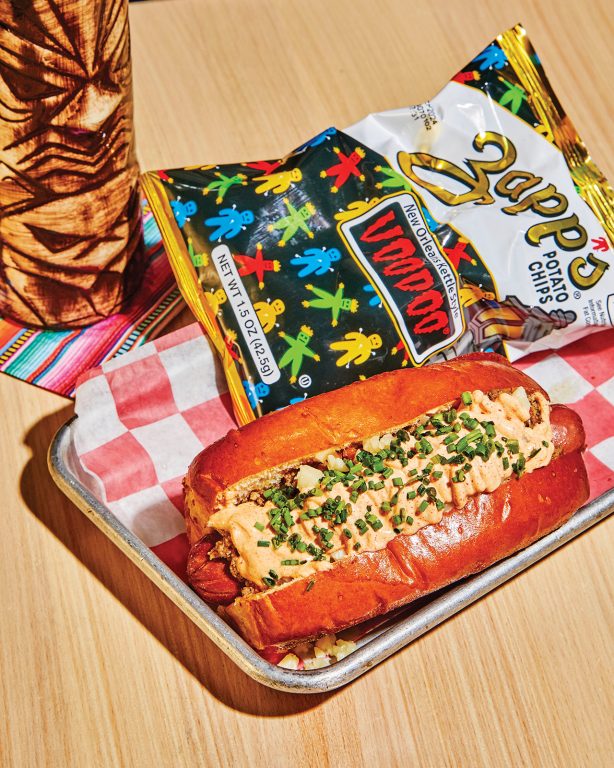
Sea Wolf’s Glizzy Dog
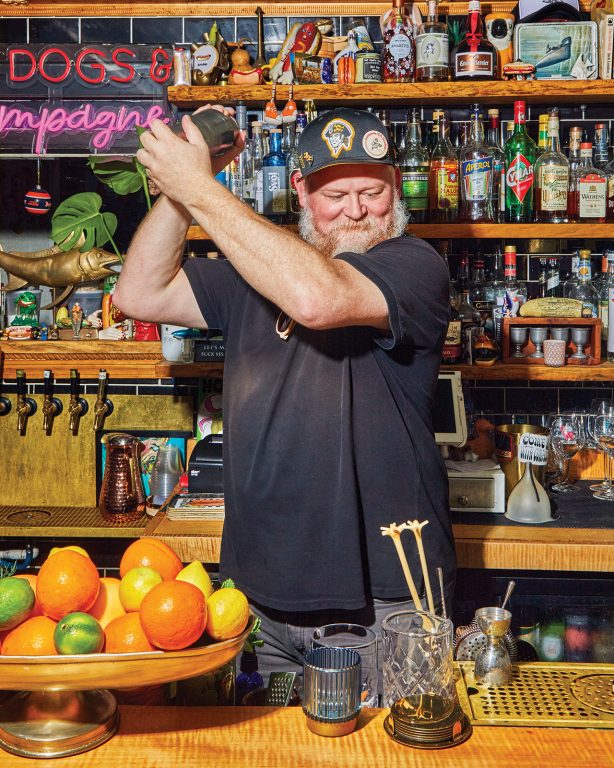
Sea Wolf owner Andrew Jay Ripley
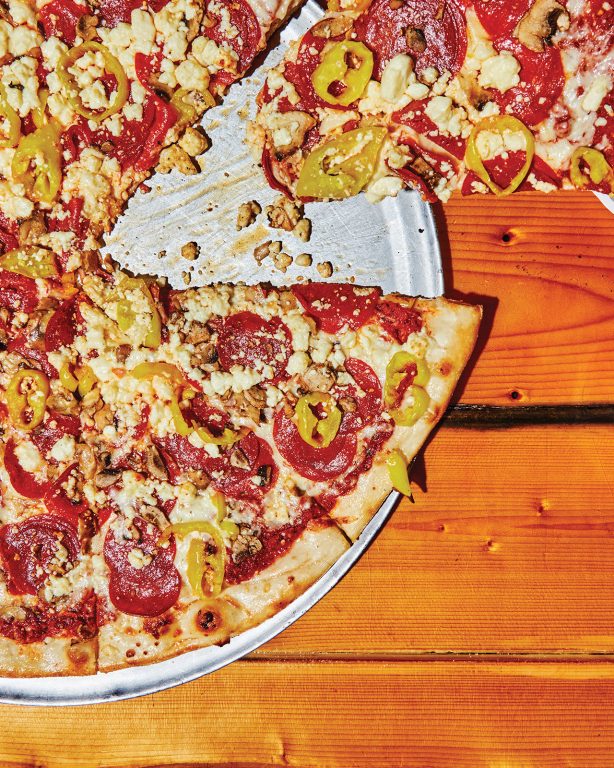
Huc-a-poo’s Team Banana pizza
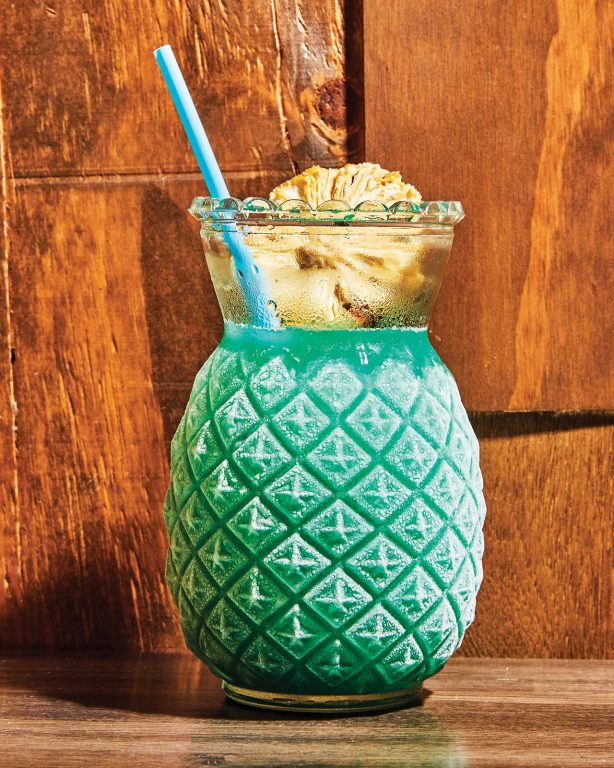
Desposito’s Blue Crab cocktail
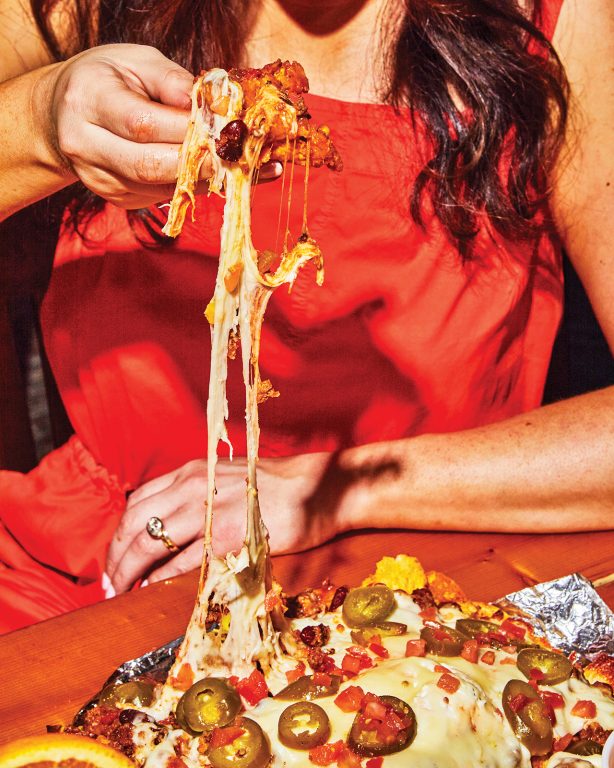
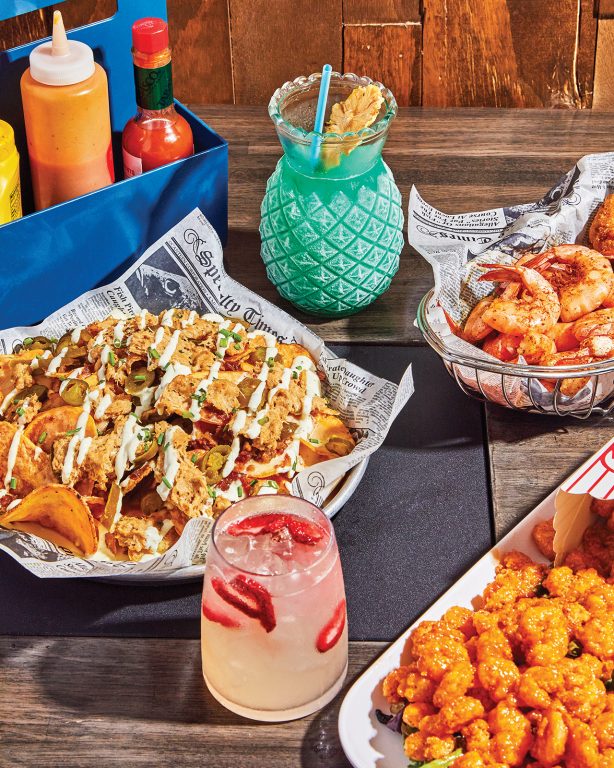
Huc-a-poo’s Knucklehead Nachos
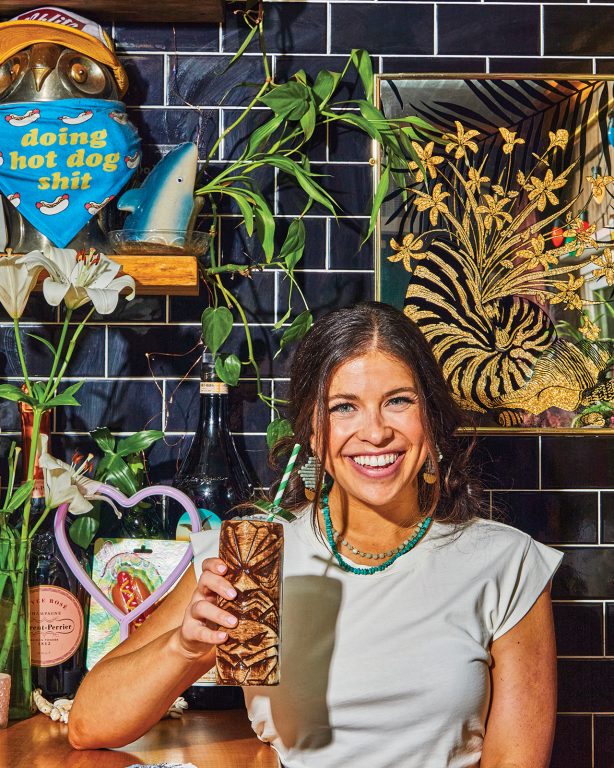
Skye Estroff at Sea Wolf
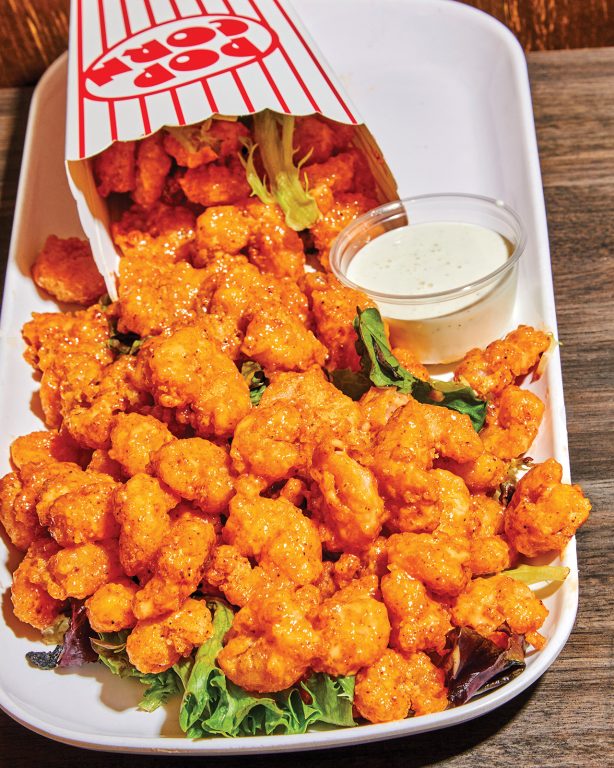
Desposito’s Popcorn Shrimp
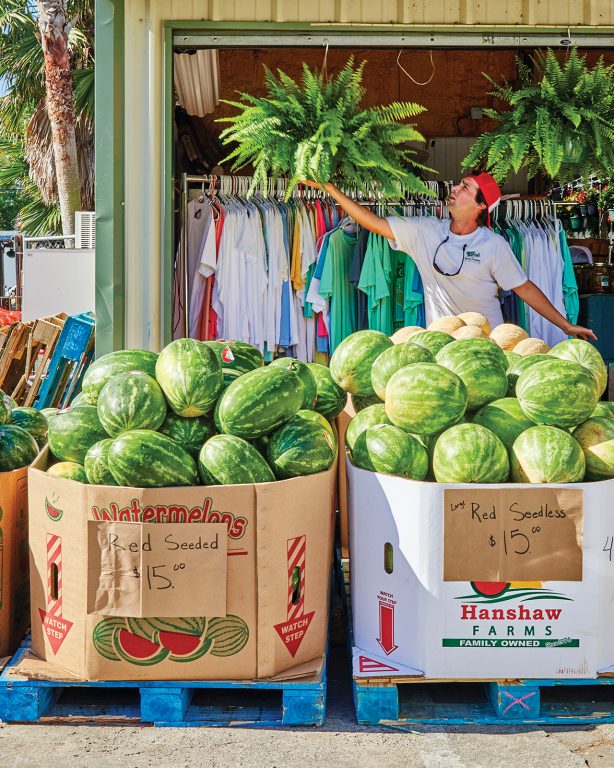
Watermelons at Davis Produce