


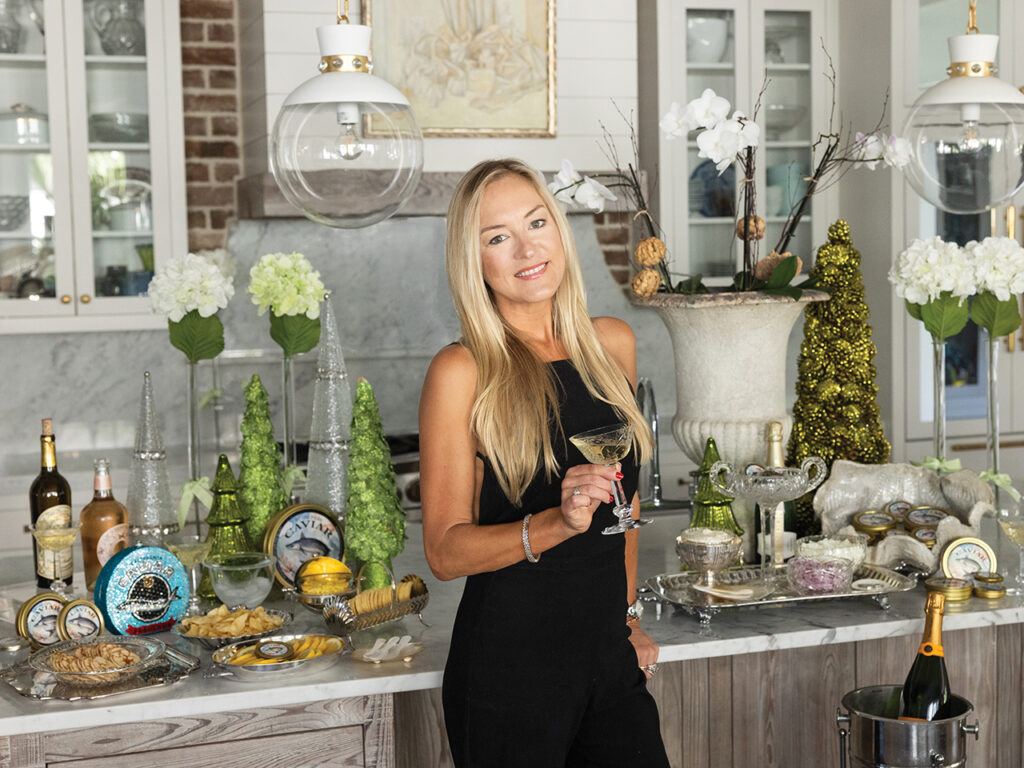
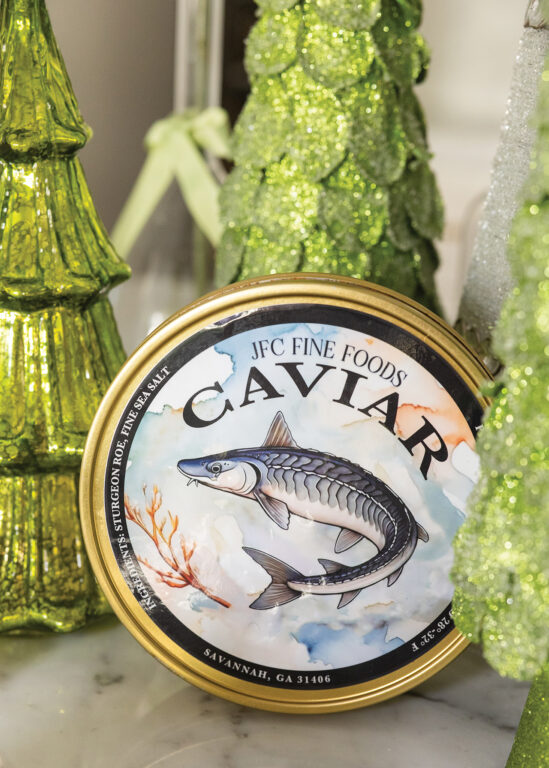
Jordan Peagler, owner of luxury food purveyor JFC Fine Foods, deals in the elite and undeniably sexy world of caviar.
Written by ALLISON ARBUTHNOT SANDERS
Photography by KATHERINE IVES
HAVING EARNED HERSELF the cheeky nickname of “The Caviar Dealer,” Savannah native Jordan Peagler sells caviar and related accoutrements to stores, restaurants, and private chefs. She also works through event partnerships, bringing the luxurious delicacy to a wide range of special occasions, from music festivals to intimate private events. But her real passion isn’t in the eating; it’s in the educating. Here, Peagler shares how she landed in this exclusive business and her favorite ways to — as she says — “elevate your vices.”
On Her Passion for Roe
My career began in the music and film industry, but I quickly realized that what I truly loved was food and hospitality. That passion took me to sea, where I worked as a superyacht chef. From there, I transitioned into luxury food provisioning. Along the way, I became obsessed with sourcing ingredients that weren’t just exceptional, but also responsibly produced. Caviar, in particular, captivated me. I appreciated caviar, but I was raised on Isle of Hope, where I knew blue crab, shrimp, oysters, and “redneck caviar,” better known as boiled peanuts. Let’s just say I entered this industry with a GED in sturgeon and came out with a doctorate. What began as “sell, sell, sell” shifted once I discovered the dark side of the industry — the lack of transparency, sustainability, and education. That’s what fueled my devotion to doing things differently.
On Her Nickname
The nickname actually started with my best friend, Annie. I was in Aspen on my inaugural “caviar ski tour.” Annie introduced me to a restaurateur friend, and she casually called me her caviar dealer, and it stuck; it’s come to define my brand. In caviar, everyone seems to have “a guy” or “a deal,” but so much of what’s out there is unregulated, unsustainable, or just plain bad, similar to the way counterfeit handbags flood the market. If I’m going to be “The Caviar Dealer,” then I’m going to be the dealer of the best while educating people on what true luxury caviar really is.
On How Caviar Became Synonymous with Luxury
Caviar started as a humble food in Persia but eventually became the delicacy of tsars, European royalty, and British aristocracy. By the 19th century, it was firmly established as “the king’s food,” and during America’s Gilded Age, it flowed through New York hotels and champagne bars, cementing its role as a marker of wealth and indulgence. As for the price, it comes down to rarity and responsibility. Sturgeon take years to mature, and many species are now endangered from centuries of overfishing and habitat loss. Almost all legal caviar today comes from aquaculture. But finding farms that are truly sustainable is more of a feat. It can take nearly a decade of patience, care, and expertise before roe is ready, and the malossol method of preparation requires incredible precision to preserve its purity and taste. (The malossol method is a traditional caviar curing technique that uses a low salt content to preserve the roe while enhancing its natural flavors and textures.)
On Elevating Vices Like Wine, Fashion, and Caviar
I don’t see “vice” as a flaw. To me, it’s the things we allow ourselves to savor, those luxuries that make life feel a little more elevated. Caviar is certainly a vice in that sense: rare, indulgent, not something most people eat every day. But it’s also brimming with omega-3s, vitamins, and minerals.
On the Caviar “Bump”
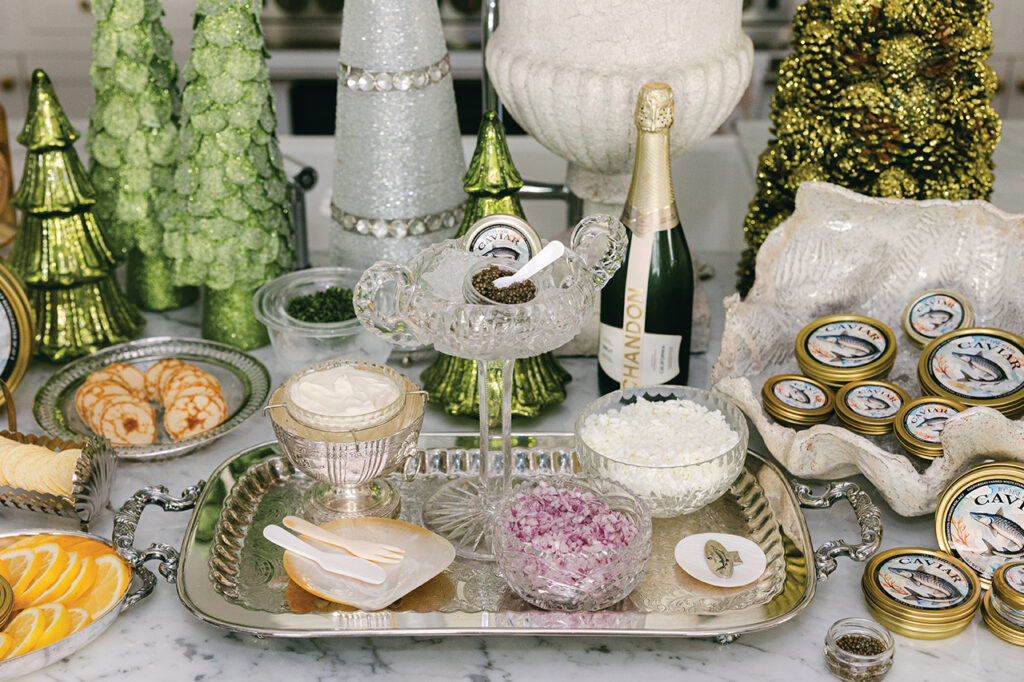
Merchants in the 1800s would taste caviar off the back of their hand (a “bump”) to bring the roe to its ideal temperature and judge its quality. Royalty and aristocracy adopted the ritual during the Russian Empire’s golden age of caviar production, turning it into a refined tradition. There’s science behind it; when caviar warms ever so slightly against the skin, the pearls release their full aroma and flavor. It prevents oxidation, too, since traditional silver spoons could react with the salt and alter the taste. That’s why mother-of-pearl, horn, or bone spoons became the classic tools of choice.
How to Best Enjoy Caviar
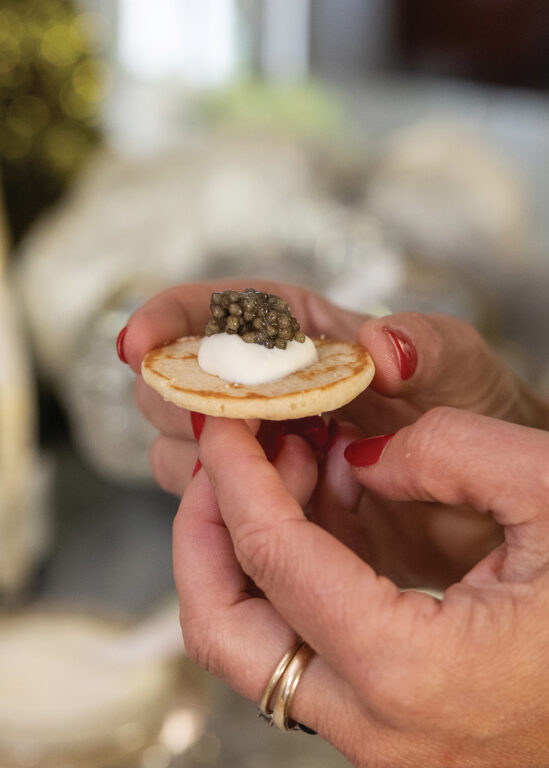
Traditionally, caviar is paired with blinis, toast points, crème fraîche, hard-boiled eggs (yolks and whites separated), minced shallots or red onion, and chives. Personally, I prefer to use my homemade potato chips or latkes; they give the perfect crunch without competing with the caviar. For me, the bump will always be my favorite. It’s playful, it’s intimate, and it strips away the distractions so the caviar can shine exactly as it should.

On Types of Caviar
True caviar only comes from sturgeon. Salmon, trout, or paddlefish roe might be delicious, but that’s costume jewelry. The real gems will always be sturgeon. There are many types, and the differences all come down to the species of sturgeon. Each one has its own look, flavor, and price tag.
On Why Sustainability Matters
Sturgeon are some of the oldest fish on the planet and sadly some of the most endangered because of overfishing, poaching, and habitat loss. While nearly all legal caviar today comes from farms, not every farm operates sustainably. Unsustainable practices like pulling broodstock from the wild, cutting corners on water quality, or mislabeling species put pressure on these fish and undermine the industry. At JFC, we primarily source from farms using the no-kill harvest — or “milking” — method. With this process, the roe is gently milked from the fish directly into the tin or jar and sealed, so it’s never exposed to air until the customer opens it. By contrast, traditional kill harvest caviar is first packed into large tins and later opened and repacked into smaller jars or tins for sale. That extra step exposes the eggs to oxygen, which dramatically shortens the shelf life. The difference is huge: no-kill caviar has a four-month shelf life unopened and seven to 10 days once opened, compared to four to six weeks unopened and just one to two days once opened for traditional caviar. For someone new to caviar, that makes it a lot less intimidating to invest in a jar. For me, that’s what sustainability looks like — not just protecting the future of these incredible fish, but also creating a product that’s fresher and more accessible. Caviar should be indulgent, yes, but also responsible, traceable, and unforgettable.