




Some of our city’s beverage experts give their tips on how to go beyond rosé this summer.
Written by Mary Cornetta
When temperatures rise, you likely reach for your favorite bottle of rosé out of habit. The pretty pink wine has long been seen as the unofficial drink of summer, but according to Savannah’s top wine professionals, it’s not the only option you can uncork to cool down.
From coastal whites to chillable reds, warm-weather wines are defined less by color and more by how they feel: refreshing, balanced, and easy to drink in the Southern heat. “For warmer weather, you want something light bodied with great acidity and lower alcohol,” explains Bridget Michalski, managing partner and owner of Savannah Wine Cellar. “The last thing you want is something heavy or high alcohol that makes you feel hotter.”
Libby Burk, general manager and wine director at Common Thread, agrees, pointing to the same characteristics. “Acidity is important because it creates a refreshing, mouthwatering feeling,” she says. “High-alcohol and fuller-bodied wines can cause quicker dehydration in the heat.”

Photo courtesy Common Thread
Most rosés fit the criteria, which is why it’s a popular choice this time of year. However, if you’re looking for something different this season, the possibilities are broader — and more exciting — than you might think. “I personally love high-acid, mineral-driven white wines and chilled reds in the warmer months,” says Burk. “I gravitate toward wines grown in coastal areas because they pair so well with our local food, so think albariño, Txakolina, and Sicilian wines.” Michalski sees that same trend: “The coastal influence on the grapes can create wines with freshness and salty minerality.”
Meanwhile, Husk sommelier and front-of-house manager Shannon LaDawn encourages drinkers to explore beyond traditional whites altogether by trying sparkling wines, pét-nats, or orange wines instead. She points to specific bottles that deliver both complexity and refreshment, such as Bonny Doon’s Le Cigare Orange.
“It has a lot of stone fruit, apricot, good acid, and just a touch of grippy tannin from the skin contact that makes the wine interesting and refreshing during the warm months,” she says. She suggests that Bodegas Parra Jimenez’s Gulp Hablo Orange “is awesome and super fun.”
What ties these recommendations together isn’t a single trait but rather a shared set of qualities: brightness, balance, and a sense of simplicity.
Perhaps the biggest departure from traditional summer drinking is the rise of chilled red wines, a category that all three experts passionately support. Referring to the tasting machines at Savannah Wine Cellar, Michalski explains that one of the eight is dedicated exclusively to chilled reds. “We call them chillable, killable reds,” she says. “These are lighter-bodied, crunchy reds and darker than a rosé but meant to be served chilled.”
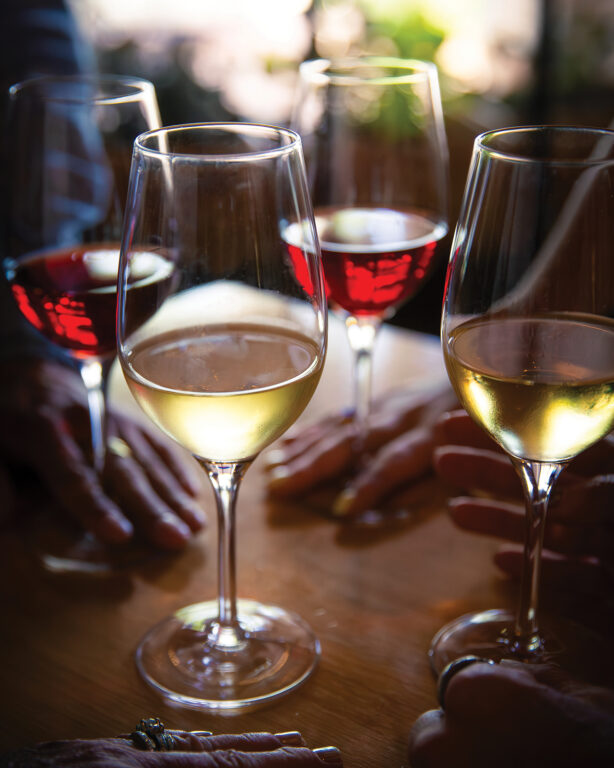
Burk offers her own lineup of go-to red varieties, including trousseau, cabernet franc, gamay, and nerello mascalese. “These are all fantastic with a chill,” she says. LaDawn also highlights a few standout bottles, such as Gönc Winery’s blaufränkisch Sabotage. “It has plenty of blue and red fruit but has a light texture and is absolutely perfect to serve with lighter dishes on a hot day,” LaDawn says. She also highlights Podere Giardino’s Suoli Cataldi, a dry lambrusco: “It has a lot of deep fruit notes, but the bubbles break that texture up and make it very versatile for food.”
LaDawn suggests picking up anything with carbonic maceration, which gives red wine a fresh, fruity, low-tannin profile.
For Michalski, these wines aren’t simply a pleasant alternative to rosé; they’re an unexpected enhancement to your summer barbecue. “A chilled red is great with anything off the grill and doesn’t weigh down you or your palate,” she says.
Of course, warm-weather wines aren’t just about sipping; they’re also about pairing with the foods of the season. Michalski explains they’re versatile and can complement anything from seafood
to barbecue, with Burk noting a few of her favorites: “Tybee Island Salt Bomb oysters, Lowcountry boil, fried chicken, grilled veggies — the list goes on!” LaDawn agrees that fried chicken pairs well with all warm-weather wines and notes that calamari and tinned fish go well with high-acid coastal whites.
Beyond general styles, each wine pro points to lesser-known grape varieties that shine in warmer weather. “Chenin blanc, xarel-lo, and trousseau are some of my favorite grape varieties, yet they are wildly underrepresented on wine lists and in retail shops,” says Burk.
LaDawn highlights a grape that perfectly captures summer’s easygoing appeal. “Hondarrabi zuri is the main grape variety in the Basque Txakolina wine from Spain, and it is delicious,” she says. “Bright acid, little fizz, lower alcohol, and lots of fruit character without being sweet.”

Photo by Jamie Prescott//Courtesy Savannah Wine Cellar
Even Michalski’s personal favorites reflect this same profile of freshness and versatility. “I love a really crisp white with great acid,” she says. “I always have a chilled bottle of albariño ready. And for reds, a light, fresh gamay is my go-to.”
Note that serving temperature plays a crucial role in how these wines perform, especially in the heat. “One thing we often see is red wines being served too warm, even in colder months,” says Michalski. “Room temperature is generally too warm, even for full-bodied reds, as this makes the alcohol more pronounced.”
Her advice is to serve reds at 55 to 60 degrees Fahrenheit. “If you don’t have a wine fridge, pop it in your refrigerator for 20 to 25 minutes to bring the temp down,” Michalski says. “The lighter the body for reds, the more chill it can have, so they are perfect to have in your fridge or pop in your cooler!”
While LaDawn acknowledges that warmer weather naturally causes wines to heat up more quickly, she emphasizes that serving temperatures exist for a reason, and adjusting them too much can compromise the wine’s integrity. “I don’t personally feel that we need to change our serving temperatures for wines throughout the year,” she explains.
At the end of the day, warm-weather wine is less about playing by the rules and more about drinking what you enjoy. And though rosé isn’t the only libation you can pour when it heats up, even the experts agree there’s still a place for it.
“I will always be a rosé girlie, and I refuse to believe that rosé is dead,” says LaDawn. “For the most part, rosés are a safe bet, especially in restaurants.” She suggests opting for dry rosés with low residual sugar to keep a headache at bay.
And, as Michalski puts it, summer wine should feel right for the moment, so no matter what you reach for this season, make it “something thirst quenching and refreshing.”