




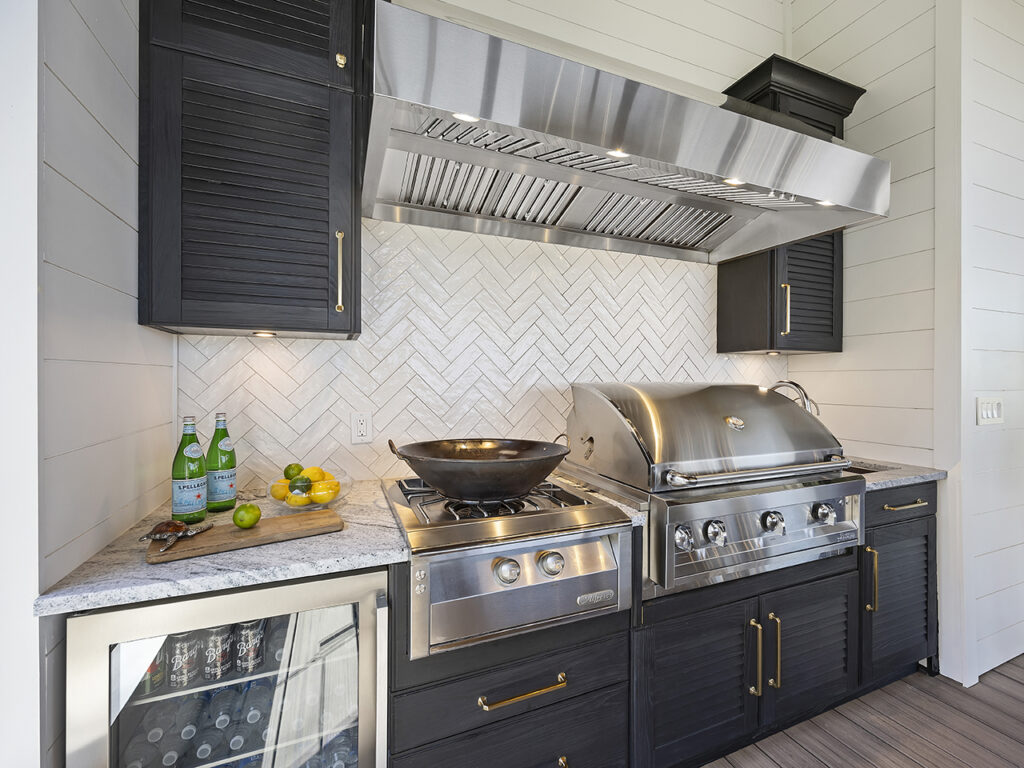
If you want your summer to be filled with al fresco entertaining, you better get cracking on your backyard bistro now.
Written by Leanna Gioia
Savannah springs can be temperamental: one week it’s pleasantly warm, the next there is a cold snap, and then suddenly it’s so hot you’re sweating through your shirt. But no matter what the weather is throwing at us, spring is the time to start planning an outdoor kitchen.
Begin by thinking about how you use the space day to day rather than immediately focusing on a shopping list.
“We always start with lifestyle and environment,” says Joe Gallo, owner of Broad Street Interiors, a Best of Savannah HOMES winner for Best Outdoor Furniture Store. “Is the space fully exposed, or is it screened or covered? What are the exact dimensions? [Is the homeowner] living here year-round or seasonally?” Gallo recommends thinking in zones so everything works together instead of competing for space. “Outdoor spaces work best when they’re designed with intention, not just filled with furniture,” he says.
Once you know how you want the space to function, bring in a designer early — earlier than most people think. Timing is everything, says Mark Palmer, founder and CEO of Kitchen Design Solutions, runner-up for Best Kitchen Design Company. “Ideally, homeowners bring us in right when they start thinking about the design and layout,” he says.
Palmer explains how the work typically divides up when designing your dream outdoor kitchen: “We provide designs and provide and install the cabinetry. We also coordinate with other vendors to ensure a seamless overall plan, but the contractor typically handles construction, utilities, and installation of appliances and countertops.”
Palmer says a common pitfall people make is overbuilding. Just as indoor cooking requires elbow room, an outdoor kitchen needs breathing room too. “One of the biggest mistakes is not understanding how much can realistically fit within the space,” he says.
When starting a project, “We start with overall dimensions and photos of the space,” says Palmer. “From there, we need [measurements of] door openings, window locations and sizes, distances from windows to corners, and the locations of electrical and plumbing fixtures.” Having that information at hand can prevent expensive surprises later, like realizing a door swing blocks a grill hood or that the vision you initially had doesn’t have a clear pathway for plumbing.
Shade Isn’t Optional
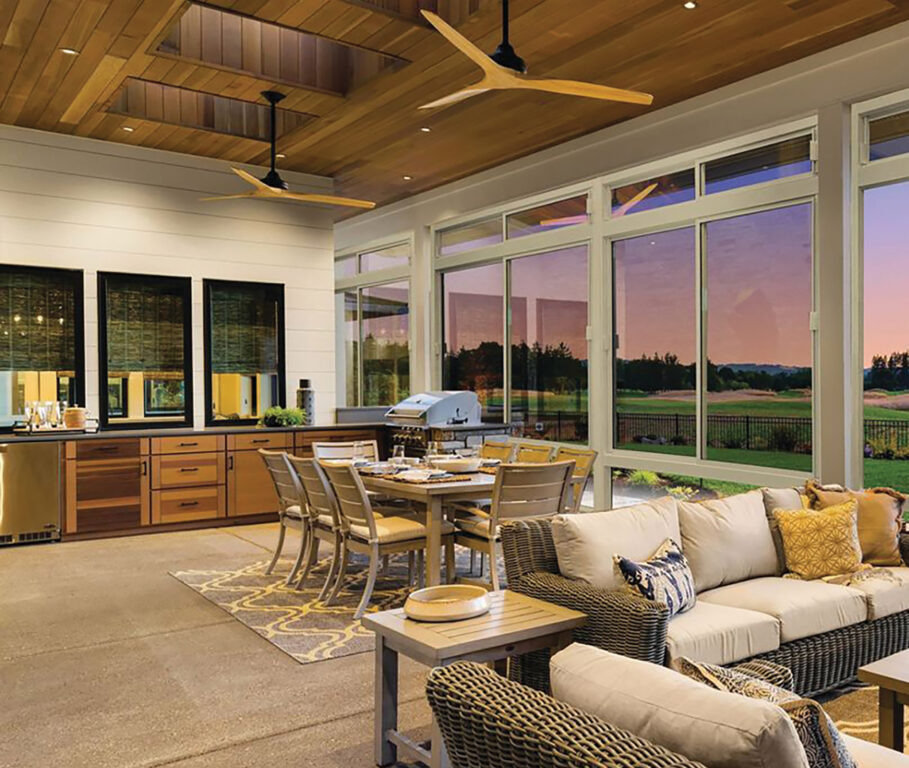
And then there’s the factor Savannah homeowners often learn the hard way: shade isn’t optional. Andrew Barber, who alongside his wife, Ellen, runs Coastal Canvas Products (winner for Best Outdoor Shade/Awnings), says coverage should be part of planning from the very beginning. “Shade influences far more than comfort,” he says. “It shapes proportion, sightlines, ventilation, lighting, and even how a gathering unfolds at sunset.” When shade is considered early, he adds, “the result feels cohesive — as though it has always belonged to the home.”
That’s especially important here, where the climate can be a design constraint. “Savannah offers remarkable beauty — and demanding conditions,” Barber says. “Between intense UV exposure, high humidity, salt air, sudden summer storms, heavy pollen seasons, and insects, outdoor structures must be designed with intention.” The takeaway: If you’re building an outdoor kitchen without thinking about overhead protection, airflow, and the sun’s path, you’re designing a space you won’t want to use.
Materials Matter … A Lot
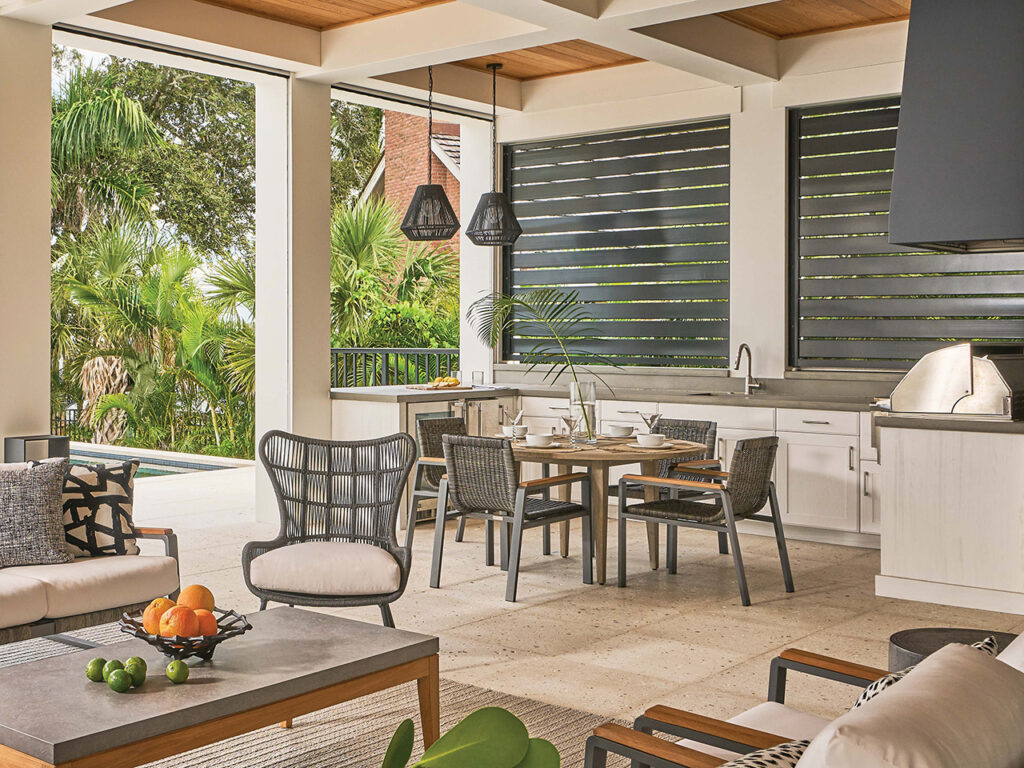
Palmer points to the coastal reality: “Outdoor spaces require marine-grade cabinetry, appliances, and stainless-steel hardware that can withstand the elements.” He’s direct about what doesn’t belong outside: “We do not recommend natural wood outdoors.” For cabinetry, he says Kitchen Design Solutions uses NatureKast, which is made from a durable resin material designed to stand up to moisture, heat, and coastal conditions.
On the furniture side, Gallo says the climate dictates smart material choices too. “Savannah’s climate is beautiful but unforgiving,” he says. “We’re big fans of high-quality, low-maintenance materials like poly wood and powder-coated aluminum.” Gallo is also clear about where people should splurge within their budget process. “Invest in the pieces that get the most use, which is typically the cushions,” he says. “Quality upholstery makes all the difference in both comfort and longevity.”
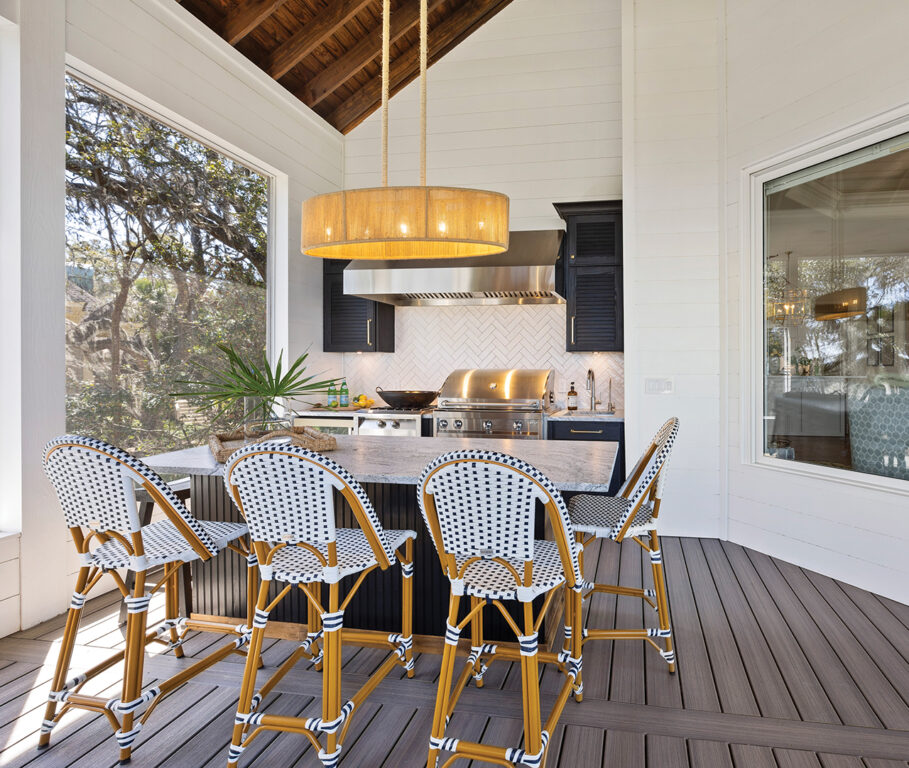
To make an outdoor kitchen feel luxurious without spiraling into stress-inducing spending territory, Palmer says to focus on features that enhance the experience. “A bar seating area always elevates the space,” he says. “Adding a TV for entertainment, a quality grill with a hood, and a cleanup sink creates a high-end feel.” He calls out the essentials he recommends most: a grill, sink, bar fridge, and ice maker. And right now, gathering-focused designs are trending. “We are seeing more raised seating areas with bar tops that allow guests to gather while someone is grilling,” Palmer says.
Timing Is Everything
Finally, start yesterday because lead times are real, and spring vanishes fast. Palmer breaks down a general timeline: “Design typically takes a couple of weeks, especially if revisions are involved. Product lead times average about six weeks. Installation of cabinetry usually takes a few days, with additional time needed for countertops, appliances, and overall construction, depending on the scope of the project.” Gallo agrees that waiting can cost you options.
The common thread from all three pros is timing. If you want to host comfortably this summer, plan now while there’s still time to design, order, build, and install. Nail the bones early, and the rest of your summer can look the way it’s supposed to — with the space working with you, not against you. As Gallo says, “The goal is simple: Your outdoor space should feel as considered, comfortable, and beautiful as your living room — just with better weather and a breeze.”