

Acquiring a spacious rural property allowed this couple to pursue their passion for rescuing at-risk animals.
Written by MARY CORNETTA
Photographed by JOHN ALEXANDER
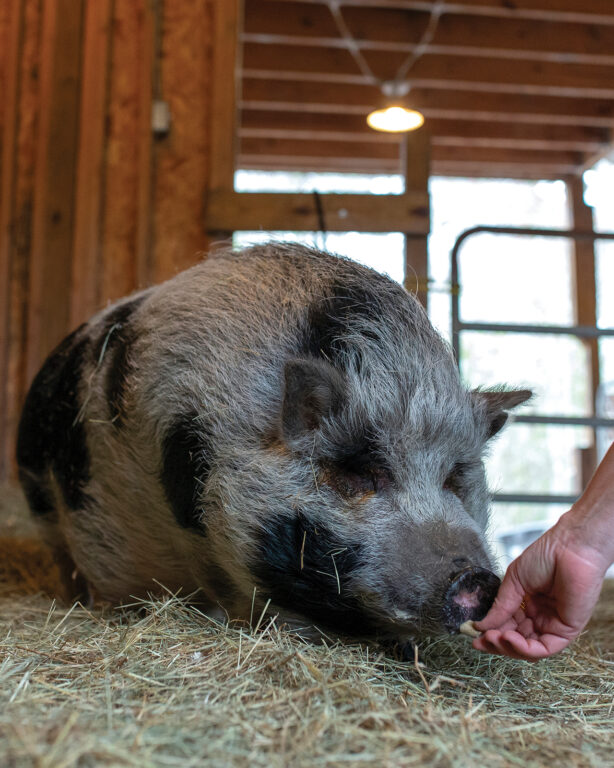
IT ALL STARTED WITH THE FOSTER DOGS. Then came the chickens and finally, Petunia the pig. Pam and Susan Peterson hadn’t set out to establish an animal sanctuary in Midtown Savannah, but that’s precisely what happened on the 9,000-square-foot lot of their property. Per city ordinances, Savannah residents are permitted to have a pig so long as it’s under a certain size. One chicken per 1,000 square feet is also allowed. The couple abided by the law, but still, they felt concern over their rapidly expanding menagerie. “I was constantly worried,” Pam recalls. “Are the chickens too loud when they’re squawking? Are the dogs barking too much?” Sue adds, “We didn’t want to be bad neighbors.”
The couple did their best to win over those around them by handing out fresh eggs, and they were never the subject of complaints. But, ultimately, they knew they were outgrowing the space. As an associate broker and top producer at Seabolt Real Estate, Pam has deep roots in the local real estate market and kept an eye out for the perfect property.
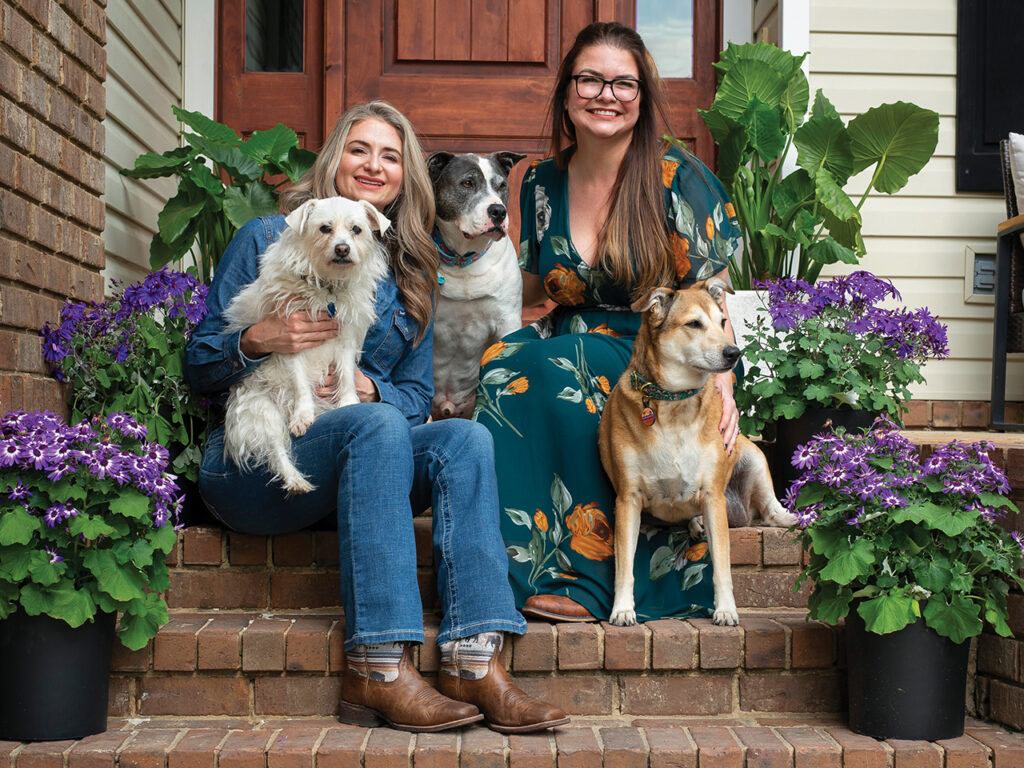
A year of searching paid off. “We were waiting for something special that would make the move worth it,” Pam recalls. When a listing in Bloomingdale came on their radar, they realized it checked a lot of boxes. “It was close enough to Savannah for a reasonable commute to work, it had enough land for horses, fencing already in place, a barn, a chicken coop, and a pond, plus the home itself was move-in ready and did not need an immediate renovation,” she says. “We could pick up and move with our existing rescue animals, and everyone could fit in seamlessly.”
After only 10 minutes of touring the property, they made an offer and later wrote the seller a letter expressing how they wanted to use the 5-plus-acre property, a gesture that ultimately worked in their favor thanks to a previously unknown connection. The homeowner, it turned out, also owned Faulkville Animal Hospital in Bloomingdale, which provides discounted veterinary services for One Love Animal Rescue. Sue was the event coordinator for One Love Animal Rescue in 2023 and 2024, and the couple have been taking in foster dogs since 2021. Pam is currently a member of the organization’s board of directors.
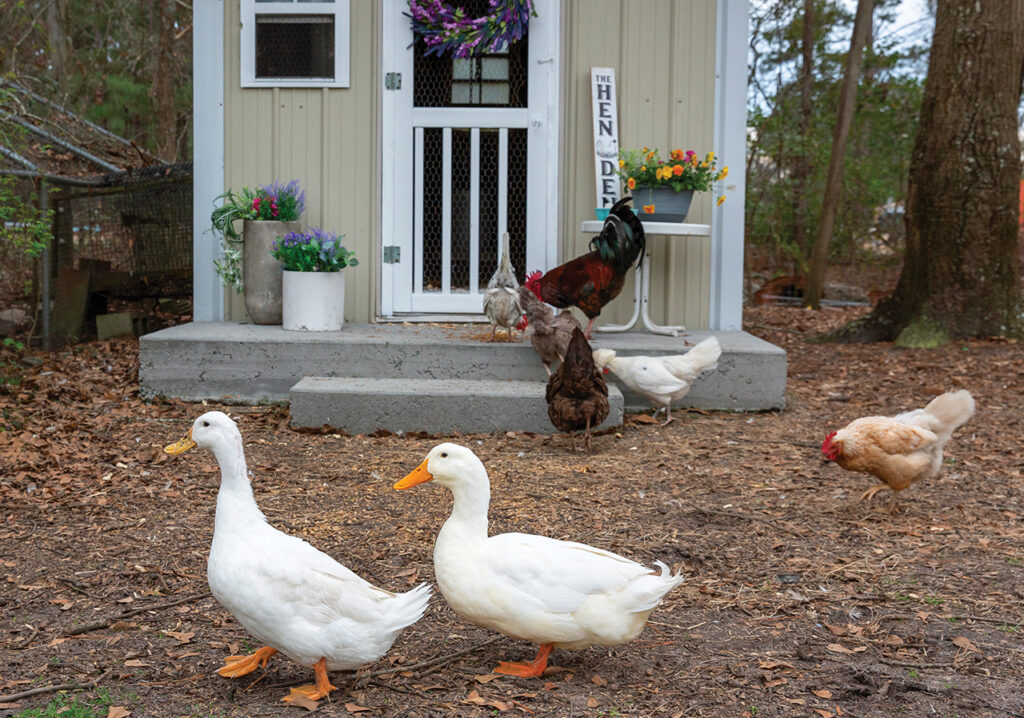
After their offer was accepted, Peterson Pines Farm Sanctuary was born. In addition to the 2,867-square-foot home, the lot also includes a barn for hay and Petunia, a chicken coop, a greenhouse, and a well-water pump. A climate-controlled, detached garage creates space where foster pups can spend time, and a new shed will soon become a duck house.
In addition to quelling their noise concerns, Pam and Sue felt confident they could now open their home to more animal friends. Pam, who’s originally from New Smyrna Beach, Florida, grew up riding horses, and Sue, who hails from Kansas City, Missouri, previously worked as a veterinary technician. “Together, we knew we had the skills to help horses and other farm animals in need of rehabilitation,” Pam says.
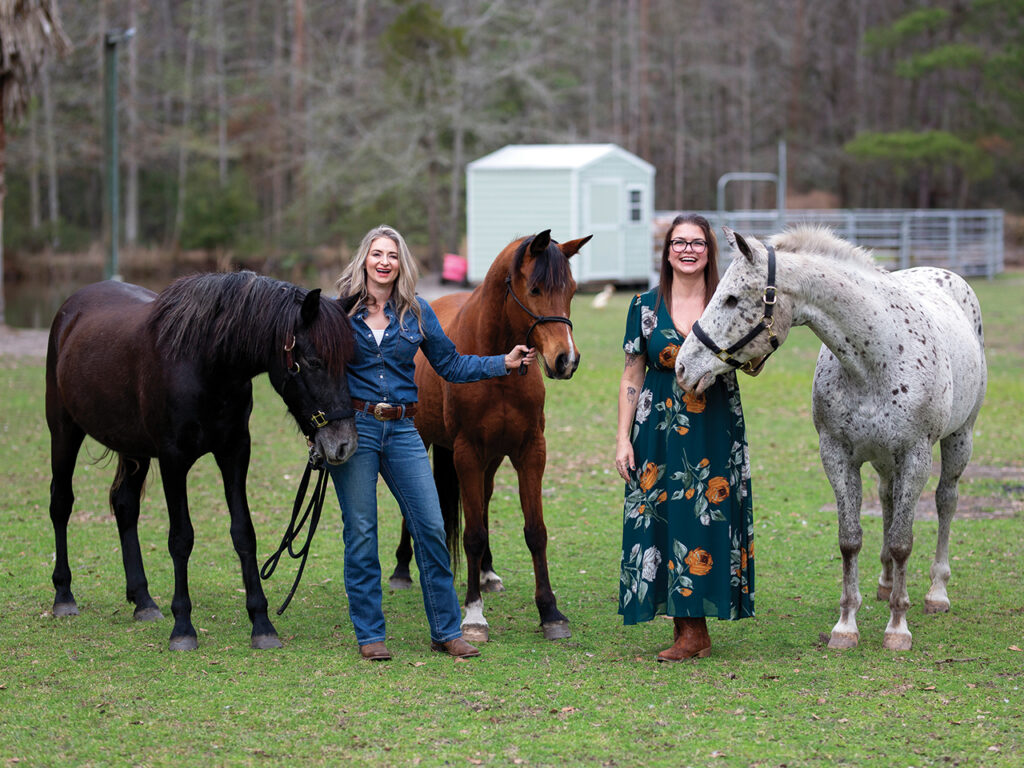
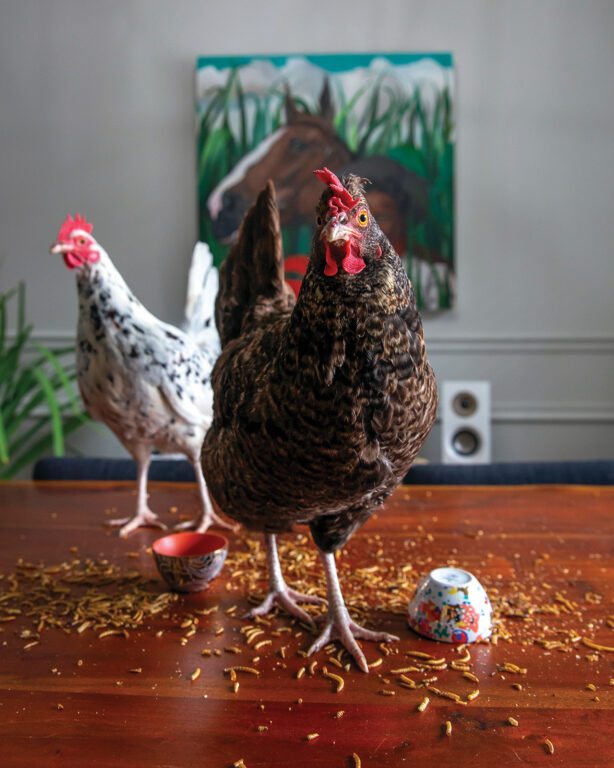
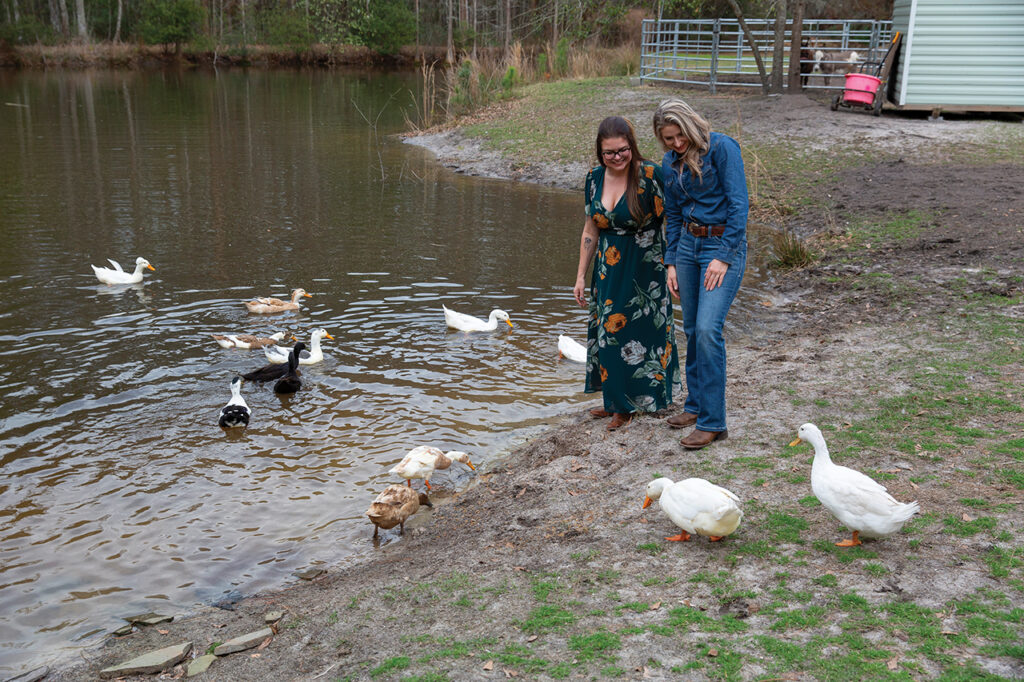
Today, Peterson Pines is home to 43 furry, feathered, or four-legged friends, including four horses, two donkeys, one pig, five dogs, one cat, 17 ducks, and 13 chickens, each with its own unique backstory. Mrs. Jones, for example, is a chicken who had been found pecking around Jones Street in Savannah’s Historic District. “A good Samaritan posted on Facebook asking for a rescue to help capture her, so we jumped in the car with a pool skimmer net,” Pam says. “A few neighbors came over to help, and we were able to follow her up on someone’s stoop and net her. We brought her home, where she now rules the roost.”
While most of their animals are rescued locally, like the dogs from One Love Animal Rescue, others come to the sanctuary from farther away. One of the horses, Billy the Blind, a 15-year-old roan Appaloosa, came to Peterson Pines from North Carolina.
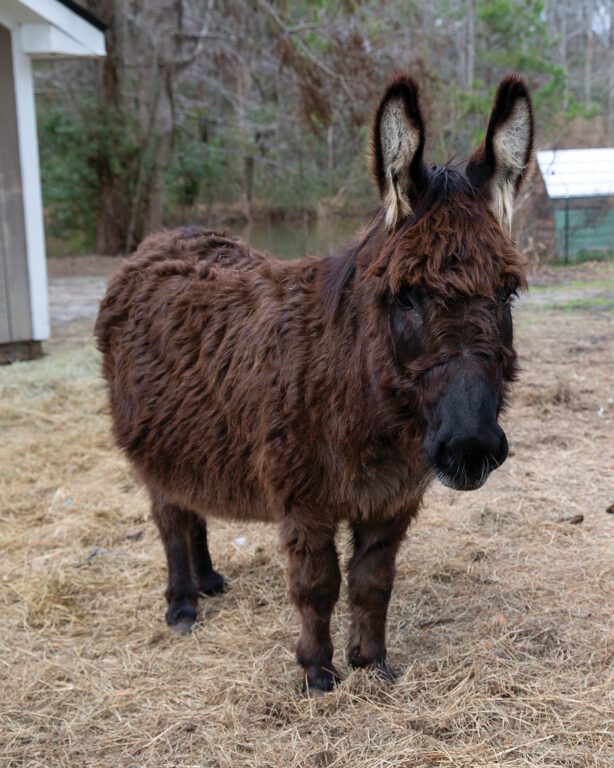
Through their network of other rescue organizations, Pam and Sue learned that he needed a safe place to live out the remainder of his life and welcomed him in. Since his eyesight is gone, possibly due to cancer, it’s hard for Billy to communicate and interact with the other horses. So they decided to keep him close to the donkeys, Charlie and Winnie, who act as his seeing-eye animals. “He follows them around and listens for their hooves to direct him and rests his head on Winnie when they are eating,” says Pam. “It has become a beautiful relationship and provided the comfort he needs to settle in here!”
As rewarding as it is for them to watch the animals bond, heal, and thrive, Pam and Sue acknowledge that owning a farm and sanctuary comes with a set of challenges. The financial needs are high, especially for larger animals like horses. According to Pam, one of the primary reasons horses end up homeless is the cost of feeding and veterinary care. Continuing to work full-time, with Pam selling real estate and Sue employed as an anesthetist within the St. Joseph’s/Candler network, allows them to keep up with the expenses.
Then there’s the demanding schedule that comes with working and running the farm. “There are truly no days off, as the animals depend on us,” explains Pam. “We are up every morning feeding and giving meds before we go to work, and we’re back again every evening.” Before bed, all of the farm animals must be secured to protect them from potential predators, like red foxes or coyotes.
There’s also the weather to contend with, especially during storm season. Hurricane Helene, for instance, delayed the Petersons’ plans to build new shelters and fences in the yard. “We have learned to take it all in stride and work through the unexpected challenges,” Pam says. “The farm has been a good lesson in being more flexible.”
The couple admits that some days feel long and tiresome, but ultimately, the farm has brought them closer together. “We are working harder than we have ever worked, but when you’re united toward a goal more important than yourselves, to improve the lives of these animals, it’s truly a bonding experience,” says Pam. Overall, they say the most gratifying part of owning Peterson Pines is witnessing the transformation of the animals as they move from “fearful and unhealthy to happy and carefree.”
Despite the land and accommodations, Pam and Sue anticipate outgrowing this space, as they had once done with the Midtown property. But for now, they plan to use every inch of it and will consider eventually purchasing neighboring properties. Another vision for the future of the farm? Hiring help so they can confidently travel — another one of their shared passions — even if only for short trips. “When we first met, we were in our travel era, and we’ll get back to that,” says Sue. “But, for now, we’re in our farm era.”
Starting Your Own Sanctuary
Pam and Sue’s dedication to Peterson Pines Farm Sanctuary and its many inhabitants serves as an inspiration, especially to those with an affinity for animal rescue. Want to start your own farm or have plenty of room for animals? Here are some tips.
1 “When you’re ready to find a ‘home’ for your rescue or just decide you need more space for your own family and animals, find a local realtor who is familiar with zoning and understands your vision,” explains Pam. If your goal is to tend to farm animals, the property will need to be zoned for agricultural purposes.
2 The size of the property is also dependent on your plans, though Pam and Sue point out that you may not need as much land as you think. “It’s more about how you use the space,” Sue says. “You can do so much with 2 acres or 5 acres like we have now, and you can really have a nice farm.” According to Pam, a good guideline for estimating acreage is to own at least 1 to 2 acres per grazing animal (like a horse or cow). “You can certainly operate with less,” she says. “But if grass is going to be one of the primary sources of forage in their diet, you will need enough pasture to support them.”
3 Also consider how owning a farm will impact your lifestyle. The more land and animals you have, the higher expenses will be in the form of fences, food, insurance (as is the case for some outside structures, like a barn), medical care, and more. If you, like Pam and Sue, intend to work while running a farm, factor in the location. While Midtown was an ideal location for both of their jobs, they had to be prepared for longer commute times once moving to Bloomingdale. The trade-off was owning more land that allowed them to do what they love every day.


