



Entranced by a beautiful staircase, designing duo Braeden and Shelby Scally gave this abandoned Victorian District home a modern remodel while still preserving its past.
Written by MARY CORNETTA
Photography courtesy SCALLY DESIGN + CONSTRUCT
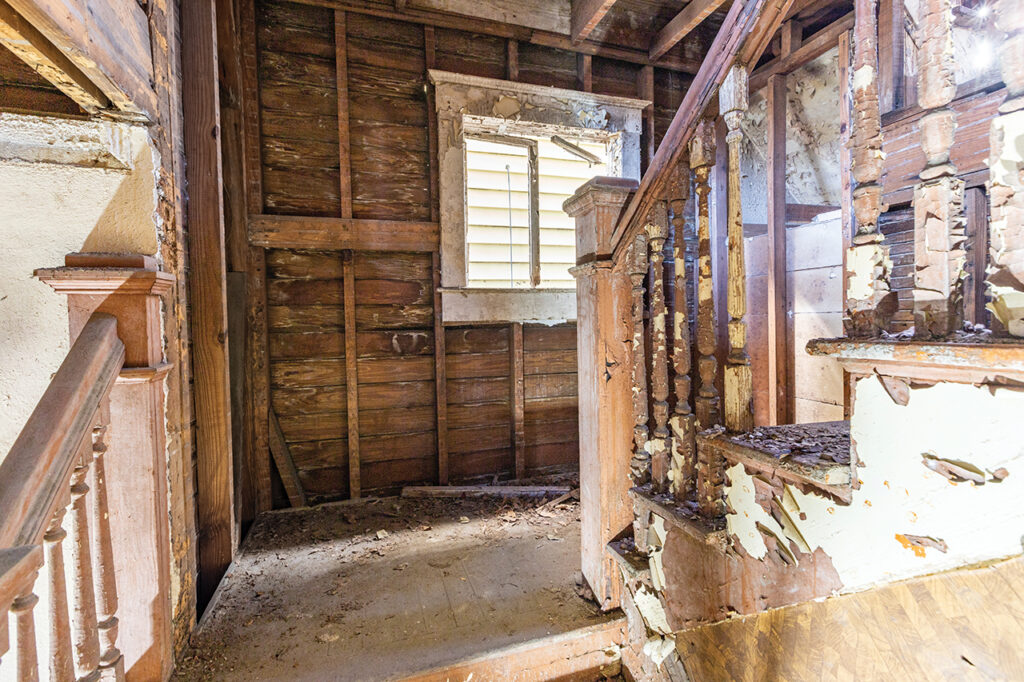
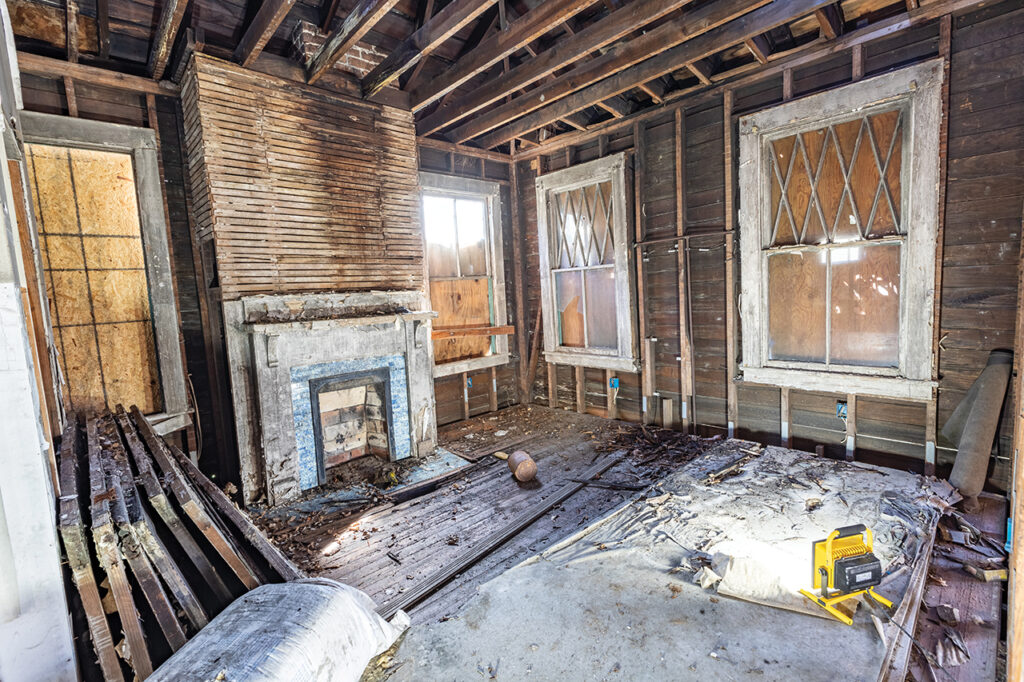
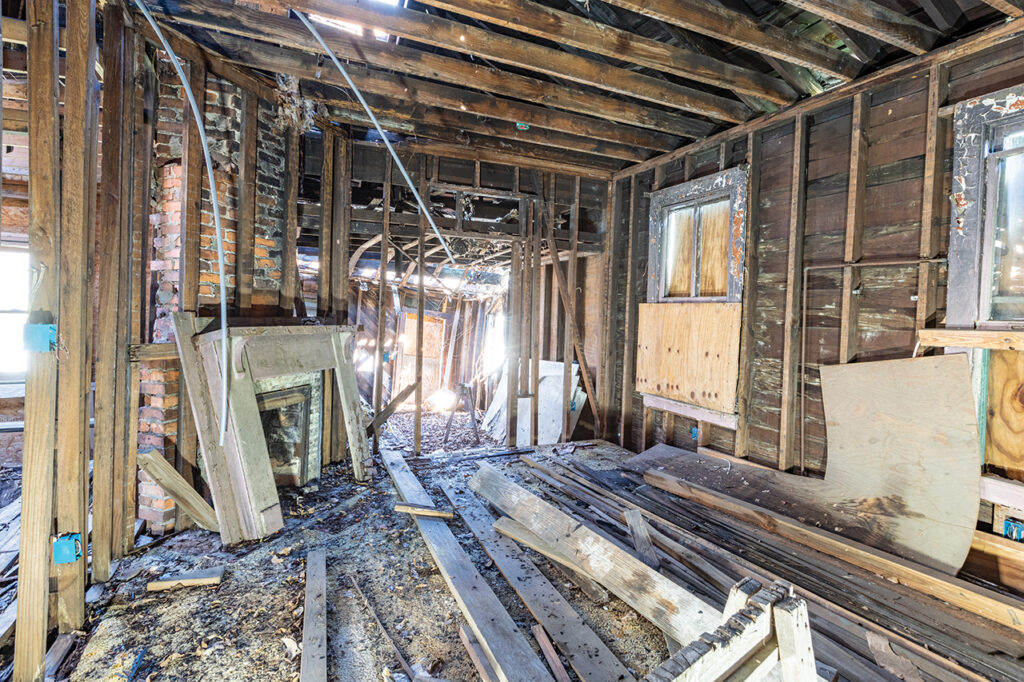
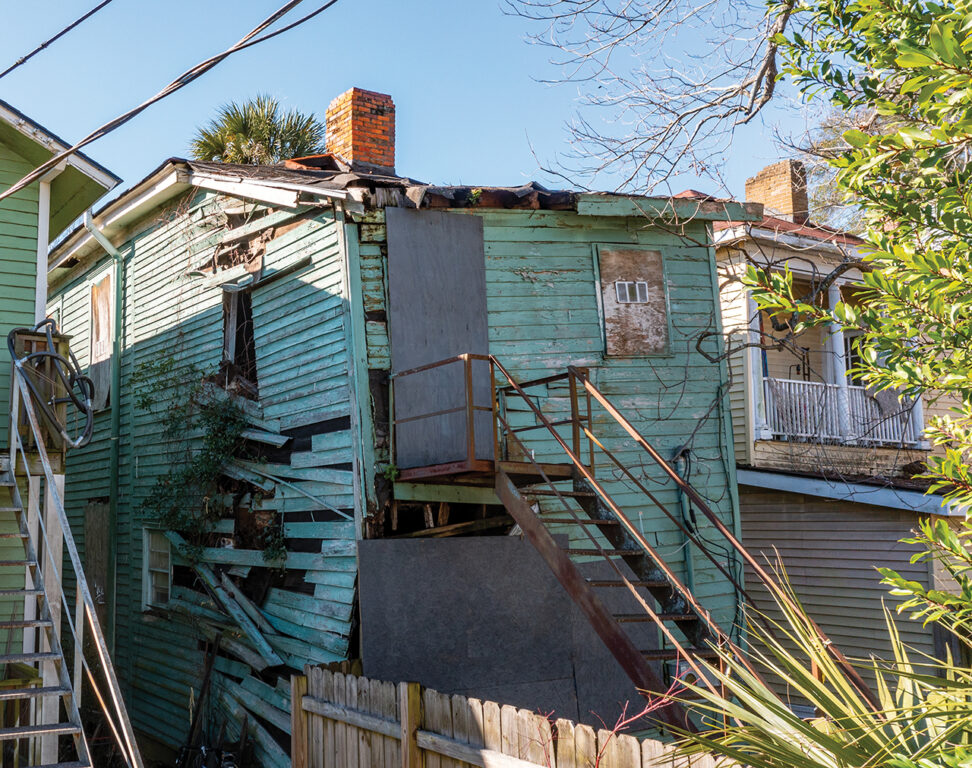
A STAIRCASE — and perhaps a touch of divine feminine intuition — convinced Shelby and Braeden Scally to buy a dilapidated two-story home in 2023. From the outside, the home appeared irreparable; it had been unoccupied since 1988 following a fire, and it had also suffered water damage after a tree fell on the roof.
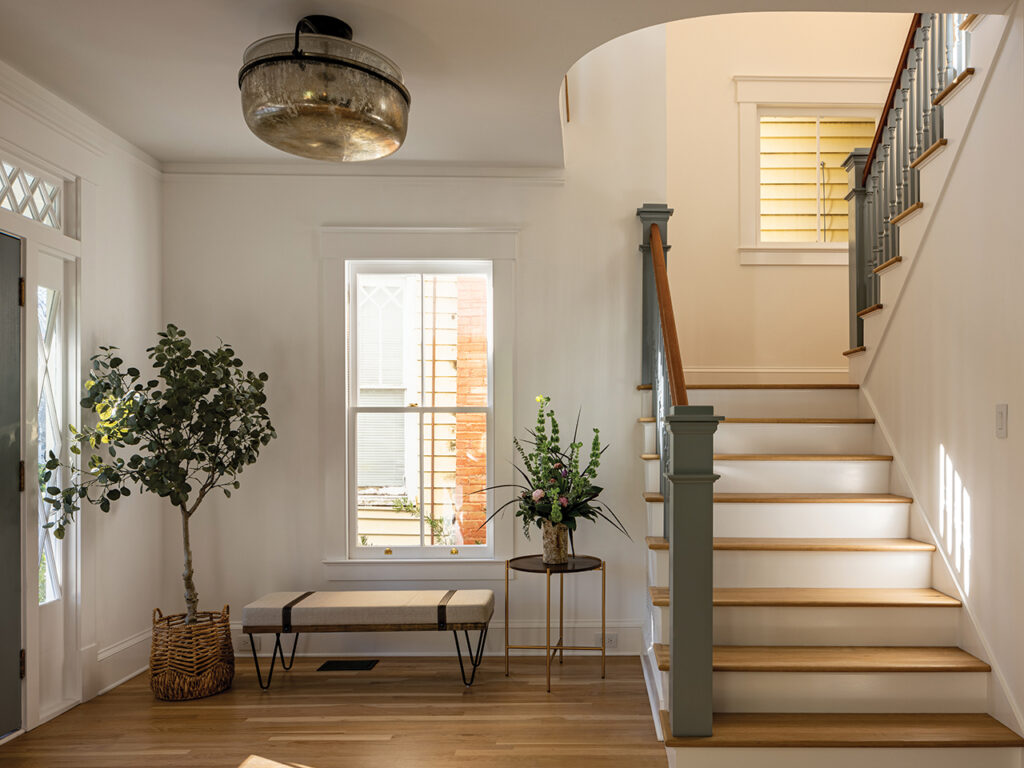
However, during their initial walkthrough, Shelby spied the unique staircase peeking through the debris. “I saw the staircase and said, ‘Braeden, we’re buying this house!’,” she recalls. “It was fabulous.” Featuring a hand-carved balustrade, with a railing that has indents for your fingers to hold onto, it’s an example of a detail that’s often not seen in today’s buildings.
At the time, the couple, who met in Braeden’s native New Zealand while Shelby was studying abroad, were managing full-time corporate jobs alongside their building and design projects under their own company, Scally Design + Construct. Both have architecture backgrounds; for their company, he serves as contractor and she works as the interior designer.
At the time, they had recently moved into a renovated home in Baldwin Park and were waiting to close on and flip another in Oakdale when they came across this derelict home in the Victorian District. They decided to take the chance and closed on it just before finalizing the Oakdale property, leading them to renovate both homes simultaneously.
But whereas the Oakdale renovation took only eight months to complete, this home required two years. Toss in Shelby becoming pregnant with their first child right in the middle of this project, and they had plenty on their plates.
In addition to juggling work, two home renovations, and preparations for the arrival of their son, the Scallys had complex zoning and historical preservation aspects to navigate. “We spent four to six months dealing with municipalities and the architectural side,” says Braeden.
To help, the couple hired local consulting group Ethos Preservation to conduct a comprehensive report, which found that the original home was built between 1912 and 1913. While that makes it relatively young compared to many homes in Savannah, it still holds historical significance.
The original builder, a man named M. M. Stewart, was technically the owner but never appeared on city records. And so, the first official owner was a woman who bought it in 1915, a rarity for the time. The Scallys named the home in her honor: the Emma C. Lee House. “You feel like you know the home better when you know its past,” says Shelby.
The historical report also revealed that the original lot included a carriage house, a detail that ultimately swayed the Chatham County-Savannah Metropolitan Planning Commission (MPC) to allow the Scallys to build a new one.
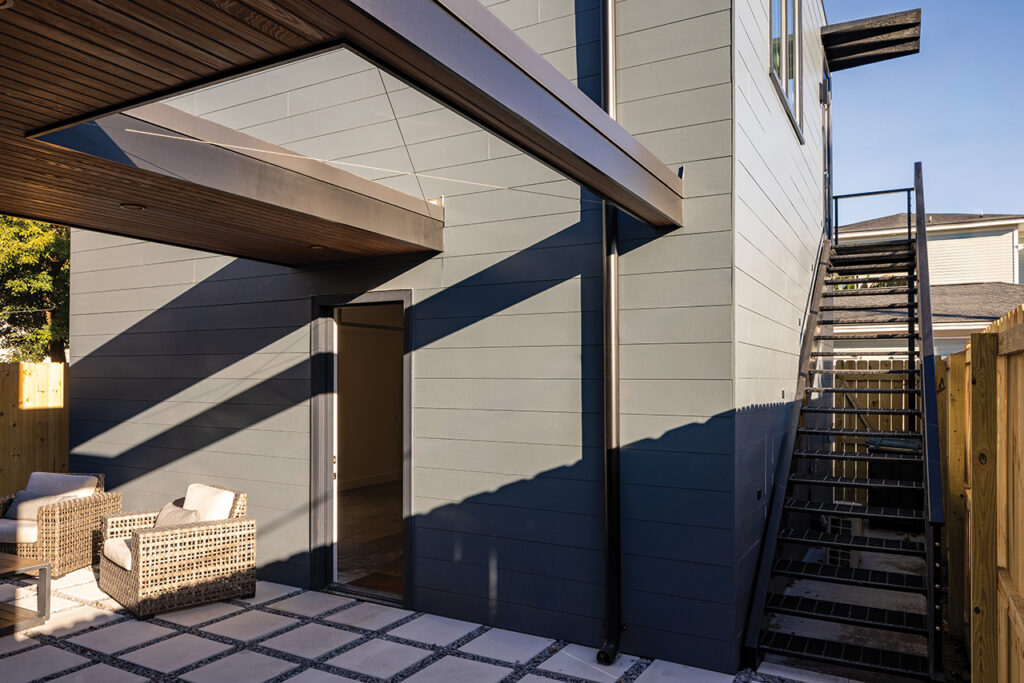
The Scallys’ vision included the new carriage house, as well as an addition to the back of the main home. Braeden explains, “Our view is that there should be a visual distinction between the old and the new, so the home tells a story. You should clearly see it has evolved over time.” After a few changes (such as switching the carriage house staircase from wood to steel to meet fire regulations) and two rounds with the MPC, everyone was on board.
Once permits were secured in the summer of 2023, the Scallys spent the next few months removing rotten material, assessing what they could salvage, and shoring up the foundation. By October, they began framing, working from front to back. “Because the site is very narrow, we had to get the main house mostly done before we could start on the addition and carriage house,” says Shelby.
The two-story addition includes three new bedrooms, one bathroom, and a family room. The carriage house has a first-floor, two-car garage and second-floor apartment. The structures’ exterior colors delineate old and new, with the original home painted white and the addition and carriage house painted gray.
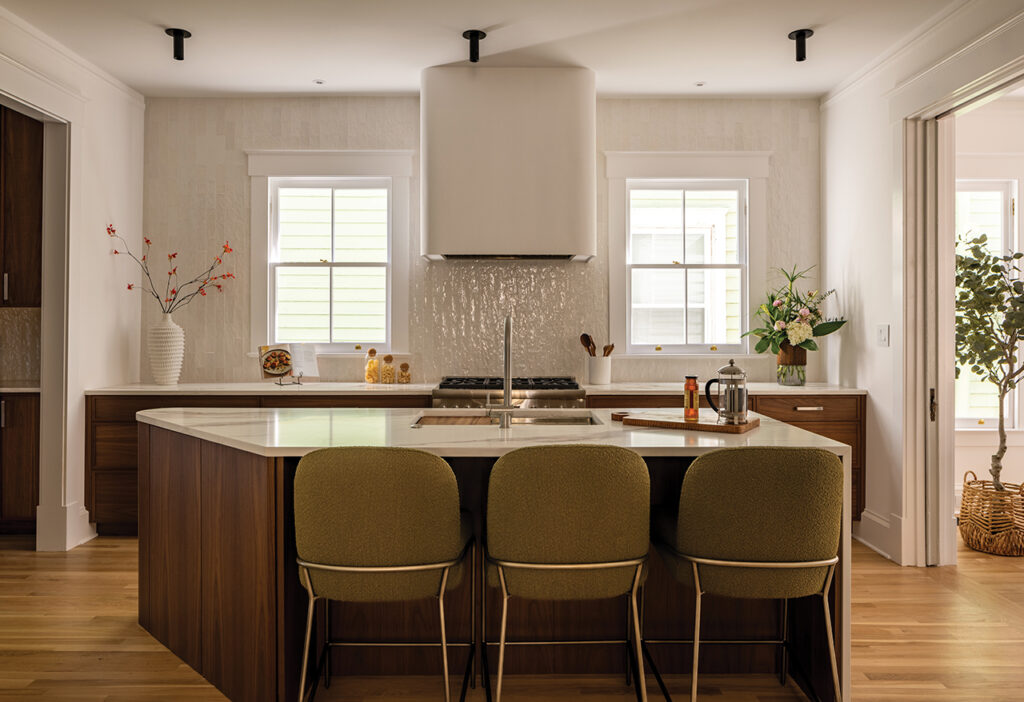
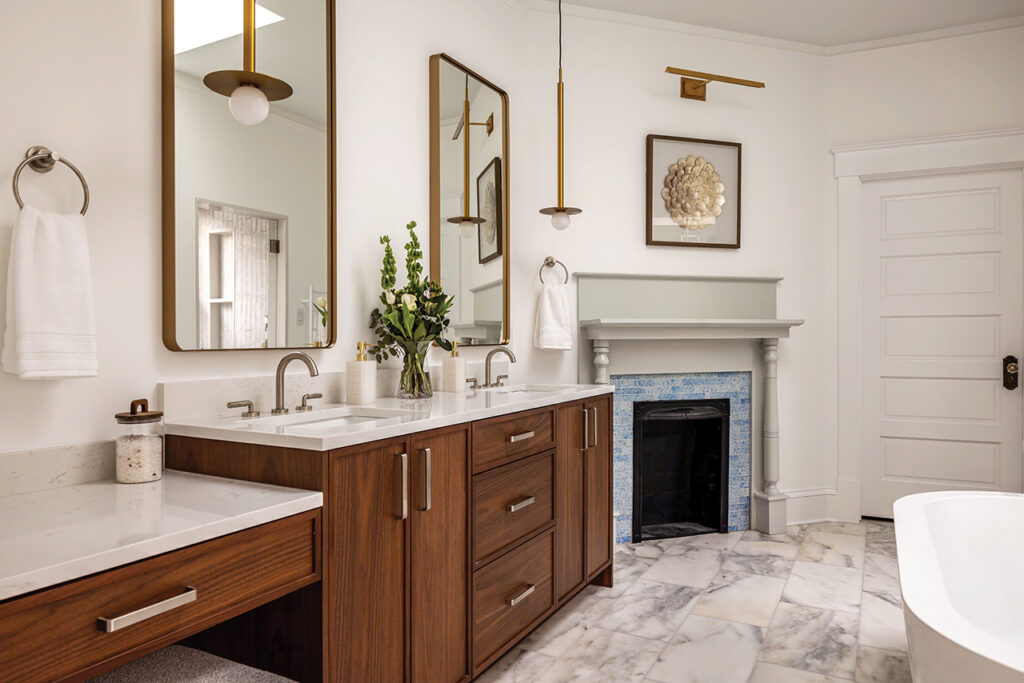
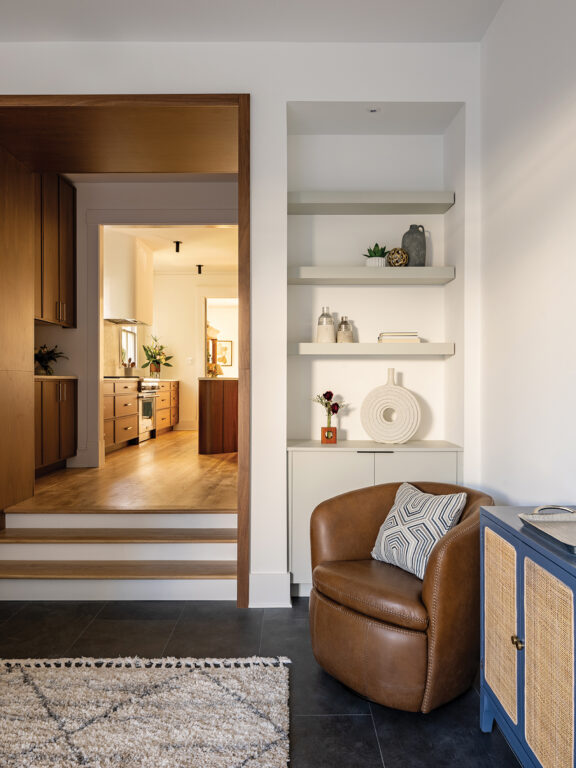
Inside, another noticeable shift transports you from the original layout to the addition on the first floor. Just beyond the kitchen, where they chose walnut cabinetry, is a matching walnut threshold (or portal, as the Scallys call it) leading into the new den. “It all flows, but it’s a very contemporary aesthetic,” explains Shelby. “It’s a wow moment because you definitely notice it. If it were just painted white, you might walk past it.”
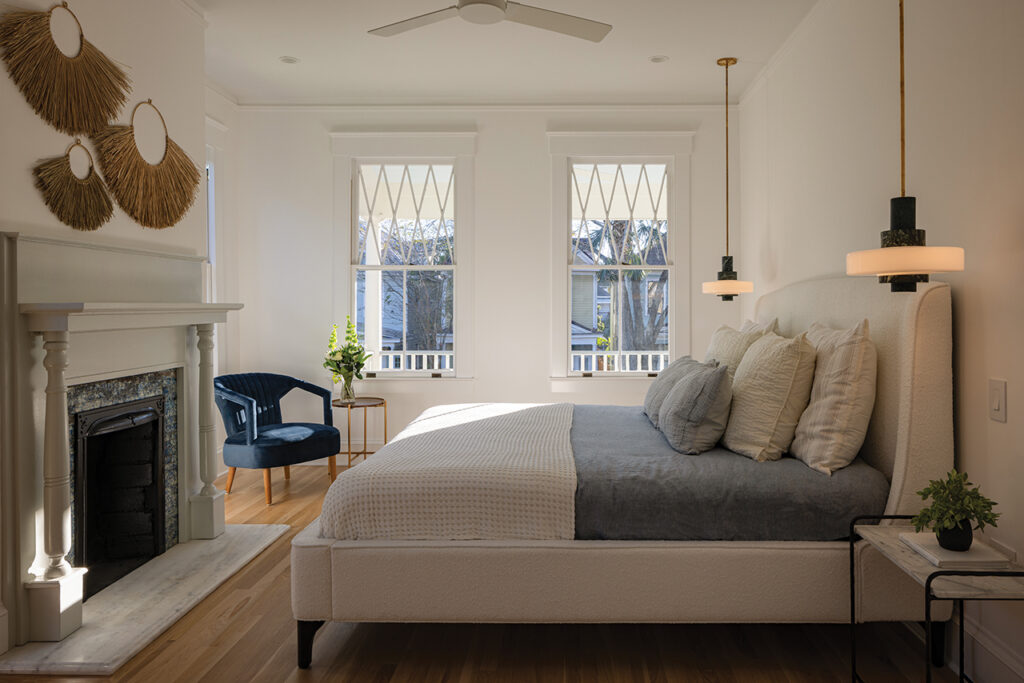
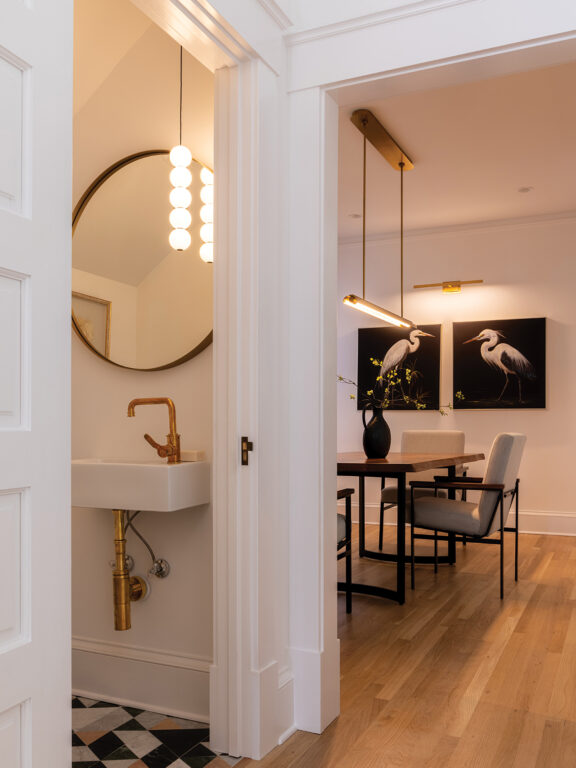
Shelby continues, “We wanted the space on either side of the portal to feel different but related.” For example, they restored the original molding and then used the same proportions, materials, and paint color in the new molding while opting for more modern profiles. They also built out large window frames to match the size of the old windows, which they had restored and reinstalled. “The historic windows came back in the same day the brand-new, aluminum-clad windows came in,” says Shelby. “It was so cool to see the juxtaposition of the two!”
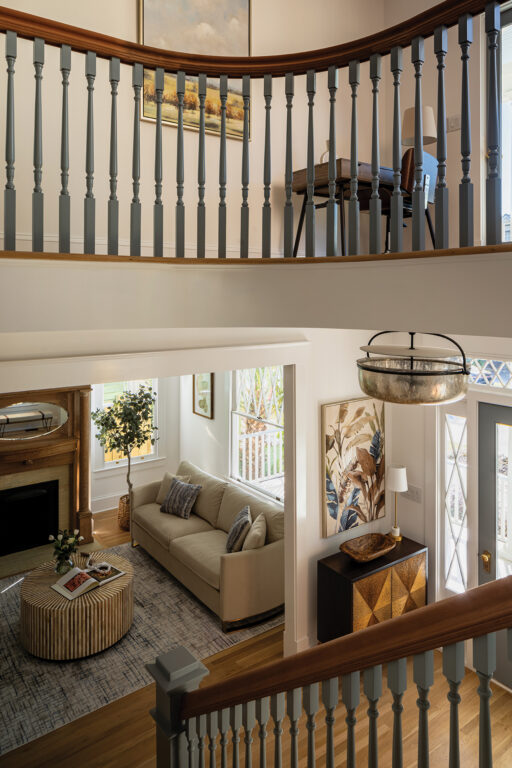
As in many old houses, the room layouts were not square, and that included the kitchen, which contained an angled fireplace the couple refurbished. Shelby chose to have the edge on one side of the kitchen island run parallel to it, softening its border. They also chose a rounded vanity for the new guest bathroom, and it was Braeden’s idea to curve the ceiling above the staircase in the foyer and the second-story banister. Per Braeden, “Curved features became an overall feature of the home and softened up what would otherwise be hard edges.”
At the start of this journey, they envisioned moving their (now) family of three into the finished Emma C. Lee House. As they got closer to wrapping it up, however, Braeden left his corporate job to focus on their company full time, and they recognized that it would be financially savvier to sell. After five weeks on the market, the home sold in January 2025, fully furnished, with custom pieces procured by Set The Stage, a home staging service based in Garden City.
Aside from the relief that a two-year project was complete and the pride they felt from witnessing their craftsmanship come to life, “this was the first project that we built that was a historic restoration and new construction going up side by side,” says Shelby. Their hard work, skills, and attention to detail paid off, and the Emma C. Lee House received a Historic Savannah Foundation Preservation Award at this year’s ceremony.
“As caretakers of these historic homes, we feel a deep responsibility to preserve their legacy while making them livable for future generations,” says Braeden. “It’s incredibly rewarding to see our design approach celebrated in this way.”
DETAILS
- Year built: circa 1912-1913
- Year purchased: 2023
- Square footage: 3,200 + two-car garage
- Bedrooms: 5
- Bathrooms: 4.5
- Time to complete renovation/remodel: Four months for design and COA/permit approval; 18-month renovation
- Architect/planner: Scally Design + Construct
- Interior designer: Scally Design + Construct
- Contractor/builder: Scally Design + Construct
- Tile/flooring: Marsh View Flooring, Coastal Tile Installations, Garden State Tile
- Paint: Perez SKG Painting
- Windows/doors: Sierra Pacific (addition and carriage house); Merriman Millworks (main house rebuild); Henshaw Preservation (main house restoration)
- Kitchen design: Scally Design + Construct
- Kitchen cabinets: Frame Zero Custom Cabinetry
- Bath design: Scally Design + Construct, Sandpiper Supply, House of Rohl
- Landscape design: Scally Design + Construct, ATA Landscape and Construction
- Hardscape design: Scally Design + Construct, Mobley Masonry
- Electrician: 5 Star Electrical Contractors
- Plumber: Heck Plumbing
- HVAC: Climatech
- Furniture, accessories, and art staging: Set The Stage Hilton Head/Savannah
- Appliances: Livingood’s Appliances and Bedding (Thermador in the main house and Frigidaire in the carriage house)


