




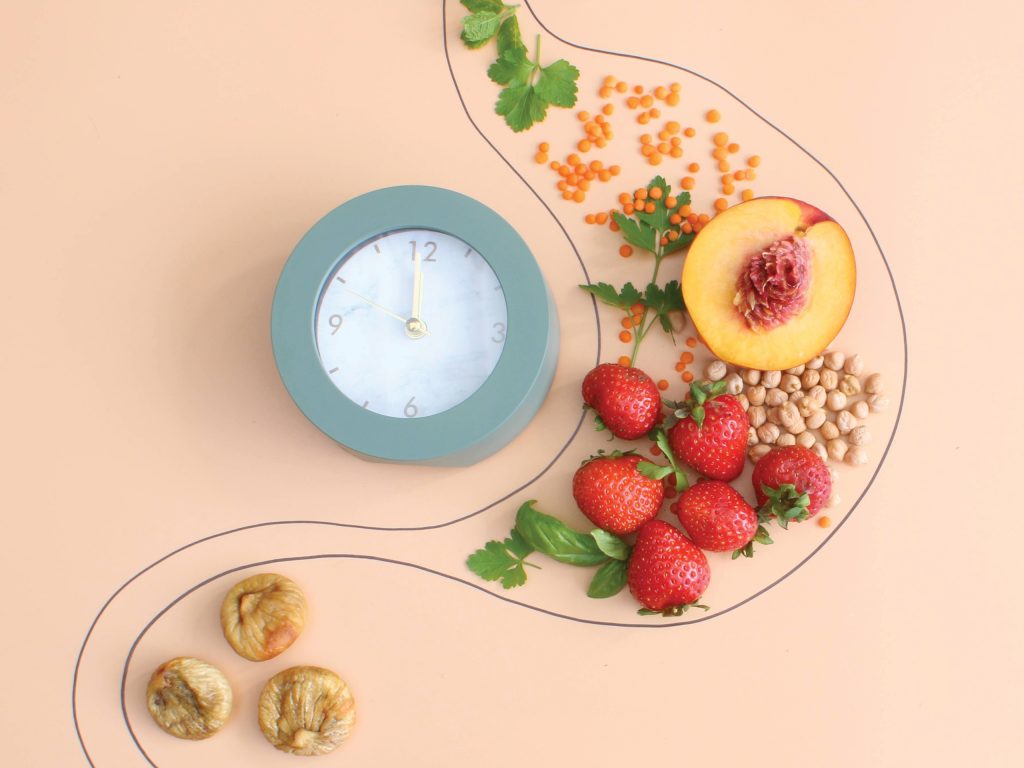
The science behind your digestive system after age 40.
Written by Ethan Mathews
Heartburn. Bloat. Irregular movements. You know, the real sexy parts of aging.
Natural changes that occur in the maturing gut can turn us into amateur pharmacists. An antacid after dinner, a ginger chew for bloat, a probiotic because someone on the internet says so. The unfortunate truth is: most of us are guessing.
And while many spend years managing symptoms they never fully understand, knowing the basics of what’s actually changing can make the difference between chasing relief and building resilience. According to Dr. Elizabeth Craig, a gastroenterologist at The Center for Digestive and Liver Health, the aging gut isn’t broken; it’s just asking for a closer look.
A Lot to Absorb
“As people enter midlife and beyond, the most important shift in the digestive system is not a dramatic loss of function but a loss of physiologic reserve,” Craig says. “Digestion is generally preserved at baseline but becomes more vulnerable to stressors like disease, inflammation, and medications.”
Unlike the immediate signal of a familiar food that doesn’t sit right anymore, these changes are gradual, largely invisible, and far more consequential. Atrophic gastritis (a condition that gradually thins and scars the stomach lining) is one of the clearest illustrations of this. “The prevalence of atrophic gastritis increases dramatically with age,” Craig explains. “When acid is reduced, it can impair vitamin B12 release from food and iron absorption.”
Other conditions like hypochlorhydria (low stomach acid), medications such as proton pump inhibitors, and bacterial infections like Helicobacter pylori — which affects more than half the world’s population — can trigger similar disruptions to nutrient absorption. According to recent national surveys, B12 and iron deficiencies are among the most prevalent nutritional shortfalls in U.S. adults, and both are critically underdiagnosed and consistently tied to declining acid production.
Although the mechanism differs, the aging body processes calcium differently as well. “As we age, calcium absorption declines — not because the gut fails, but because the body makes and responds to less active vitamin D,” says Craig. “Less calcium is absorbed, even with the same diet. Over time, this can lead to bone loss, making vitamin D intake more important than ever.”
If the food we eat is an investment, it’s worth knowing how our money’s being spent. “We spend a lot of time thinking about what we eat, but as we age, how our body handles those nutrients becomes just as important,” says Craig.
Breakdown, Broken Down
When a meal doesn’t sit right, it’s easy to assume the food was too rich or the portion too large, or if you’re gassy, you can always blame the dog. But the actual culprit is rarely any of those things. Except maybe the dog.
Digestive enzymes are the gut’s unsung workhorses. These proteins produced by the pancreas and small intestine that dismantle food at the molecular level allow the body to absorb what it needs. With age, production slows. “The pancreas produces fewer digestive enzymes, potentially making it harder to break down fats and proteins completely,” Craig explains. “Foods that never caused problems before may suddenly trigger discomfort — not because the food changed, but because the digestive machinery processing it has.”
Crucially, Craig explains that pepsin, the enzyme your stomach depends on to break proteins into usable form, declines by roughly 40% in adults older than 65, regardless of underlying conditions. When those undigested proteins pass through the digestive tract largely intact, they ferment in the colon and produce gas, bloating, and enough discomfort to make eating your favorite foods feel like a gamble.
The same can occur for enzymes that break down certain sugars, like lactose in dairy or fructose in fruit, leading to a suite of similarly distressing symptoms.
Moving Parts
“Many people assume that heartburn means too much stomach acid, but the opposite is often true in midlife,” Craig explains. “As we age, acid production actually declines yet reflux gets worse because the valve between the stomach and esophagus weakens and the muscular waves that clear acid slow down. Meanwhile, that same drop in stomach acid allows bacteria to overgrow in the small intestine, fermenting food and causing bloating.”
This is not the only mechanical change we experience in the gut as we age.
After that last bite, chew, and swallow, the enteric nervous system takes the reins. This network of hundreds of millions of neurons lining the gut wall, known affectionately as the “second brain,” loses neurons with age, and the precision it once managed quietly begins to slip. “Age-related changes in the nervous system can weaken peristalsis, the muscular waves that push food along, and increase transit time of food in the gut,” Craig says. “This can alter how nutrients contact the gut wall.”
She notes that other changes compound the slowdown. Gastric emptying becomes mildly delayed, the colon squeezes less forcefully and less often, and the rectum loses the sensitivity to signal when it’s time to go. “We believe there is also a reduction in natural mucus production that lines the intestinal walls, and stool becomes harder to pass,” Craig says. “Constipation becomes increasingly common, and the chronic straining can contribute to conditions like diverticulosis.”
Charting the Course
Perhaps the most underrated part of aging well is also the most accessible: knowing what’s actually changing. You can’t respond accurately to something you don’t understand, and learning these changes exist is itself a meaningful first step. But beyond awareness, what can be done?
“This is the million-dollar question,” Craig says. “True digestive optimization in midlife isn’t about finding the perfect supplement or eliminating the right foods. It’s about rebuilding the ecosystem.”
This distinction matters. Not every intervention is created equal, with some addressing the root cause and some simply managing the surface. So when our gut instinct tells us to reach for an antacid or cut out certain foods, Craig points elsewhere — treating documented deficiencies at their source, addressing underlying infections when present, and supporting the system through regular meals, consistent movement, and adequate fiber.
“Your gut is home to trillions of bacteria, and as you age, that community naturally becomes less diverse,” she says. To combat this and the downstream effects on your system, she recommends foods that feed your gut bacteria, particularly fermented foods that add good bacteria directly. Many of those foods, such as onions and sauerkraut, may also lead to excessive gas production, part of the reason Craig emphasizes a strategy built around the system, not the symptom. That means addressing nutritional deficiencies while also making lifestyle modifications that support the aging digestive system’s natural function.
The throughline across all of it is the same: less reaction, more intention. For changes that feel harder to navigate alone, a gastroenterologist can help you determine what warrants intervention and what simply warrants attention. “These aren’t quick fixes,” Craig says. “They are ways to rebuild resilience in a system that naturally becomes more vulnerable with time.”