





Recent research has been pointing to the gut as ground zero for mental and physical wellness. Local health professionals weigh in
Written by ALLISON ARBUTHNOT SANDERS
MOST OF US KNOW that a healthy diet, exercise and adequate sleep are essential for optimal health. Recently, however, more and more research has been pointing to the gut itself as ground zero for wellness, both physical and mental. But what, exactly, is a healthy gut? Why does it matter, and what does it have to do with our mental well-being?
“We exist in concert with our environment, both outside us and within us,” says Dr. Keith Seibert, director of Pediatrics and Preventative Medicine with ExperCARE. “It is our relationship to those environments that our body has developed to live with. Some of these are biological systems: communities of bacteria and parasites that live in the gut, as well as the mouth, on the skin, and in your ears. We are surrounded by bacteria that we need and depend on. A healthy gut is one of many places we interact with nature and the world, and it’s one that has huge health consequences.”
Consider that the gut is the most colonized human organ, with up to 100 trillion microbes, about 10 times the number of human cells in the body. This collection of microorganisms in the gut, referred to as the microbiome, is estimated to contain more than 150 times as many genes as the human genome — about 3.3 million in comparison to our 20,000. Looking at it this way, one could argue that it’s the microbiome’s body, and we’re just living in it.
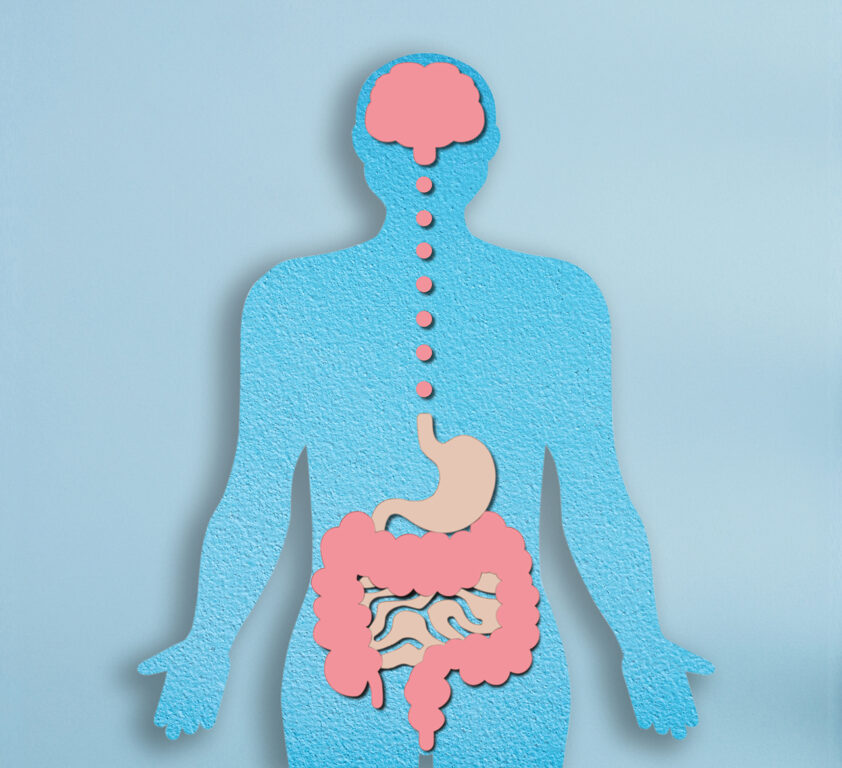
The Gut-Brain Axis
It’s no surprise, then, that the latest research has revealed that the gut microbiome impacts, well, almost everything.
“Holistically, it all stems from the gut,” says Dr. Tassie Hargrove of the Holistic Wellness Center of Savannah. “It’s where you’re assimilating nutrients and making energy. At the same time, chronic inflammation is the root of disease processes, and that starts in the gut as well.”
The enteric nervous system, a network composed of over 100 million nerve cells that regulate our gut, is often called the body’s “second brain.” It communicates directly with the central nervous system — the first brain — through the gut-brain axis, a network of nerves that links the emotional and cognitive centers of the brain with intestinal functions.
“The brain and the gut are very closely related. Having a healthy gut can decrease depression and anxiety, as well as help with functional disorders like irritable bowel syndrome (IBS)
or heartburn.”— Dr. William Mansour, Gastroenterology Consultants
“Think about the butterfly sensation you had in your stomach on your first date, or that feeling when your stomach drops,” explains Dr. William Mansour of Gastroenterology Consultants. “The brain and the gut are very closely related. Having a healthy gut can decrease depression and anxiety, as well as help with functional disorders like irritable bowel syndrome (IBS) or heartburn.”
Turns out that among those 100 trillion microbes living in our gut, there are just four major phyla: Firmicutes, Bacteroidetes, Actinobacteria and Proteobacteria. The composition of these bacteria in each individual is formed in infancy and childhood, and is based on many factors, from birth and milk feeding to environment and antibiotic exposure.
Feeding the Good Germs
There is no optimal gut microbiota composition; each is unique. The trick is to maintain a proper balance, primarily through diet. If there are too many or too few of a certain type, things go awry.
“Sugars feed specific families of bacteria in our gut,” explains Seibert. “In balance, it would be fine. But the bacteria that can break down sugar, like proteobacteria, are very pro-inflammatory. In the past, people might have had honey or a lot of fruit sugar during the summer, when the days were long, and they were out working the field, burning that sugar and metabolizing it quickly. As the season changed and the fruit disappeared, those Proteobacteria would drop down to their rightful place — a small, necessary, but not overwhelming piece of our bacterial flora.”
In our modern world, sugar consumption is not ruled by the seasons; we can and do eat sugar all year long and in far greater abundance than nature intended. Recent studies are finding that too much sugar is making us sick from the inside out. An increasing amount of scientific data identifies Proteobacteria as a possible microbial signature of disease. There is significant evidence that an overgrowth of Proteobacteria is involved in metabolic disorders and inflammatory bowel disease, and recent studies also suggest it may play a role in lung diseases like asthma and chronic obstructive pulmonary disease. Inflammation is a core aspect of Proteobacteria-related diseases.
Seibert puts it simply: “Processed foods and simple sugars feed bacteria like Proteobacteria. In their cell membrane is Lipopolysaccharide (LPS). LPS is linked to the immune system development of white blood cells that create eczema and autoimmune disease. If you eat the foods that feed these bacteria, you are feeding the stuff that creates immune system dysfunction and causes disease. And by default, you are not feeding the good germs.”
Feeding the good germs is about much more than just keeping the bad ones in check. You know those ultra-important neurotransmitters and hormones, dopamine, serotonin and gamma-aminobutyric acid (GABA)? These are the things that help to regulate mood, motivation, movement, learning and memory, sleep and so much more. And they are all produced in the gut.
Recent studies have linked some mental disorders, such as depression, anxiety, schizophrenia and autism spectrum disorder to gut microbiota. This connection is what Mansour is talking about when he said that having a healthy gut can decrease depression and anxiety.
The Power of Probiotics
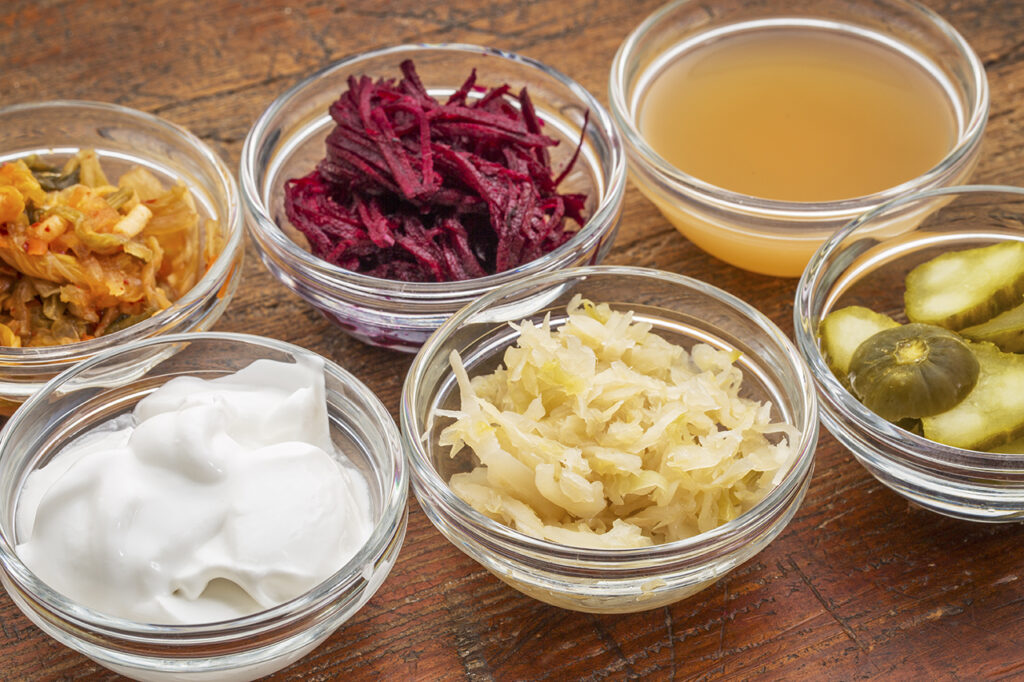
In order to support the production of vital neurotransmitters, as well as maintain a healthy gut wall that can absorb nutrients while blocking toxins, we have to feed the good germs. The good germs love two key things: prebiotics (fiber) and probiotics, ideally from fermented foods.
“Probiotic supplements, in our research, are not recommended,” says Mansour, noting there is no governance on probiotic supplements. While they are not likely to hurt you, there is little evidence that they are doing anything to help. There is a reason, however, that nearly every traditional diet around the world incorporates some type of fermented food.
“Fermented foods are one of the ways that bacteria and funguses break down extra simple sugars in our food and give us nutrients that help our gut lining and help reduce inflammation,” says Seibert. “But as a society, we’ve lost our taste for fermented foods, to our detriment.”
“Holistically, it all stems from the gut. It’s where you’re assimilating nutrients and making energy. At the same time, chronic inflammation is the root of disease processes, and that starts in the gut as well.”
— Dr. Tassie Hargrove, Holistic Wellness Center of Savannah
“From an MD side, when we look at gut health and the gut-brain axis, diet is the biggest key to longevity,” adds Mansour. “The biggest things affecting American health are heart disease, diabetes, hypertension and high cholesterol. All of these come indirectly from the gastrointestinal (GI) tract. If you eat a normal American diet, you’re at a higher risk of developing these diseases. Ideally, we would prevent any of that by focusing on gut health to begin with. There is really solid, research-based evidence that eating whole foods in a plant-based or Mediterranean diet can prevent things like diabetes, high cholesterol and high blood pressure, which in turn prevents strokes, heart disease and even some cancers.”
Listening to Your Gut
Of course, not all illnesses can be cured by diet alone. New tests like the GI-MAP (Gastrointestinal Microbial Assay Plus) can help identify the root causes of many intestinal ailments. While antibiotic use can throw a healthy microbiome out of whack, they are also sometimes necessary to restore it.
“Infections in the gut, like H. Pylori, protozoa, C. diff, parasites like giardia, need to be taken out,” says Hargrove. “Small intestinal bacterial overgrowth (SIBO) is very common. These are addressed with antibiotics.”
“We’re starting to get a lot more research into functional abdominal disorders, where symptoms like constipation or diarrhea are present, but are not caused by any physical disease or pathology,” says Mansour. “Previously, a lot of older doctors would just say, ‘Oh, it’s all in your head.’ But we know now that there’s a reason why. Research suggests that some people may have a genetic predisposition, then if one of three things — the gut microbiome, the brain, or the gut receptors in the Gut-Brain Axis — gets disrupted from stress or infection or antibiotic use, then it can throw a person into a functional disorder.”
With new research comes new treatments. “I target IBS and other functional disorders with anti-spasm meds, GI-specific antibiotics, and neuromodulators like amitriptyline, a class of tricyclic antidepressants, which modulate the neurons between the gut and brain to suppress the symptoms experienced with a functional disorder,” says Mansour. “But I prefer to target it with diet.”
Seibert echoes this sentiment. “If I have a patient who is depressed or constipated, I will encourage nutritional approaches first,” he says. “But if they are still struggling and not doing well in school, it’s okay to use medication to improve symptoms, recognizing that it’s how we live that got us there in the first place, and it needs to be how we get out in the long run.”
Editor’s Note: This article is for informational purposes only and is not intended as medical advice. Please consult a healthcare provider before making any significant changes to health routines.
Dos and Don’ts for Gut Health, from the Experts
- Eat plenty of soluble and insoluble fiber to feed the good bacteria. Think whole grains, oats, apples, avocados, nuts, seeds and berries. Shoot for 25-30 grams a day for adults.
- Eat fermented foods like yogurt, sourdough bread, sauerkraut, kefir, apple cider vinegar, kombucha and miso.
- Avoid processed foods and excess sugar and alcohol that feed the inflammatory bacteria.
- Seek professional medical help from your healthcare provider to identify and treat any symptoms you’re experiencing.


