




With the popularity of weight-loss medications, some people are discovering that being thinner can sometimes mean looking older. Local cosmetic surgeons weigh-in with solutions.
Written by ETHAN MATHEWS
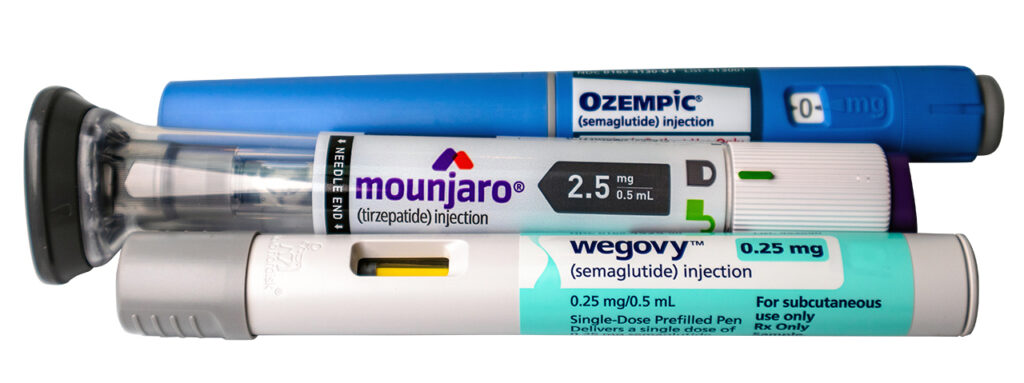
IN THE SUMMER OF 2021, the FDA approved a medication called Wegovy for chronic weight management, marking the first time a GLP-1 agonist — a class of medications that helps regulate appetite and blood sugar — was cleared for use in non-diabetic patients. Once confined to clinics, medications like Ozempic, Wegovy, and Mounjaro represent a new era in both obesity treatment and total-body transformation.
According to a May 2024 survey from the KFF, a leading nonprofit in U.S. health policy research, about one in eight U.S. adults said they had used a GLP-1 drug at some point, and of that group, 6% (over 15 million U.S. adults) were actively using a prescription.
While many of the results have been positive — GLP-1s significantly reduce weight, body mass index, and waist circumference, according to a February 2025 report by JAMA Network Open — a common, undesirable effect quickly became apparent.
Deflating News
Informally referred to as “Ozempic face,” individuals who achieve substantial weight loss often experience a loss of elasticity and facial volume that had normally been provided by facial fat. The result is a loosening of the overlying skin, deflating facial contours, and an appearance of accelerated aging.
“They’ve given it a name, but really it is the result of profound weight loss,” says Dr. Barbara Davies, a plastic surgeon at Savannah Plastic Surgery. “The fat goes away, the skin drapes, and you lose elasticity. Even folks who aren’t on Ozempic but have lost a lot of weight — their elastic properties are very, very different.”
Despite popular reference to “Ozempic face” as a side effect, endocrinologists and weight-loss experts emphasize that no study has shown GLP-1s target facial fat; rather, this is simply a natural consequence of significant fat loss. Unfortunately, no magic prevention or correction can direct where fat is lost or gained on the body, but for GLP-1 users experiencing unwanted facial changes, solutions are available.
“I see it all the time,” says Dr. Timothy Minton, a facial plastic and reconstructive surgeon at Savannah Facial Plastic Surgery. “How we treat it — just like any other aging face condition — depends on how advanced the problem is.”
The Heat Is On
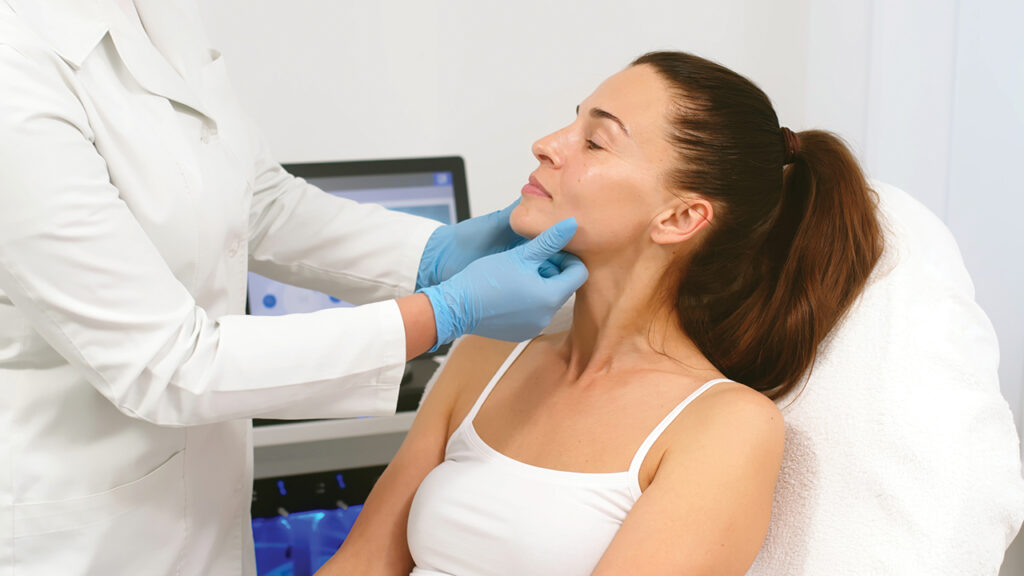
Minton says cases involving mild skin laxity, like minor looseness or early loss of elasticity, can be treated with nonsurgical approaches, such as energy-based treatments. Think of these as home renovations on your face, carefully disrupting the existing structure so the skin can rebuild stronger and smoother. The “disruptions” are noninvasive and generally require little to no downtime.
When used appropriately, energy devices deliver targeted heat through modalities like radiofrequency (such as Thermage), ultrasound (like Ultherapy), and microneedling combinations (for example, Morpheus8) to trigger a controlled wound-healing response that stimulates the body’s natural production of collagen and elastin — proteins essential to skin structure and elasticity. Mild side effects such as swelling, redness, and tenderness may occur, but typically resolve within a few days. While some treatments offer single-session results, the majority require multiple sessions of varying durations, and packages can range between $2,000 and $5,000. The effects build gradually over time, with noticeable improvements typically appearing within three weeks, and full results visible after several months.
Because these devices generate heat in the deeper layers of the skin, Minton cautions against relying on them alone to correct facial volume loss. “If they are used incorrectly, you potentially melt more fat and you’re just making the problem worse,” says Minton. “They’re OK for somebody with a mild degree of change, and in conjunction with something like fat grafting or filler.”
Fill ’Er Up
Other forms of nonsurgical, minimally invasive treatments for facial fat loss are dermal fillers, which restore volume and smooth out lines or wrinkles by injecting gel-like substances beneath the skin to replace lost structure. Fillers have been a staple in aesthetic medicine since the early 2000s due to their versatility and relatively low downtime. Treatments typically cost between $675 and $875 per unit, depending on the type and area treated. Minor side effects such as swelling or bruising may occur, but recovery is usually minimal, and results can last anywhere from six months to two years.
With a variety of filler types available, treatments can be tailored to meet each patient’s unique needs. Hyaluronic acid-based fillers, such as Juvéderm and Restylane, provide immediate volume and smoothness by attracting water to the treated area, making them ideal for restoring midface volume or smoothing lines. In contrast, poly-L-lactic acid fillers like Sculptra work gradually by stimulating the body’s natural collagen production, offering subtle, longer-term improvement over a series of treatments.
You’ve Got To Move It, Move It
For more significant volume loss or pronounced facial hollowing, fat transfers — or autologous fat grafting — are often considered a natural and longer-lasting alternative. This procedure involves harvesting fat from another part of the body (like the abdomen or thighs), purifying it, and injecting it into the target areas of the face. Because the material comes from the patient’s body, fat grafting offers a natural look and feel, carries little risk of allergic reaction, and, once fully integrated, can last for several years.
When it comes to treating the face after weight loss, it’s natural to want to correct any changes right away, but a little patience can make all the difference. Fat transfers, in particular, highlight the importance of letting your weight stabilize before starting any treatment plan.
“If you were to have a fat-transfer procedure, then you lose more weight after that, you could lose some of those results,” says Minton. “I don’t recommend doing anything until you are down to your ideal weight.”
Powerlifting
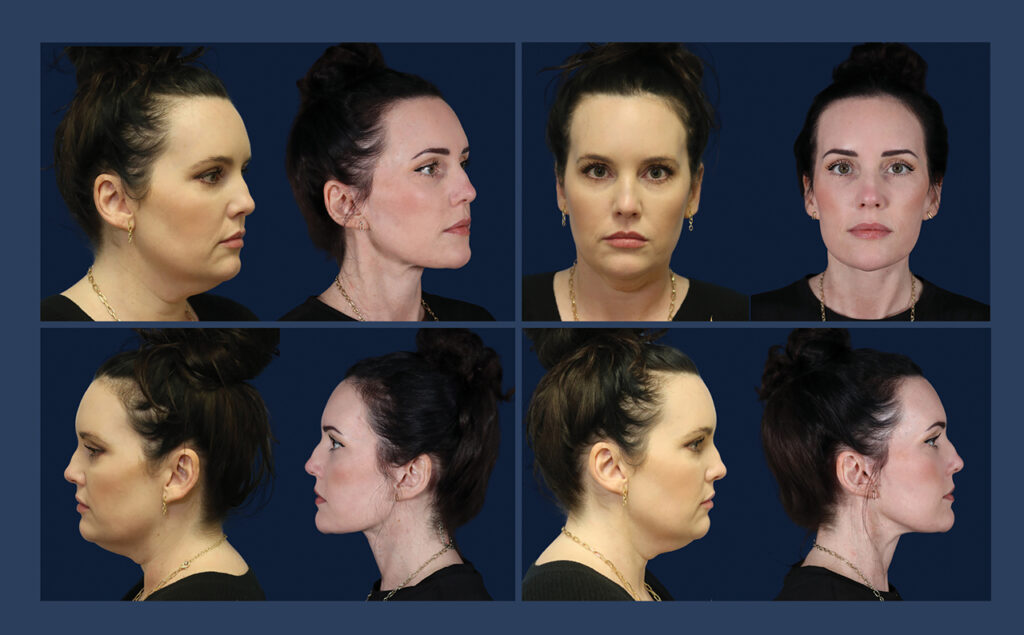
While often associated with aging, facelifts have become an increasingly popular solution for the facial changes brought on by significant weight loss — particularly in the lower face and jawline, where sagging skin, deep folds, and volume loss can leave behind a tired or gaunt appearance.
Unlike nonsurgical options, a facelift offers comprehensive, lasting correction by removing excess skin and repositioning underlying muscles and connective tissues to restore youthful contours. For patients struggling with loose skin that can’t be tightened with fillers or energy devices alone, a facelift delivers a level of structural refinement that other treatments can’t match. It’s a more involved procedure, with recovery typically lasting two to three weeks, but results often last 10 years or more, making it a long-term investment in both confidence and facial definition. Depending on complexity and location, facelifts generally start at $15,000.
Treatments for post-weight loss corrections are often elective and not covered by insurance, adding to the already high out-of-pocket cost of GLP-1s, so it’s essential to work closely with your provider to identify the most effective approach within your goals and budget.
“I will typically triage them by looking at what the skin is doing — what’s the quality, is there too much, and have they had volume loss,” says Davies. “Then, you address each one individually.”
Thinning and Winning
Ultimately, losing a significant amount of weight is a major accomplishment — one that can dramatically improve health, energy levels, and quality of life. While facial changes may be an unexpected outcome, Dr. Carl Pearl, plastic surgeon at Chatham Plastic Surgery, believes it is secondary to the deeper, long term benefits of reaching a healthy weight. “I think the fad name behind it is a little dangerous. It can create a stigma around weight loss in general that’s unhealthy,” Pearl says.
Although he offers a range of treatments for patients who’ve experienced significant weight loss, Pearl believes the conversation needs to shift, prioritizing health and happiness over anything else. “I feel strongly about that,” adds Pearl.
According to a 2024 survey conducted by the American Academy of Facial Plastic and Reconstructive Surgery — the world’s largest specialty association for facial plastic surgery — nearly half of AAFPRS facial plastic surgeons observed a noticeable rise in patients seeking procedures to mitigate the cosmetic effects of GLP-1s. Additionally, one in four surgeons anticipate these medications will drive an increased demand for nonsurgical treatments.
As the use of GLP-1 medications grows, so too does our understanding of the effects significant weight loss can have on the body. Navigating these changes requires careful consideration and should be approached thoughtfully with the support of qualified professionals who prioritize long-term well-being and sustainable results.