




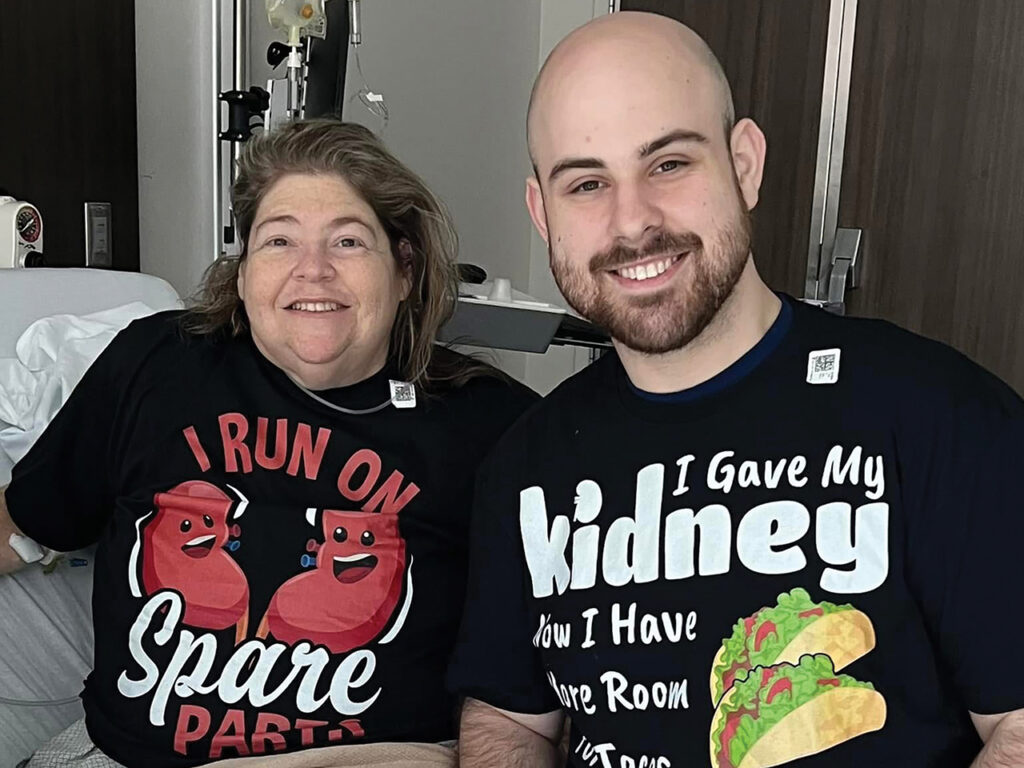
After a serendipitous meeting, two Savannahians share a bond deeper than friendship — they share a kidney.
Written by MALEAH STEPHENS
AFTER DECIDING SHE WANTED to purchase “grownup furniture,” Dayna Cohen felt drawn into a Rooms To Go one fateful October morning in 2021. There, she would meet the person she’d later credit for saving her life.
Jake Rowland was a sales associate working the floor at the time. He approached Cohen, hoping to connect her with the perfect bedroom suite, but instead, he found a connection of his own. Their cordial chat about bed frames and dressers quickly evolved into a friendly conversation about accents and the must-try restaurants in New York City.
Cohen, originally from New York City, was excited to find out that Rowland planned to travel there that December. She eagerly listed off the best restaurants. “I was telling him, ‘Oh, you gotta do this, and you gotta try that,’” Cohen says.
Rowland, happy to receive the expert opinions of a native, took her suggestions to heart. “We just sat and talked for a good 45 minutes,” he says. He even added her as a Facebook friend. “It was uncommon, and I had never added a customer over Facebook, but she was different,” he says. “She felt like a friend I had always known.”
After leaving the store with both new furniture and a new friendship, Cohen stayed in touch with Rowland via Facebook. They shared pictures of food they enjoyed and memes they found funny, and they met up intermittently for lunch to catch up.
During one of their lunches in 2023, Cohen filled Rowland in on the kidney issues she had been having and how she needed a transplant.
“I wasn’t thinking anything of it,” Cohen recalls of the conversation. “We were just reconnecting.”
But for Rowland, this was more than a life check-in — it was a calling. “It planted a seed,” he says.
Admittedly, Rowland says it seemed unlikely that he could help Cohen. The odds of two people being a perfect match are incredibly low. For unrelated individuals, it’s less than 1%.
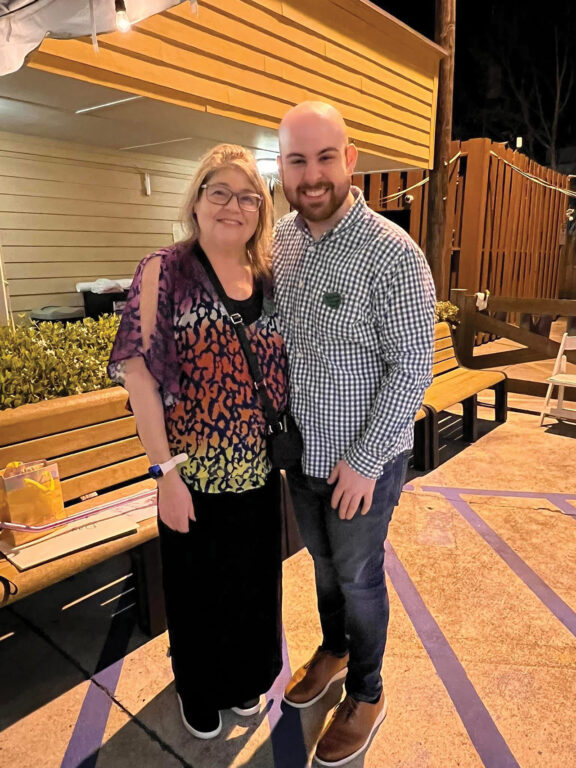
And the decision to donate is just the beginning. Testing can take three to six months before the donor is approved as a match, and it can take anywhere between two to eight weeks after that before the patients are in the operating room. During this time, kidney failure is continuing to progress, making each day without a donor highly worrisome for the patient whose life depends on this transplant.
But Rowland couldn’t shake the feeling that he could help. Scrolling on Facebook, he came across a website Cohen created in her search to find a donor. There, he made the stunning discovery that they had matching blood types.
“I thought that was my sign to pursue this,” says Rowland. After finding the contact to a transplant coordinator listed on Cohen’s website, he decided he could potentially be a donor and started the process that day.
Rowland began traveling back and forth between Savannah and Atlanta to complete the necessary testing — all completely unbeknownst to Cohen. “I didn’t know that Jake was a match, and you’re not told who’s getting tested because of HIPAA laws,” she says. And she didn’t feel worthy, either, recalling, “I didn’t think anyone would care enough to get tested for me.”
Though Rowland wanted to tell Cohen what he was doing to give her hope, he decided it was best to complete the testing beforehand, so as not to disappoint her. As she continued working through dialysis and campaigning for a donor, he was undergoing extensive testing — involving several different blood tests, dietary modifications, infection screenings, and more — alone and at record speed.
Finally, after just under two months of traveling to and from the hospital, Rowland received the news: He was a match. “Mine was one of the fastest timelines of someone going through the process,” Rowland says, still stunned by how easily everything fell into place.
Wasting no time, he messaged Cohen on Facebook that he wanted to meet up, and Cohen happily welcomed Rowland into her home.
He says that when he told her that he would be the donor, all the color left her body. Cohen immediately attempted to dissuade him from going through with the donation process, but Rowland refused to budge.
“It’s made me rethink my feelings on fate and coincidence. We don’t meet anyone by chance, and you have to really value who comes into your life because you never know what they might mean to you.”
Jake Rowland
Once Cohen accepted Rowland’s offer, they filled his parents in on the news. They had several questions, all of which Rowland was able to answer with ease. “They were concerned,” he says. “But they know once I make my mind up, there’s no changing it. This was no different.”
Their reservations about Rowland’s decision quickly dissipated once they met Cohen, and they welcomed her into the family.
Surgery was set five months later in August 2024. “I was texting him the day of surgery, asking if he still wanted to go through with this,” says Cohen. “He was just like ‘Oh my God, you’re being so silly, come on.’”
After the operation, both patients were up and walking within hours — unusual for transplant situations. The typical recovery process can take roughly six weeks, with patients often requiring 24 hours before they can walk.
As they look back on this time, both Cohen and Rowland still have chills from how easy the process was. “It’s made me rethink my feelings on fate and coincidence,” says Rowland. “We don’t meet anyone by chance, and you have to really value who comes into your life because you never know what they might mean to you.”
Today, Rowland is an associate broker and director of operations for Team Kristin Brown, Keller Williams Coastal Area Partners. Cohen, a former insurance broker in New York for over 25 years, is taking time away from employment to recover.
Together, they are advocates for organ donation and are in the very early stages of working to start a foundation for those who are undergoing transplant surgery or are interested in donating. Cohen hopes that their story gives people that extra push to not give up and to keep going to dialysis or to go do that one medical test. “Then it makes everything I’ve been through worth it,” says Cohen.
From group support and counseling for those interested in donating to providing gift cards for gas and dinner money to those feeling drained from dialysis, the pair are determined to ease the process of organ donation and spread the miraculous hope they witnessed during their own experience.