


Clinic enables those with physical and cognitive challenges to get back to living again.
Written by MARY CORNETTA
Photography by CHRISTINE HALL
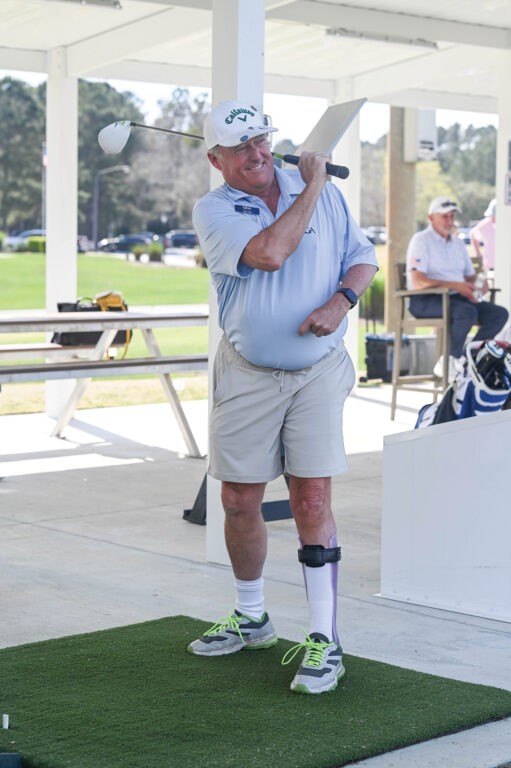
BY HIS 30TH BIRTHDAY, Gary Head had suffered two strokes that left his left side paralyzed. But he refused to let that keep him from playing the game he loved. “I decided I wasn’t going to give up golf,” he says.
Today, Head is the Savannah clinic coordinator for the Georgia State Golf Association’s Adaptive Golf program, which has 11 locations across the state. Over the years, Head had taught himself how to swing with one arm, a skill that led his son to call him a superhero. So, “When people come to our clinic for the first time, I don’t ask them what their disability is, I ask them what their superpower is,” says Head.
The GSGA’s Adaptive Golf program is designed to enable anyone with a physical, cognitive, or sensory impairment — including veterans suffering from PTSD — to learn the game of golf and become part of a community. According to Head, “We help people develop a camaraderie between us because we all have some sort of challenge.”
The program can also serve as an extension of rehabilitation for those who are recovering from traumatic events, such as a car accident, spinal injury, or amputation. “When someone is in a rehab facility, wondering what life will look like going forward, this shows them there is something they can do that also gets them out of the house,” explains Head.
Adaptive Golf Savannah holds their clinic on the second Thursday of each month at the driving range of Crosswinds Golf Club; it is free of charge for all participants as well as their guests. The use of the range and equipment (such as clubs and balls) is funded by the GSGA, with volunteers running the clinics. The volunteers are trained by the GSGA to work with those with physical challenges, and physical and occupational therapists often attend to lend their services.
Per Head, “Some volunteers also have challenges and started as participants, and once they do well, they want to show others.” Head is a prime example of this, says David Windsor, the Adaptive Golf director for the GSGA. “Gary is paying it forward because as he’s gotten himself more recovered and proficient, he decided it was time to give back.”
Chris Thompson, a former PGA pro at The Club at Savannah Harbor, volunteers his time helping as the professional on staff for Savannah’s group. Thompson works with participants at their ability level, assisting with their form, grip, and swing. “They’ll hit a ball from here to the end of the range, and it’s like they won the Masters!” he says. “It’s a thrill to watch that, it just makes you feel so good.”
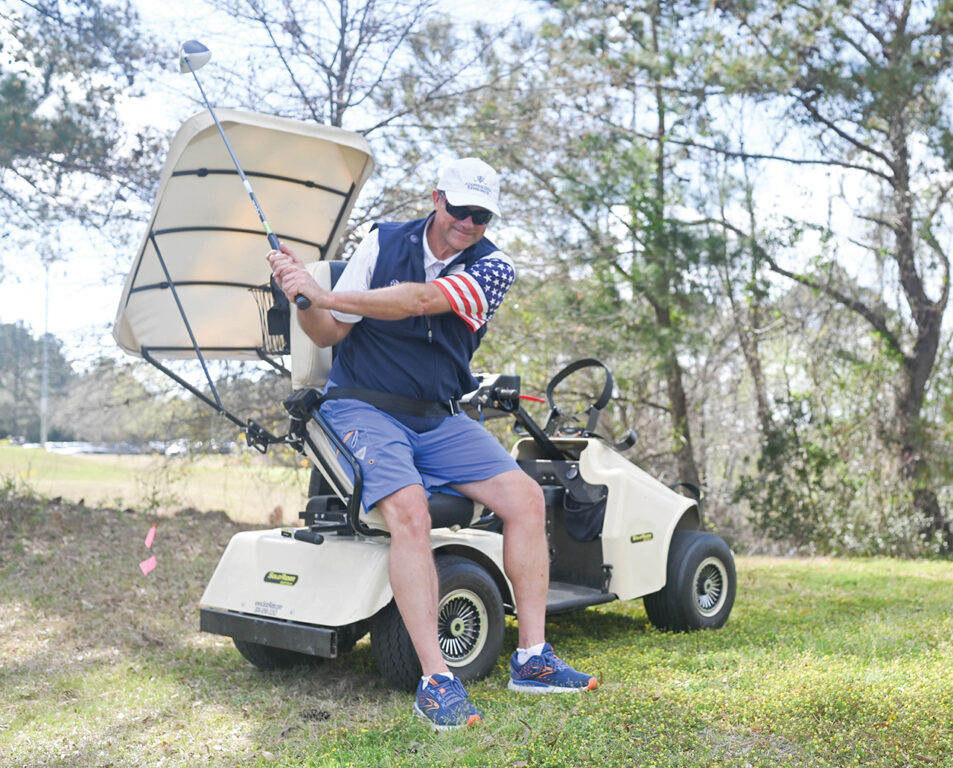
In addition to the professional guidance and free equipment, the program also offers the use of a specialized golf cart, called a SoloRider, which assists those in wheelchairs or with limited lower-body mobility. According to Head, a “seated play” cart allows for someone in a wheelchair to transfer to the cart, which has hydraulics in the seat that will stand someone up vertically so they can swing the club.
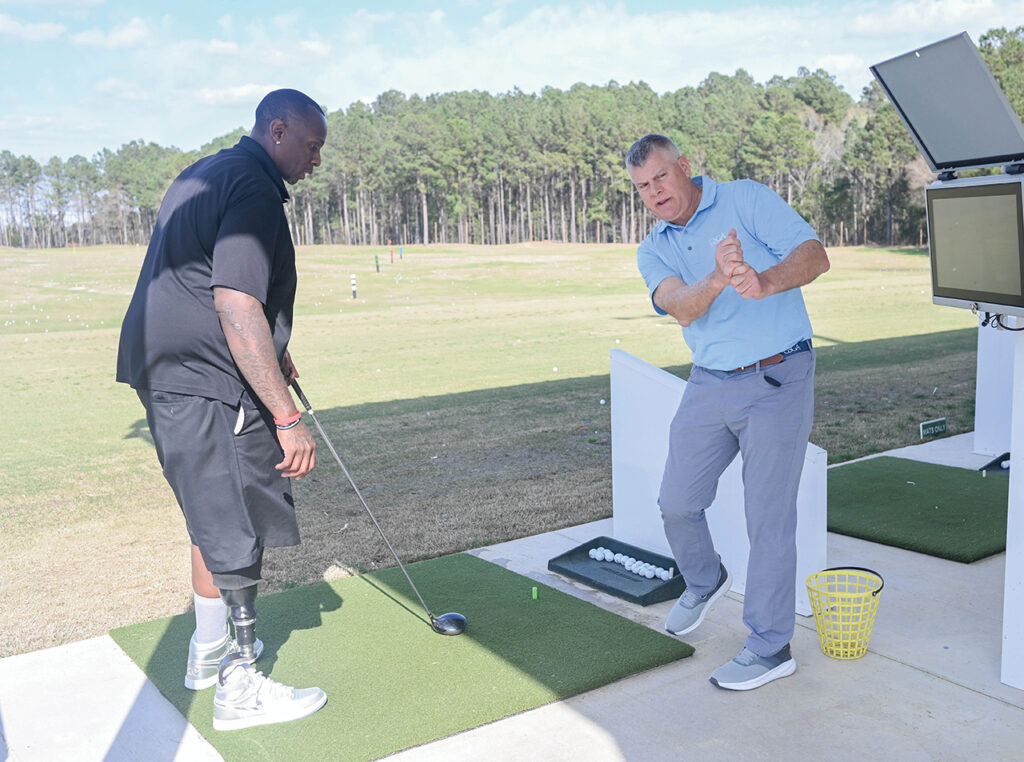
Henry Bryant, an amputee and the prosthetic clinical liaison at Reform Prosthetics in Savannah, recently joined the program. “I’ve never played golf before, so these guys went through all of the steps, from how to hold the clubs to my swing,” he explains. “Getting the mechanics down is interesting to me, and I enjoy every part of it.”
Some participants decide to take it up a notch and compete in tournaments held by the US Adaptive Golf Alliance. Head is currently rated as a top player in the country in the senior, one-arm golfer category.
Whether they give it their all in a USAGA tournament or simply enjoy hitting balls at the range, participants of all ages and abilities are welcome at Adaptive Golf Savannah. If you or someone you know is interested in attending their monthly clinic, fill out the form on their website: gsga.org/play/adaptive-golf.
Head is also available to give presentations at rehabilitation facilities, hospitals, and golf clubs to spread awareness of the program to those who can benefit from learning or relearning the game. As Head says, “Golf is the one sport that has a handicap system where, no matter how good or how bad you are, we’re all equal when we start.”