
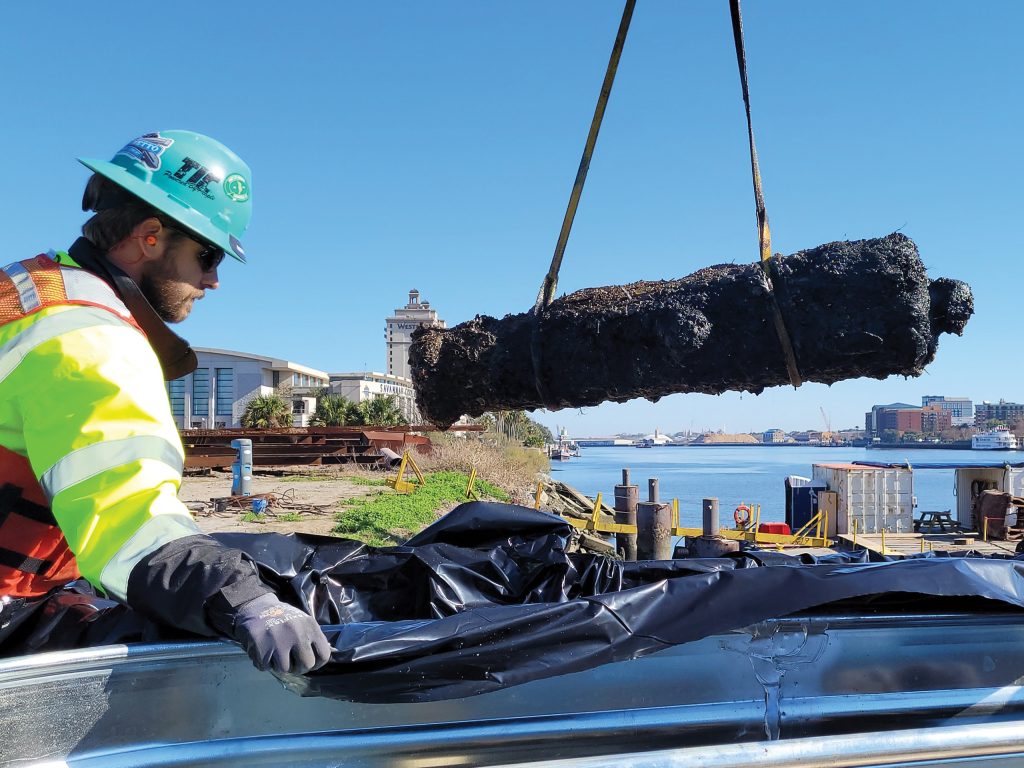
After being at the bottom of the Savannah River for 250 years, 17 British Naval cannons from the American Revolution can be seen at the Savannah History Museum.
Written by Christopher Berinato
Photography courtesy U.S. Army Corps of Engineers Savannah District
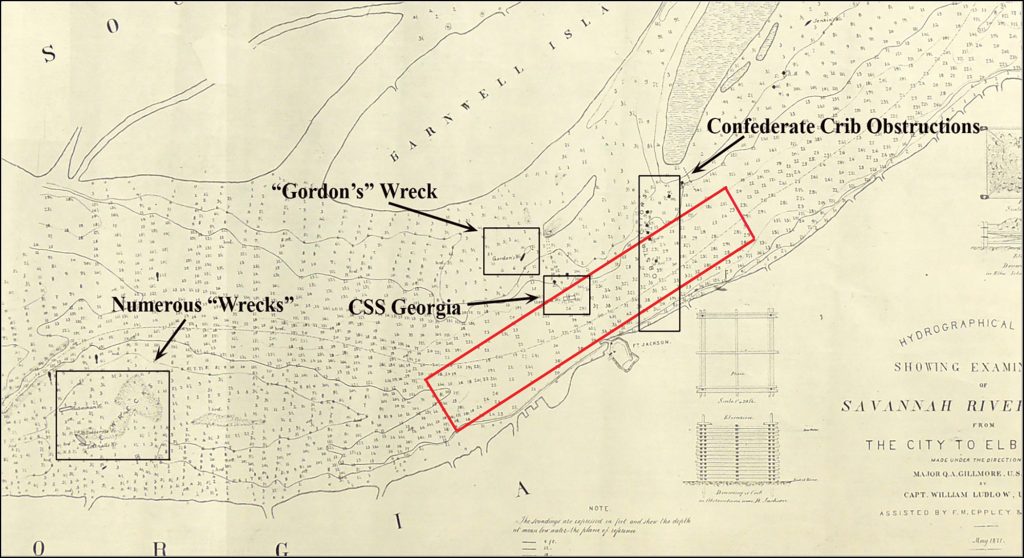
In 1779, during the buildup to the bloody Siege of Savannah, occupying British forces anticipated an attack from the mouth of the Savannah River by the French Navy, who were allied with American militia. In order to prevent an invasion from the river, the British Royal Navy scuttled several of their ships at Five Fathom Hole, a deep spot in the river near what is now Old Fort Jackson, using a common strategy to block the passage of ships.
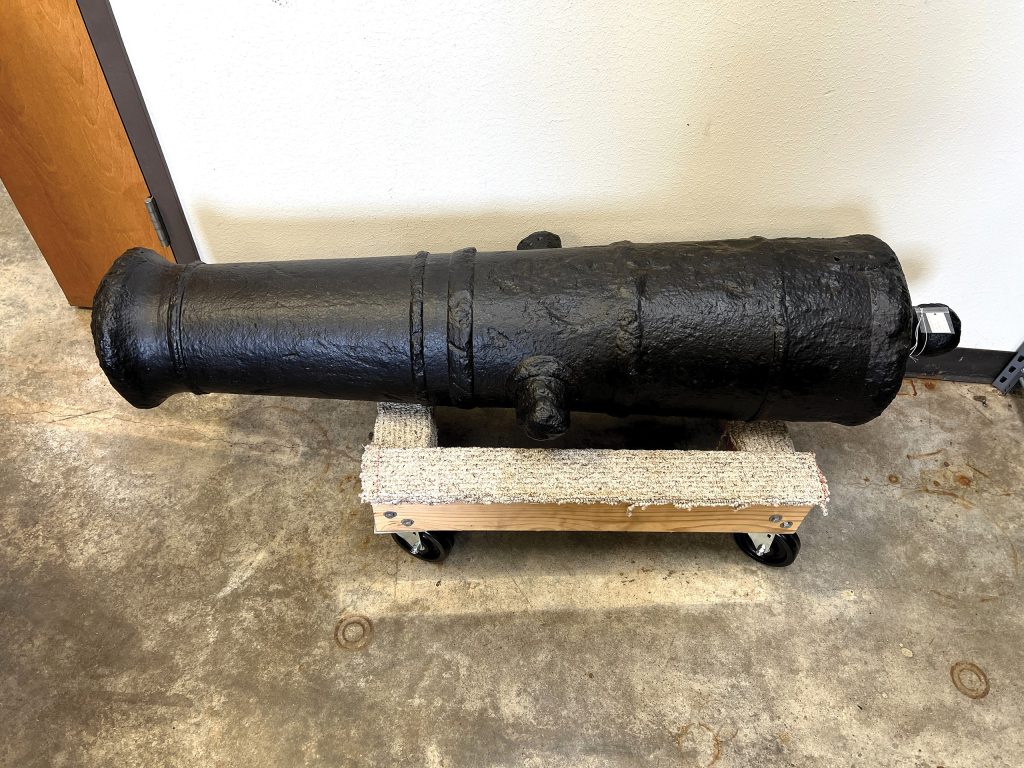
Now, nearly 250 years later, 17 British naval cannons and dozens of other artifacts have been dredged up from the muddy depths of the Savannah River and painstakingly restored to be displayed at the Savannah History Museum — just in time to celebrate the 250th anniversary of our nation’s founding.
This remarkable discovery happened almost entirely by accident. In February 2021, the U.S. Army Corps of Engineers (USACE) pulled up the first three cannons while dredging the Savannah River as part of its harbor expansion project to accommodate larger tankers entering the port. When dredging the area near Old Fort Jackson, workers considered the possibility of running into live ordnance left behind by the CSS Georgia, a Civil War-era ironclad ship that had been previously recovered from the river. So, a clamshell dredge was used instead of the usual cutter dredge because it could safely pull up debris from the river floor to be sifted through on a metal grate. It was meant to be a routine operation. Then early one morning, Andrea Farmer, an archeologist at the U.S. Army Corps of Engineers’ Savannah District, received a text: The workers had found a cannon.
“It wasn’t a big deal at that point because we just thought it was the CSS Georgia,” says Farmer. “Then the next clamshell that went down pulled up two more cannons and an anchor fragment, and we’re like, ‘OK, something’s unusual here.’”
Dredging operations were moved to a different part of the river while cannon measurements were sent to experts at Texas A&M University (who had worked on the CSS Georgia conservation). It was quickly determined that the cannons were manufactured in the mid-1700s and were definitely not from the CSS Georgia.
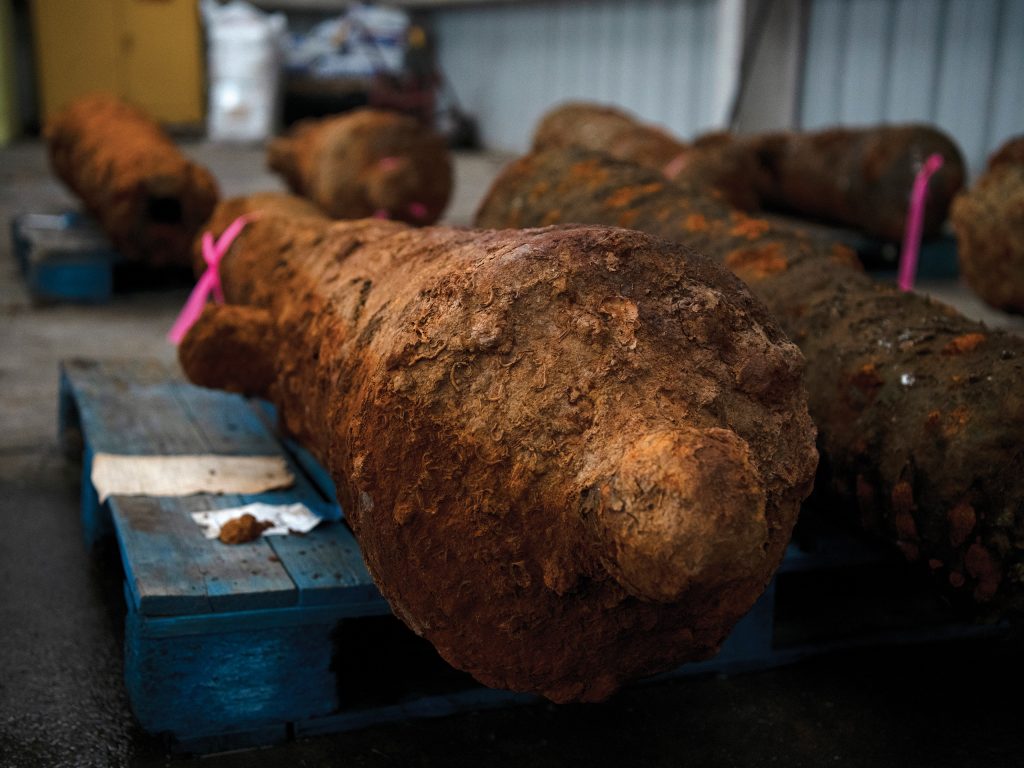
The USACE carried out a series of underwater archeological investigations, including remote sensing and diver investigations. Eventually, there were a total of 19 cannons recovered, but only 17 underwent conservation. Fragments of ship anchors were also found. It was determined by process of elimination that the cannons were most likely from the remains of the HMS Savannah, the HMS Venus, and a few other British transport ships.
Recovering the cannons and related artifacts was a bigger challenge. The USACE spent more than two years carefully pulling the rust- and barnacle-covered cannons from the clay bed of the river. Divers had to move or halt operations whenever ships came into the harbor, and they could only go down twice a day, during high and low tide, because the currents can get as strong as hurricane force gales. Visibility was low, too, with divers only able to see 6 inches in front of their faces, which meant they had to feel around with their hands to find artifacts. At one point, a diver found that an object identified by sonar as a cannon was actually a concrete piling.
Despite the rough outward appearance of the recovered cannons, they were unusually well preserved internally thanks to wooden plugs called tampions. The way the cannons fell and were lodged into the clay bottom of the Savannah River, then covered gradually with more clay, created a perfect environment to preserve the wood plugs and protect everything inside the cannon, says Farmer.
Many of the cannons were loaded with cannonballs, bar shots, junk wads, and, most amazingly, intact gunpowder cartridges. “The gunpowder cartridge, which is the paper, a lot of times people don’t know to look for it because they can’t believe that paper would last 250 years,” says Farmer. “Fourteen of the 17 cannons were still loaded, and we have most of the gunpowder cartridges.”
The next challenge was preserving the cannons after they were extracted from the river. Artifacts, especially metal ones, often degrade quickly once exposed to oxygen.
The cannons were sent to Texas A&M University’s Nautical Archeology Program and Conservation Research Laboratory, which specializes in artifacts recovered from water.
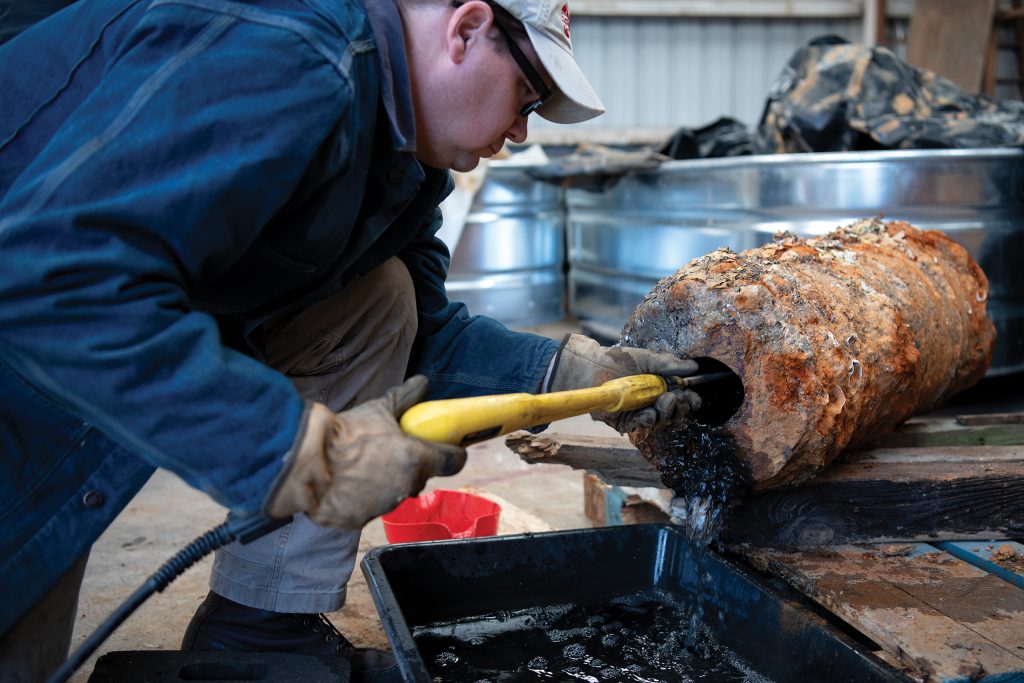
“These were not objects that could simply be rinsed off and put on display,” says Chris Dostal, director of the Conservation Research Laboratory and an assistant professor in the Department of Anthropology at Texas A&M University. “After centuries in the river, the cannons required careful treatment to remove corrosive salts, stabilize the iron, and preserve the evidence still contained on and within them. Our involvement was part conservation, part scientific study, and part public stewardship: making sure the cannons could survive for future generations while also helping tell a more complete story about their history.”
Cannons are rather common for Dostal and his team, but the Savannah cannons were exceptional. “It is one thing to conserve a single cannon, but it is extremely rare to come across a collection of cannons from the same historical context, especially with most of them still fully loaded and their internal elements so well preserved.”
The most challenging material was the rare paper cartridge bags, says Dostal. “Their treatment falls well outside the kind of material that our lab normally handles. The Conservation Research Laboratory is very experienced with waterlogged archaeological materials, including iron, wood, and other organics from submerged sites, but fragile historic paper required a different level of specialized expertise.”
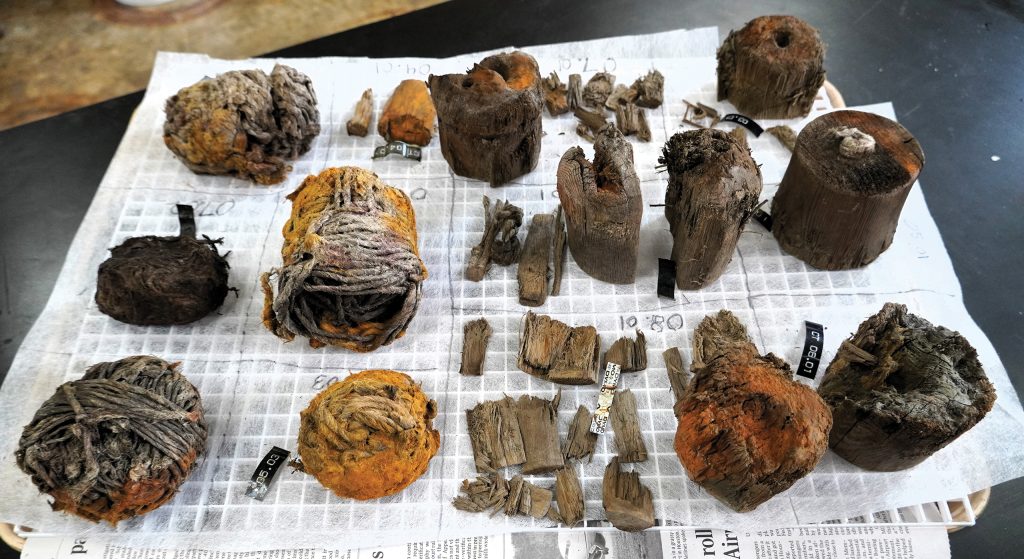
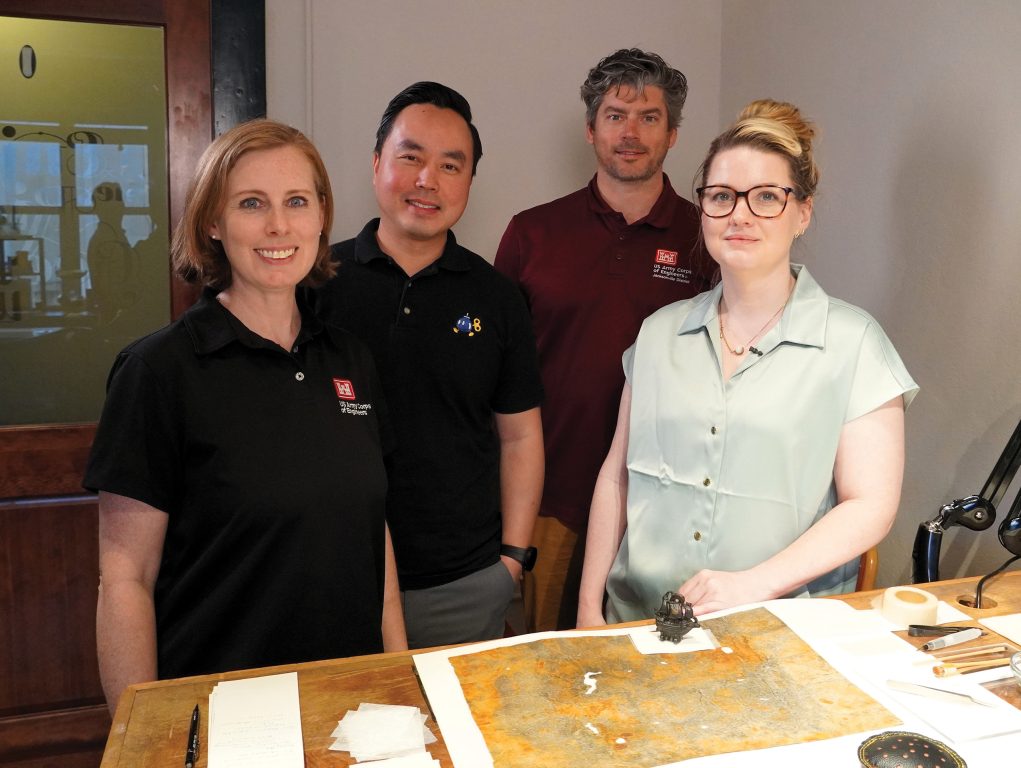
Jeanne Goodman, a world-renowned book and paper conservator, was brought in to consult and ultimately help reinforce the paper cartridge bags. Now, after three years of meticulous restoration, the cannons are ready for their new home in Savannah, but research on the cannons will continue. “The Savannah assemblage preserves patterns and details that are almost never available at this scale,” explains Dostal. “I suspect this assemblage will be a launching point for academic research for decades to come.”
The Coastal Heritage Society (CHS)has partnered with the USACE and the Georgia Department of Natural Resources to display the 17 restored cannons and related artifacts at the Savannah History Museum, which happens to sit at the actual site of the Siege of Savannah. The museum’s new landmark exhibition, “Loyalists & Liberty: Savannah in the American Revolution,” unveils on July 2.
“It’s incredible that this discovery was made a few years before our nation was rolling into the 250th commemoration,” says Nora Fleming Lee, CEO of the Coastal Heritage Society. “The timing of all of this really felt very serendipitous.”
The CHS supported the cannon project with fundraising and also constructed custom mounts to display the cannons. The mounts were fabricated at the Georgia State Railroad Museum by the CHS historic preservation team.
The “Loyalists & Liberty” exhibition will tell the story of Georgia’s part in the Revolutionary War through the diverse voices of people who really lived through it. The exhibit draws from the firsthand accounts of a loyalist woman, a free slave, two Georgia patriots, and a French soldier. And, of course, the addition of the cannons will help expand the naval aspect of Savannah’s history.
“We try to focus, in all of our storytelling and all of our historic interpretation at our multiple museums, on humanizing stories,” explains Lee. “We want guests to understand that the people who lived 100 years ago, 200 years ago, or 250 years ago aren’t really that different than you and I today.”