



2020 may be a year unlike any other — but Savannah’s valedictorians are going places. Here, our outstanding graduates strike a pose, backed by a heartening commencement address by celebrated writer (and Savannah native!) Bruce Feiler.

Listen with compassion, because our world is in need of more people who can empathize with others.
University of Notre Dame, business
The Wolf In the Fairy Tale
WORDS ON COMMENCEMENT
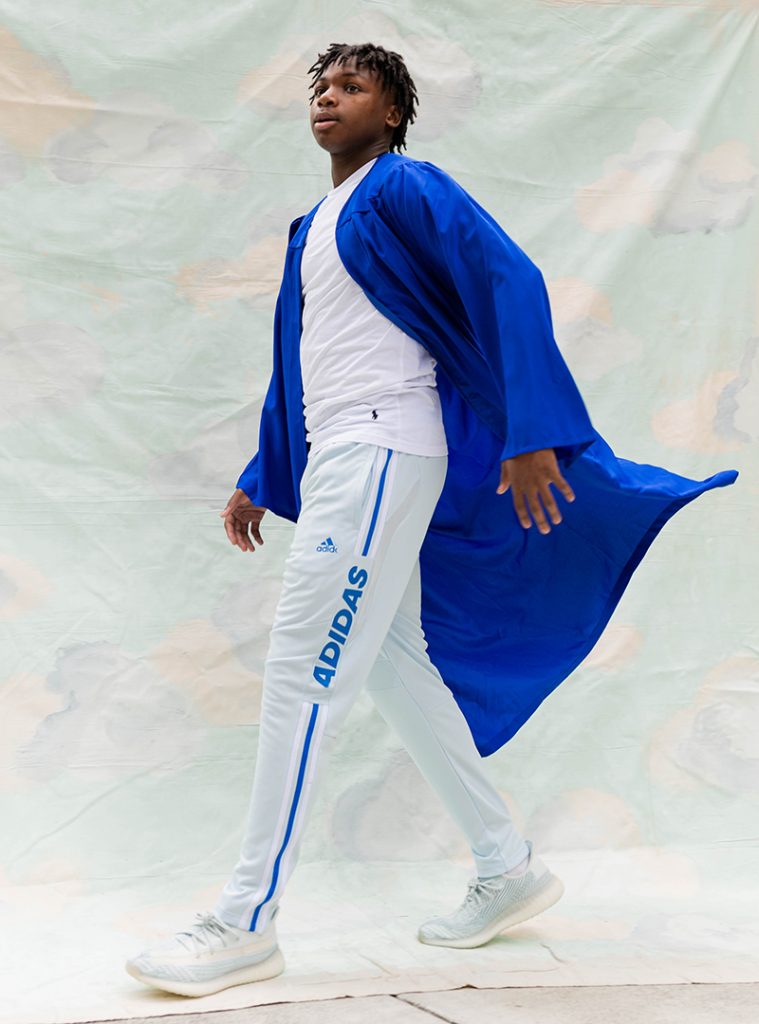
Take it one day at a time — and always put school first.
Shaw University (on a full basketball scholarship), computer science
Stop for a second and listen to the story going on in your head. It’s there, somewhere, in the background. It’s the story you tell others when you first meet them; it’s the story you tell yourself when you visit a meaningful place, when you flip through old photographs.

The worst they can say is no. Having this attitude has helped me in many aspects of my life where the fear of rejection might have otherwise prevented me from expanding my horizons.
Yale University, biology
It’s the story you’re going to tell yourself about your high school graduation. The one that didn’t happen. Or happened online. Or with a box of free doughnuts. Or three months late, with a commencement speech delivered in a magazine.

Be patient and persistent.
University of Georgia, biology and business
It’s the story of who you are, where you came from, where you dream of going in the future.
It’s the story of your life.
And that story isn’t just part of you. It is you in a fundamental way.

If you want something, you have to work for it.
Air Force
Life is the story you tell yourself.
But how you tell that story — are you a hero, victim, lover, warrior? — matters a great deal. How you adapt that story—how you revise, rethink, and rewrite your personal narrative as things change, lurch, or go wrong in your life — matters even more.

A flower does not think of competing with the flower next to it. It just blooms.
Georgia Institute of Technology, biology
Tiana Ruden, Savannah Arts Academy:
Work hard, try your best, and show kindness to others.
Princeton University, public policy
Recently, something happened to all of us: We lost control of that story. For a time, we didn’t know who we were; where we were going.
We were lost.
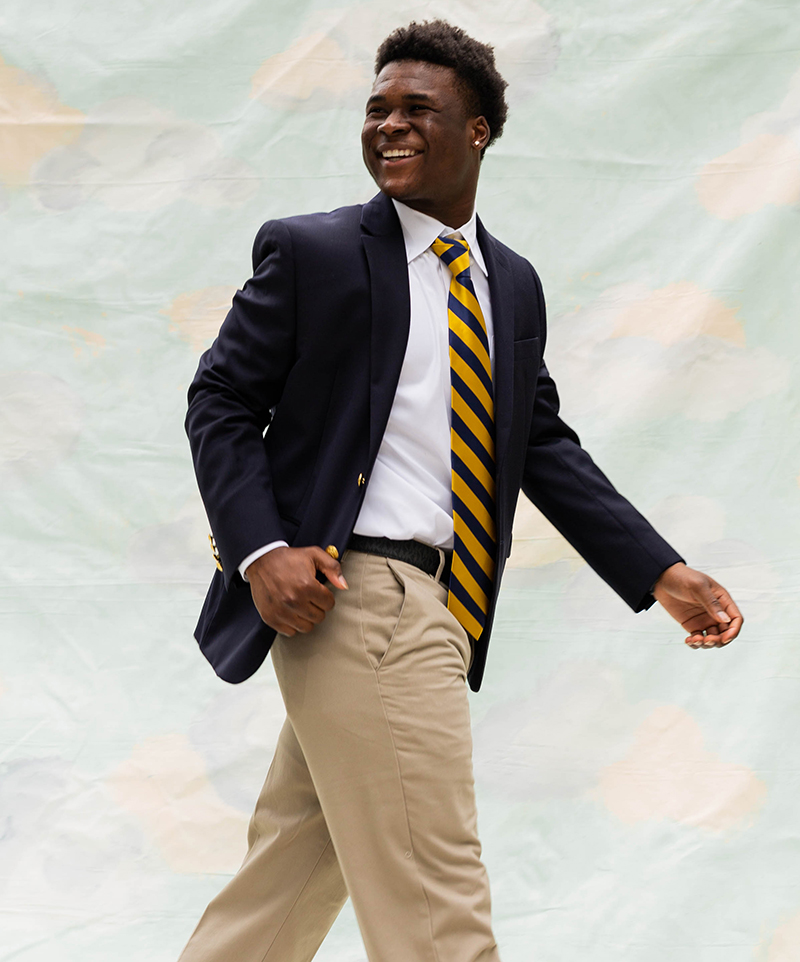
Bethesda Academy: Be phenomenal or be forgotten.
Presbyterian College, accounting
What I’d like to tell you today is that as graduation presents go, having the plot of your life be disrupted in this way, while certainly not pleasant, may be the most valuable gift you’ve ever received.

Veritas Academy: Always trust your intuition.
University of Kentucky, equine science and management
The reason: All fairy tales go awry. Wolves have a way of showing up. But it’s what happens next that makes the story a fairy tale.
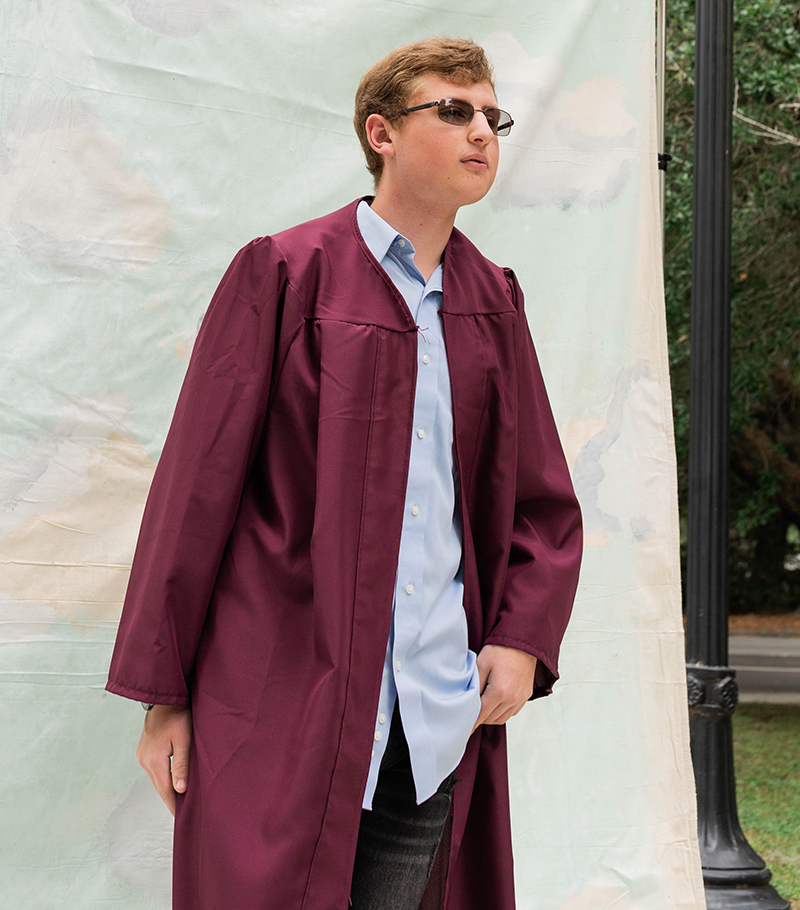
New Hampstead High School:
Avoid apathy and indifference, and know that it is OK to care.
University of Georgia, sports management
The hero shows up, too. And my message to you today: Be the hero of your own story.

Memorial Day School:
Live life with no regrets, be happy for what you’re given and cherish the ones you love.
Georgia Southern University, undecided
Hailey Flewallen
Memorial Day School:
Treat people like you want to be treated, make standards and keep to them.
Georgia Southern University, nursing
I’d like to begin by bringing up something we don’t talk about a lot but that plays an oversized influence in how we think about ourselves: Our lives take all different shape. The parents and grandparents among us grew up with an idea that may seem old-fashioned today: Our lives would follow a predictable path. We would go from low-level jobs to mid-level jobs to higher-level jobs to retirement; we would go from being single, to being married, to being parents, to being empty nesters.

Savannah Classical Academy:
Don’t sweat the small stuff and keep moving forward.
Georgia Southern University, criminal justice
Libraries of books were written about this idea; entire university departments were devoted to this.
Our lives were predictable, straight- forward, linear.
None of this is true today.
Worse, the idea itself is dangerous. It holds you back.

Johnson High School:
Good things come to those who wait.
Still deciding (accepted to eight schools!), mass communication
Today, the once-routine expectation that you’ll have one job, one relationship, one faith, one home, one body, one sexuality, one identity from adolescence to assisted living is deader than it’s ever been.

Islands High School:
The simple reassurance from the people who know me best that everything will be fine has helped reconfirm my confidence so many times when I’ve really needed it.
University of Georgia, wildlife sciences
For all the benefits of living nonlinearly — personal freedom, self-expression — it obliges us all to navigate an almost overwhelming array of life transitions.

Savannah Early College High School:
Have integrity and remain true to yourself in the face of obstacles.
Fisk University honors program, sociology
That means our stories will be interrupted by lots of wolves, lots of ogres, lots of twists and turns.
So how do we do that?
That’s what I’m here to share.

Habersham School:
Pursue what you enjoy — following a path merely for an outcome or reward
isn’t making the most of life!
Mercer University, mechanical engineering
I graduated from high school in Savannah in 1983 and spent the next 25 years living what we might consider to be a classic, linear life. I discovered what I wanted to do early on; I did it for no money for a long time, then I found success. I wrote books that made the bestseller list; I hosted television series; I got married and had beautiful children.
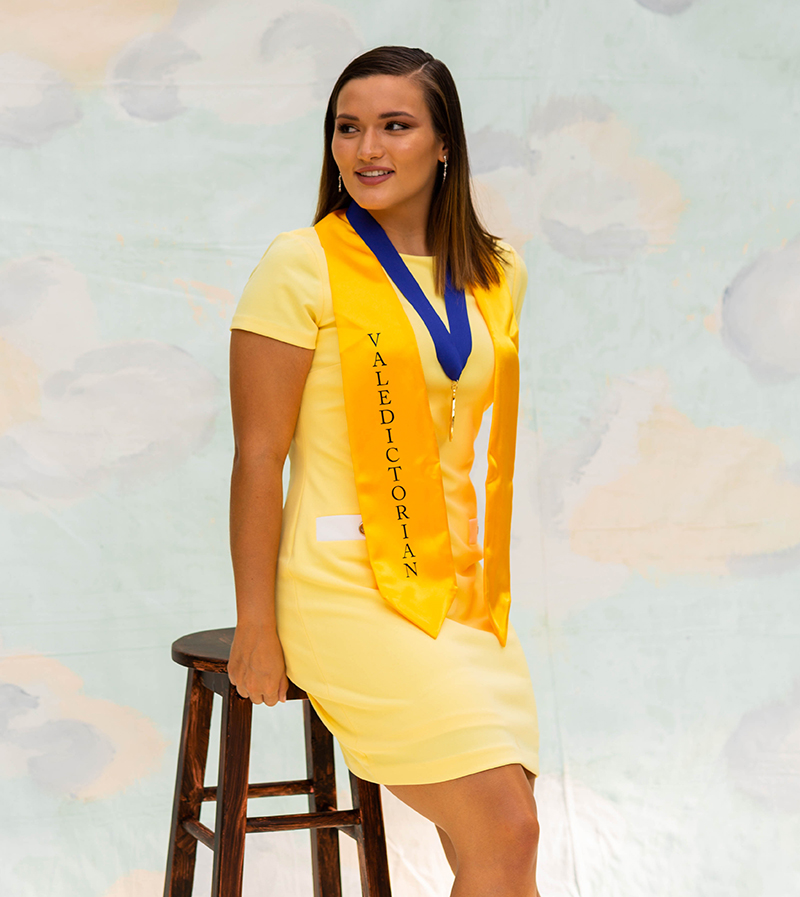
Windsor Forest High School:
Make sure you’re still living your life while also staying on top of your schoolwork.
Kennesaw State University, nursing
But in my 40s I had a back-to- back-to-back set of experiences that shattered that linearity. First, as a young dad, I was diagnosed with a life-threatening cancer; then my family was hit hard by the Great Recession; then my family suffered a wrenching crisis.
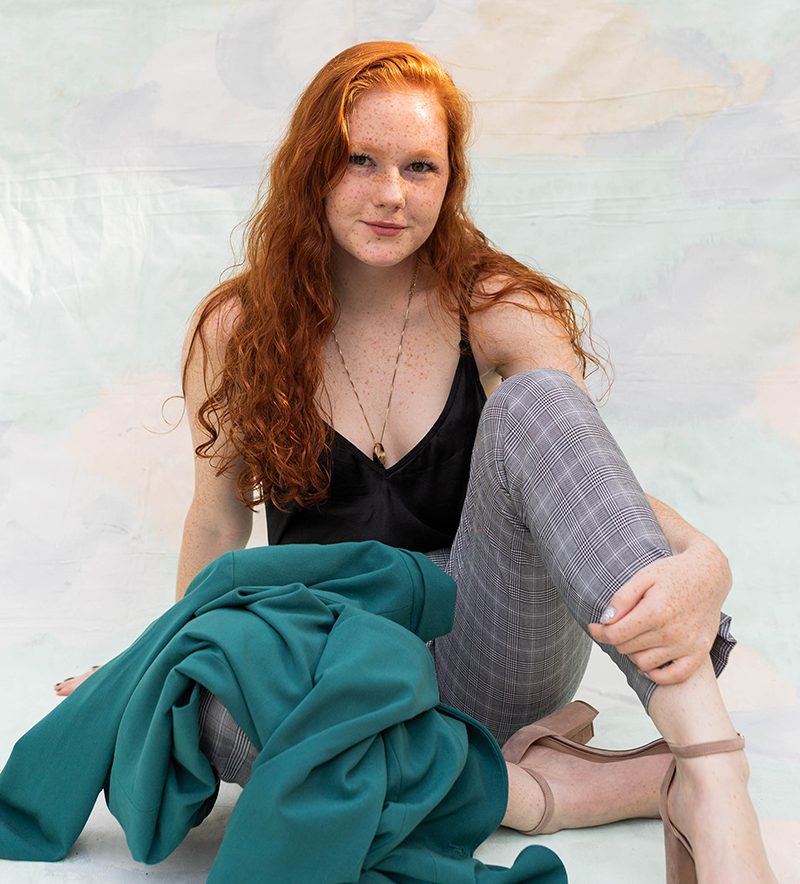
Calvary Day School:
Get in the shower if it all goes wrong.
Georgia Institute of Technology, environmental engineering
I spent the last five years, crisscross- ing the country, collecting hundreds of life stories of Americans who’ve been through similar, life-altering experiences. What I discovered is that I wasn’t alone. All of us face a quickening of disruptors, one every 12 to 18 months, according to data I collected. One in 10 of those becomes what I call a lifequake and leads to a massive life change. We spend half our lives in a state of transition. You or someone you know is going through one now.
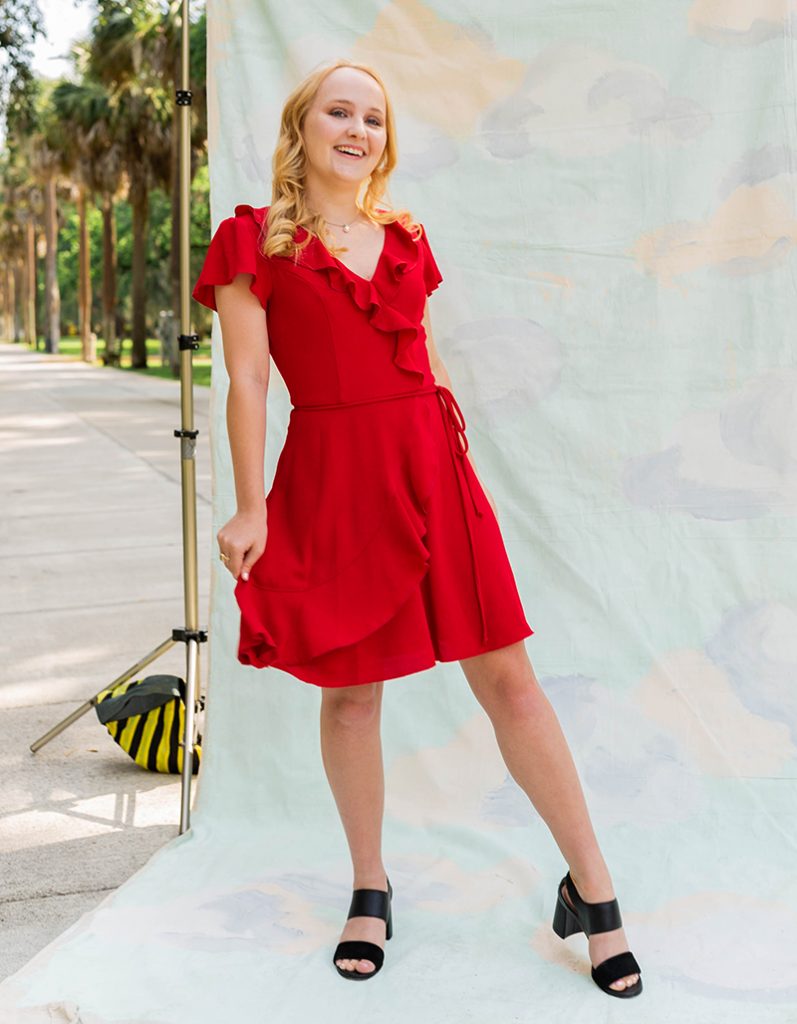
St. Vincent’s Academy:
The day you plant the seed is not the day you eat the fruit.
Wofford College, biology
In fact, graduating from high school may be the first significant lifequake you’ve ever experienced.
So what advice can I offer you about how to get through these times?
In a word: Turn your lifequake into your life story. Turn the most upsetting, destabilizing, discombobulating thing that ever happened to you into a story of how you triumphed in the face of unbeatable odds.
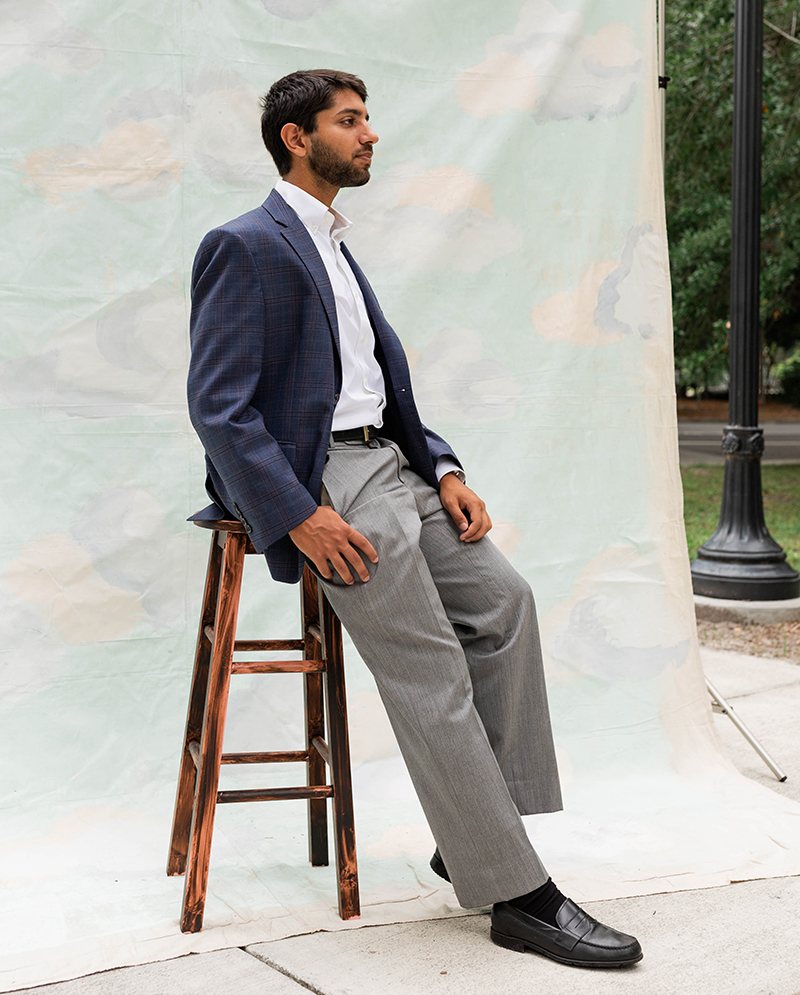
Savannah Country Day School:
Try everything at least twice — the first time might be a disaster, but giving something a second chance could mean the difference between giving up early or discovering something you’ll enjoy for the rest of your life.
Duke University, biophysics
Here are three concrete ways to do that:

Savannah Christian Preparatory School:
If no one is standing in your way, you might be going
in the right direction.
Georgia Institute of Technology, biomedical engineering
Write it down. When the pandemic first hit, the one thing I compelled
my teenage daughters to do was write about their feelings. Boy, did they resist! Three decades of research has shown that people who write about their most stressful life experiences develop greater insight into their emotions and learn to express themselves more fully. They also get new jobs more quickly, new relationships, even new health benefits. Why? Because they turn their misery into meaning.

Jenkins High School:
Discover your true passions and do what you enjoy.
Georgia Institute of Technology, computer science
Tell a friend. Revealing your problems to someone else releases soothing chemicals in our brains and activates systems in our bodies that help us relate better to others. When people relate their most traumatic experiences, their blood pressure and heart rate rise in the short term, but afterward fall below where they started — and remain there for weeks. As the old saying goes, “A problem shared is a problem halved.”
Nail the ending. Researchers have found that the most important quality to a story that helps heal us is a story that has an upbeat ending. The event may be positive or negative, but the story ends on a positive note. The larger point here is worth emphasizing: We have a choice in how we tell our life story. We do not write it in permanent ink. There are no points for consistency, or even accuracy. We can change it at any time, for any reason, including one as simple as making ourselves feel better.
Which brings me to the ending of this story.
Transitions, disruptors, lifequakes. At their heart, they’re interruptions in our life stories. But conflict is the one precondition of a story. For there to be a narrative at all, something unforeseen must happen. The purpose of the story is to resolve this breach.
The Italians have a wonderful expression for this phenomenon: lupus in fabula. Fabula means fairy tale. Lupus means wolf. Lupus in fabula means the wolf in the fairy tale, and Italians use it as the equivalent of speak of the devil. Just when life is going swimmingly, trouble appears, ogres arrive, pandemics pop up.
I’d love to tell you that what just happened to you this year will be the last such disruption. But it won’t. Wolves will be a regular part of your life. And that’s OK. Because once you beat one wolf, you know you can do it again. That’s why we need fairy tales. They teach us how to slay our fears and help us sleep at night. Which is why we keep telling them year after year, bedtime after bedtime. They turn our nightmares into dreams.
Congratulations! Go outsmart your wolves. Go write your own endings. Be the hero of your own story.
For more graduate images, click here.

