




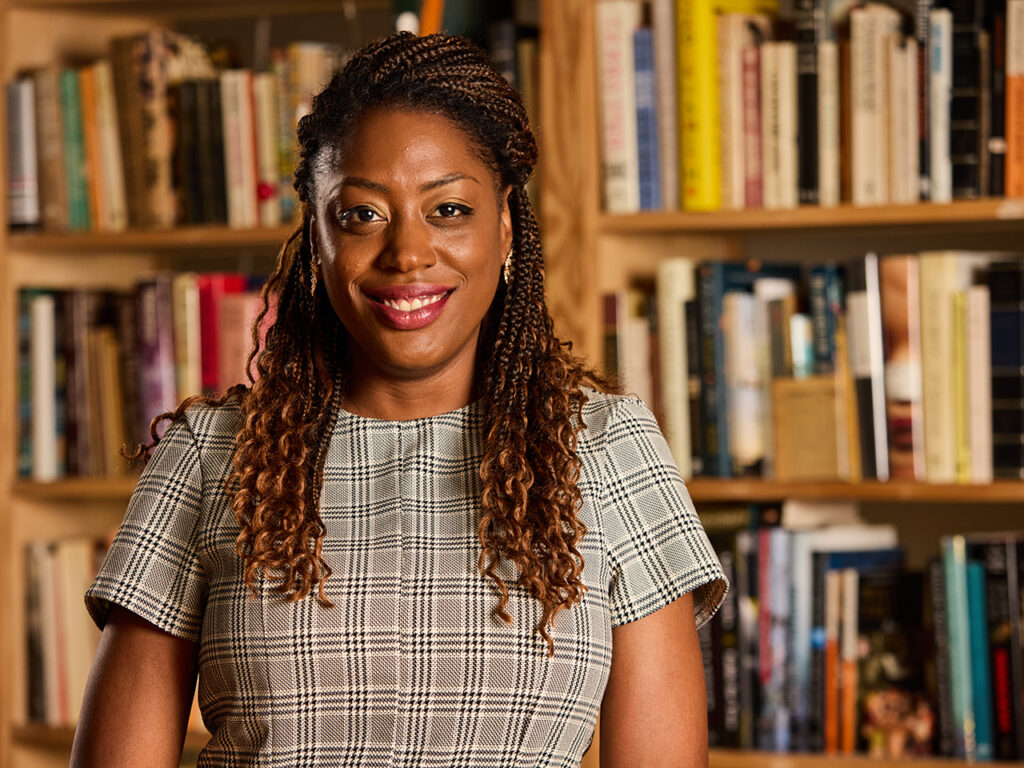
The League of Women Voters of Coastal Georgia aims to combat misconceptions and ensure every eligible voter knows their rights
Written by KA’DIA DHATNUBIA
Photography by MIKE SCHALK
MORE THAN A CENTURY IN THE MAKING, the League of Women Voters is just getting started.
What began in 1920 by leaders of the women’s suffrage movement, this nonpartisan, grassroots network has expanded its focus beyond empowering female voters to encourage everyone to take part in America’s democracy.
“I look at voting as a means of forever honoring those who have done so much before me — walked, boycotted and sat in — to ensure that I have the opportunity to go and cast a vote, that my vote isn’t being challenged, that my vote isn’t being minimized,” says Chassidy Malloy, president of the League’s Coastal Empire chapter.
Disenfranchisement is the state of being deprived of a right or privilege, such as the right to vote. According to data provided by the League, disenfranchisement prevented an estimated 250,000 Georgians from voting in 2020, and 58% of the disenfranchised Georgians were people of color. There is also an estimated 44,000 in pretrial detention in state jails, and another 400,000 will be released from prison or finish parole or probation this year. Of all these groups, many are unaware they are eligible to vote.
That’s why, in preparation for the 2024 presidential election, the League focused its efforts on spreading awareness to often overlooked communities.

Freedom to Vote
There is a common misconception that any involvement with the justice system automatically revokes your right to vote. However, Malloy clarifies that’s not the case in certain scenarios. “Folks who are serving under the First Offender Act, or who have conditional discharge, are eligible to vote,” she says.
In Georgia, the First Offender Act allows first-time offenders who have not been convicted of any felony in any state to avoid prosecution and its negative consequences by having their records expunged if they meet certain requirements.
“Also, folks who are awaiting trial,” Malloy adds. “If you have not been convicted of anything just yet, that is not an automatic revocation of your voting rights.”
To peel away the misconceptions, the League finds information is shared most effectively when there can be one-to-one, direct engagement with detainees. So, Malloy has been leading the charge on connecting with statewide chaplaincy services to meet folks where they’re at — literally. “We don’t see [prison] bars as a restriction for us to be able to reach those voters,” says Malloy. “And we don’t want bars to be restrictions to keep them from voting if they’re eligible.”
Power in Partnerships
To amplify its efforts, the League has made a conscious effort to seek support from other organizations that have already laid the groundwork. Through these partnerships, they’ve distributed updated voting rights videos to pretrial detainees and those who have served time but remain eligible to vote.
This begins with strengthening connections and resource networks through partnerships with community organizations such as the Atlanta-based Georgia Justice Project and Southern Center for Human Rights.
“It’s great to see that [the League] crosses genders now, and it’s way more inclusive of so many different segments of the population. We recognize that we all share this common goal to make sure that we are uplifting our mission to empower voters and defend democracy.”
Chassidy Malloy, president of the Coastal Empire chapter of The League of Women Voters
Other efforts to encourage voter participation include hosting forums where local community members can have direct conversations with candidates, just as they did for the Chatham County District Attorney’s race for the Eastern Judicial Circuit on Sept. 16, and mailing 3,500 postcards to folks in precincts with traditionally low turnouts.
The League has also tapped into grassroots community hubs, including sororities, fraternities, community centers and churches, to get the word out.
“A lot of churches have social justice teams,” Malloy says. “This is a great opportunity to reach out to them and say, ‘Hey, here’s a social justice issue of vital importance, and here’s a really great opportunity and some quick information for those who might be impacted by these social justice issues.’”
Looking Forward
Despite the promise of progress, this is still tough, trying work. When the work weighs the worker down, the League looks to the youth — intentionally including the next generation not only in the conversation but also giving them a seat at the table.
For instance, Harrison Tran is a local high school student who serves on the organization’s board, providing a direct line to the needs and concerns of his peers.
“It’s great to see that [the League] crosses genders now, and it’s way more inclusive of so many different segments of the population,” Malloy says. “We recognize that we all share this common goal to make sure that we are uplifting our mission to empower voters and defend democracy.”


