

Improvement plan seeks to upgrade Savannah’s waterfront while preserving its history.
Written by JESSICA LYNN CURTIS
Images courtesy SAVANNAH’S WATERFRONT
THE STORY OF SAVANNAH’S HISTORIC WATERFRONT is as old as Georgia itself. It dates back to 1733, when the Colony of Georgia was founded on the banks of the Savannah River, right where River Street exists today. Now, the Savannah’s Waterfront Vision and Implementation Plan aims to keep that story going with a new chapter.
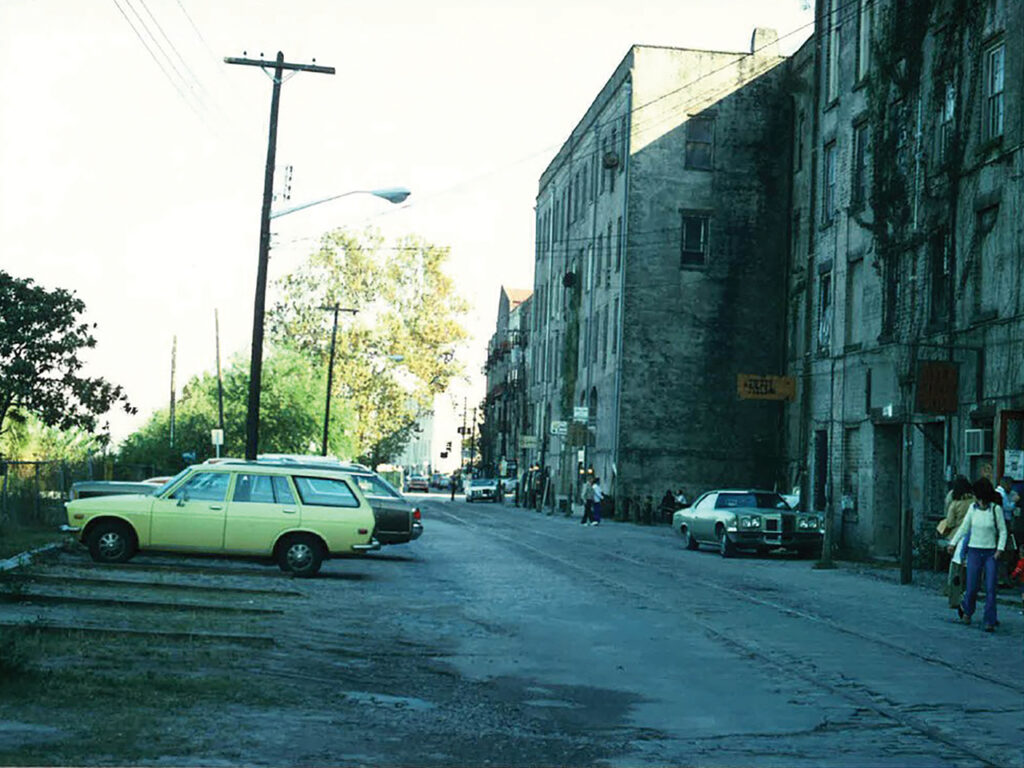
River Street’s History
As the Colony of Georgia grew throughout the 1700s, the waterfront served as the original Port of Savannah. By the mid-1800s, Savannah was the world’s leading cotton exporter, and four- and five-story cotton warehouses made of wood lined River Street.
Many of the original warehouses succumbed to fires and hurricanes over the years, but they were rebuilt using ballast material (stones used to stabilize ships) from visiting trade vessels. These sturdy upgrades are not only still standing, but they also remain a vital part of River Street’s charm.
The ramps down the bluff connecting Bay Street to River Street were paved with this same ballast material — chert, quartz, granite, basalt, and more — that traveled all the way from Spain, Madeira Island, France, the British Isles, and Canada. As you walk down these ramps today, pay attention to the cobblestones beneath your feet; when their look makes a sudden shift, it means you’ve reached the end of the stones from one ship and moved on to those of another.
With advancements in transportation and planters selling their cotton directly, Savannah’s cotton trade eventually dried up. The Savannah Cotton Exchange closed in 1951, and the Georgia Ports Authority moved upriver.
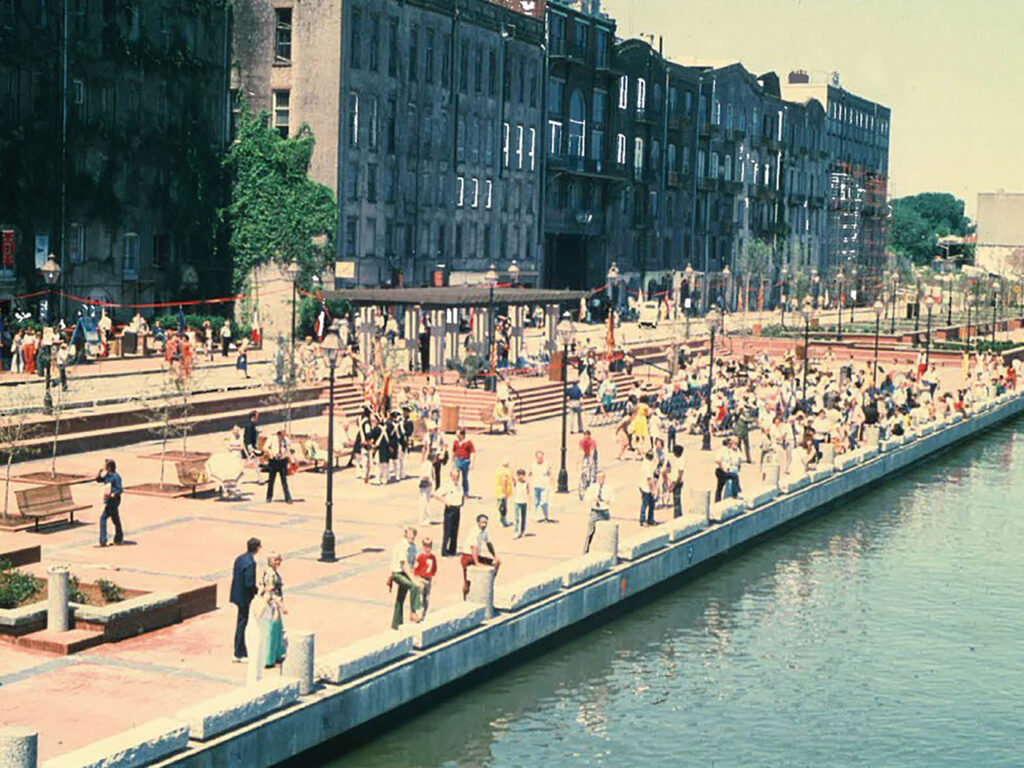
A Vision for Renewal
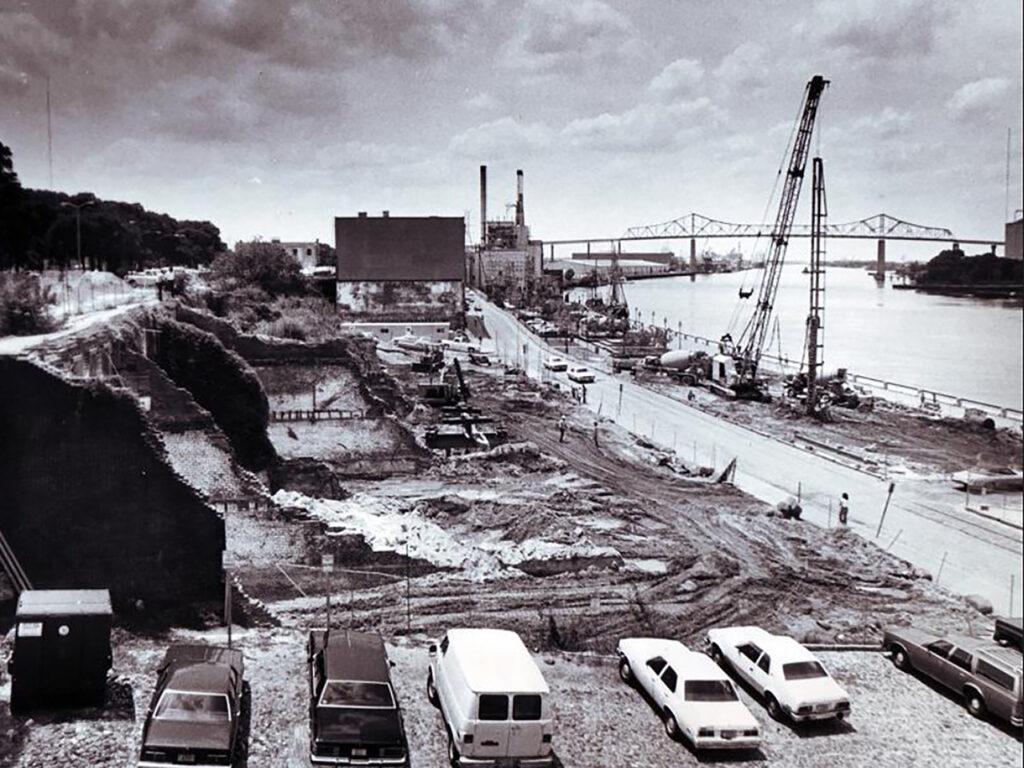
By the 1970s, the once-bustling area was being considered as space for a new parking lot. But local architecture power duo Eric Meyerhoff and Bob Gunn had traveled the world and spent time particularly in Venice.
“They were just taken by these beautiful European plazas, all the way down to the pattern of the pavement and the quality of developing these outdoor spaces that were really outdoor living rooms,” says architect Christian Sottile. Sottile is principal of Sottile & Sottile, a Savannah-based urban design and architectural firm, and a professor of architecture and urban design at the Savannah College of Art and Design. Meyerhoff and Gunn were convinced that similar outdoor spaces were possible for our beautiful city.
With help from Mayor John Rousakis and urban renewal funds, Meyerhoff and his team got to work on the Riverfront Urban Renewal Project, which spanned a half-mile along the Savannah River. They broke ground on the 30-acre plaza in 1975, and the stunning revitalization of the waterfront was completed in 1977.
“It was really a beautiful moment in American urbanism,” says Sottile. “It wasn’t just about Savannah — Savannah was leading nationally, showing the possibility of reimagining our waterfronts. It was bringing people to the water to enjoy it, transitioning from its industrial past.”
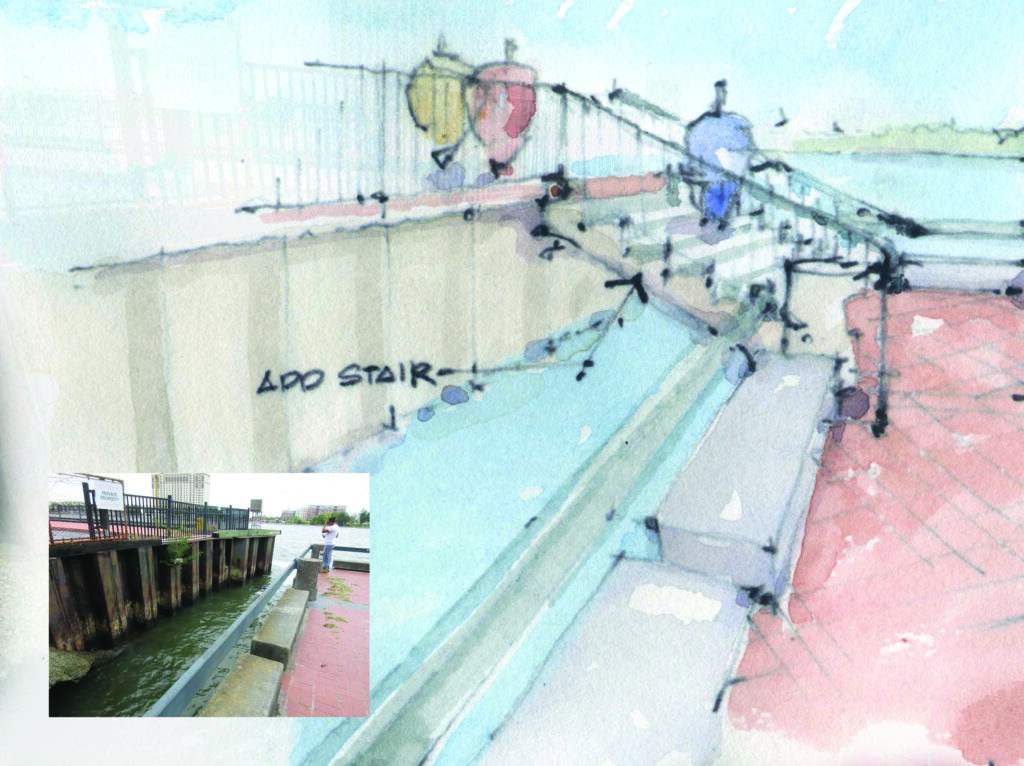
Connecting the River and the Community
Of course, upgrades and maintenance are needed as cities evolve. Studies in 2009 and 2017 both looked into what would be necessary to keep River Street thriving. The now completed Plant Riverside District and the grand stair at Montgomery Street connecting Franklin Square to the waterfront both came as a result of the 2009 study.
Savannah’s Waterfront Community Improvement District (SWCID) Board began a new study in early 2024: The Savannah’s Waterfront Vision and Implementation Plan.
“This plan allowed us to look at everything,” says Sottile, the plan’s architect. “It’s very comprehensive, but it’s also actionable. Some ideas are a little bit more long-term, but there are also more mid-term and immediate ideas. And the vision is grounded in taking Savannah’s most historic district and renewing it, while really staying true to its spirit and history.”
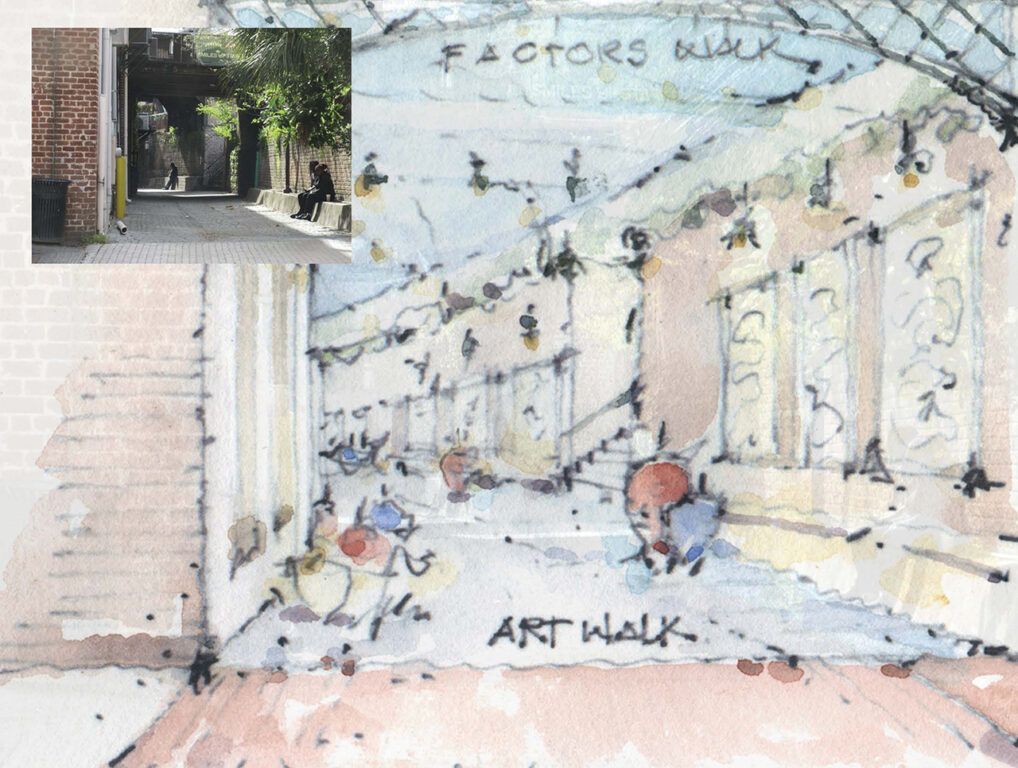
“And now it’s time for the rubber to meet the road and see how much things will cost and which ones we can do first,” says Julie Ford Musselman, executive director of the SWCID.
The city raised its hotel and motel tax in 2023, at the same time the SWCID was formed, and some of the resulting funds are earmarked for tourism product development, including the redevelopment of River Street. Commercial property owners in Community Improvement Districts (CIDs) also agreed to a higher tax rate to fund community improvement, and federal grants are additionally being leveraged for this project.
A central theme of the Vision Plan is connectivity — how to get down to the river and back up.
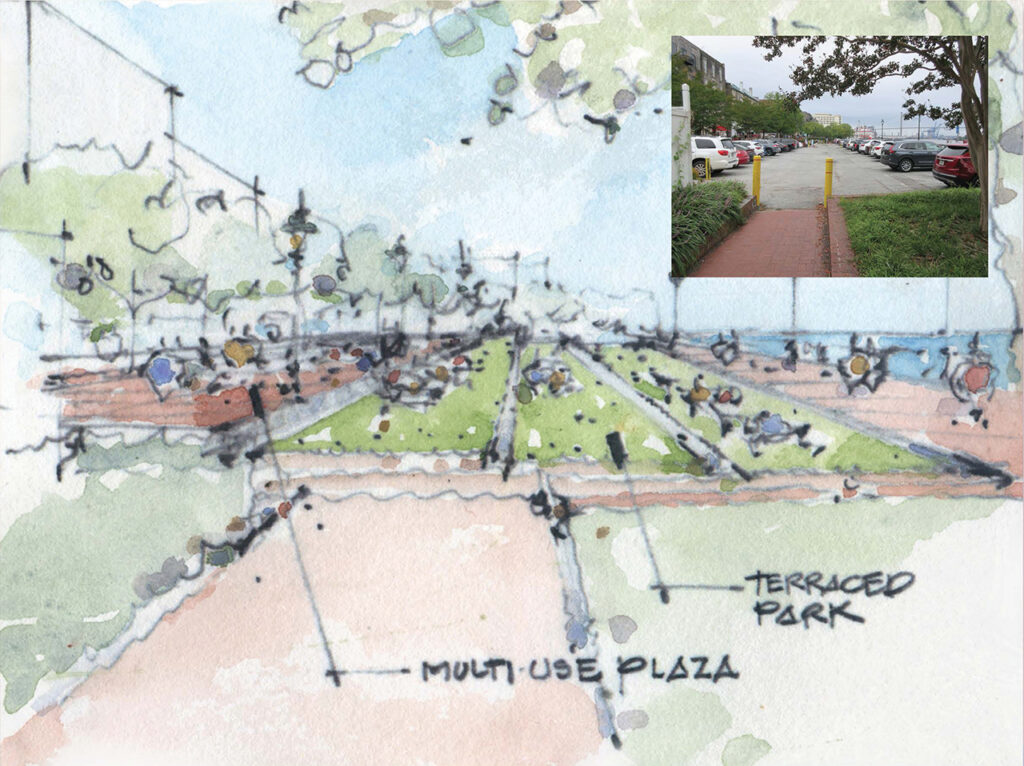
“The street is longer now than it was in the 1970s,” Musselman points out, “so we need connectivity at both ends and in the middle. We also have more people in our region now than we ever have, and we’re only going to have more, so we need more areas for people to enjoy the river.”
Opportunities include connecting and renovating Emmet and Morrell Parks and adding a playground on the waterfront, a gathering space for events and concerts, more dining spaces, and art galleries on Factors Walk to turn it into an art walk.
Other aspects of the project will focus on landscapes, hardscapes, sidewalks, lighting, security, signage, refuse, and other services.
“This waterfront belongs to everyone,” says Musselman. “It’s an asset for the whole state. And to be able to elevate the whole place so that we all can enjoy it well into the future — that’s what keeps me going.”