


The Bluffton-based nonprofit aims to lift up the Lowcountry’s Black-owned businesses with educational programming and an annual community-wide Roots & Rivers Festival
Written by TRELANI MICHELLE
“WE’VE ALWAYS HAD THE SKILLS, but when it comes to leveraging the playing field, we cannot do that on our own, because we didn’t shut ourselves out of access.”
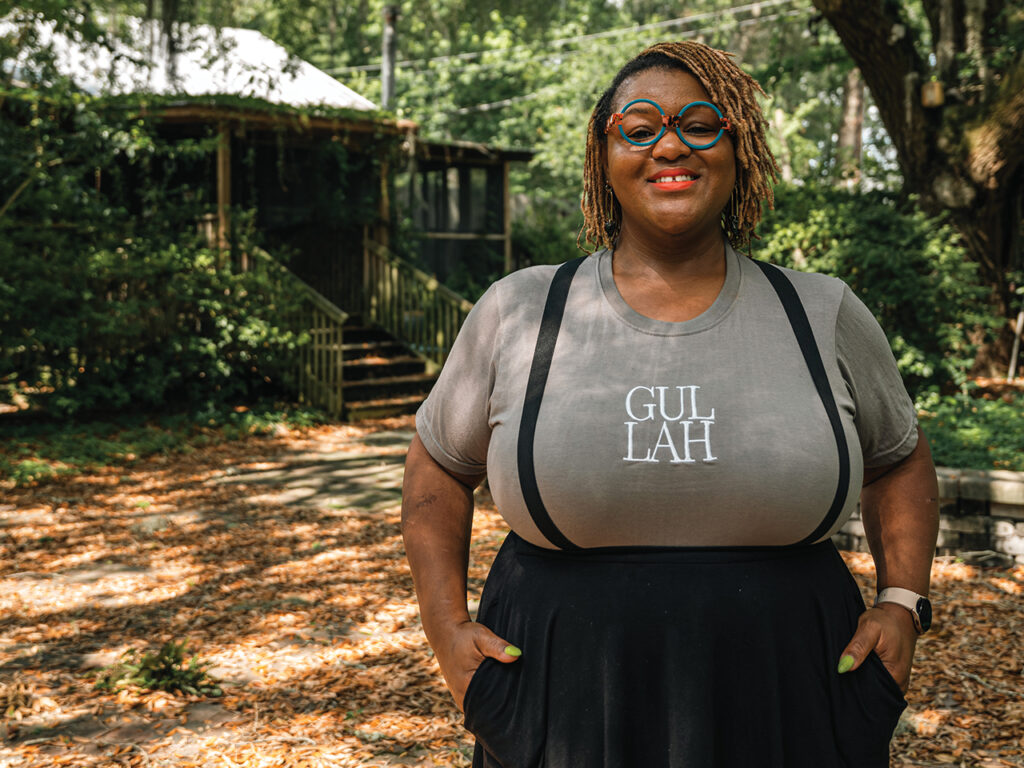
That’s what Bluffton, South Carolina, native and council-woman Bridgette Frazier recalls telling serial entrepreneur Billy Watterson when he asked how he could help further her efforts. This discussion, along with many subsequent meetings, led Frazier and Watterson to co-found BlacQuity, a nonprofit based in Bluffton that is dedicated to elevating, empowering and promoting local Black-owned businesses.
INVESTING IN CHANGE
After the death of George Floyd Jr. in May 2020 and the nationwide outrage that followed, many people sought ways to support Black entrepreneurs but lacked a central resource. In response, the Bluffton MLK Observance Committee created a directory of Black-owned businesses.
As a committee member and a former Beaufort County English teacher who was elected to the Bluffton Town Council in 2020, Frazier organized pop-up markets for Black entrepreneurs. It was at one of these markets that she met Watterson, the founder of Watterson Brands, which also includes Red Fox Organics, Bespoke Adobe, Burnt Church Distillery, Old Route 69 Brewery, Side Hustle Beer Co. and The Bank, among others.
“What does the Black community need?” Watterson asked Frazier.
“We don’t have the capital, and a lot of businesses just don’t have the foundational principles,” she answered, citing a need for educational resources to teach critical business skills, like how to create a profit and loss (P&L) statement, becoming a vendor with the city and state, setting up a website, balancing books and becoming bonded and insured — just to name a few.
Frazier suggested creating a curriculum designed to teach entrepreneurs essential business skills, which has since become the foundation of BlacQuity’s core program, Black Equity University. With Watterson’s support, the resulting 12-week course, as described on their website, “equips entrepreneurs with essential business knowledge, skills, connections in the community and resources in order to run or launch a successful business.” Black Equity University graduates include local Black entrepreneurs across various industries, such as food, retail, health and wellness, mobile detailing, dance, financial consulting, laundry, home health and photography.
STRENGTH IN NUMBERS
In the fall of 2021, Gwen Chambers joined BlacQuity as its executive director. Hailing from North Myrtle Beach, South Carolina, Chambers leveraged her experience in sales, marketing and community engagement to elevate BlacQuity to new heights. She also draws inspiration from the late Ida Martin, who founded Bluffton Self Help in the late 1980s to assist working families and senior citizens in need.
Chambers, a former volunteer coordinator and community outreach manager for the nonprofit, describes Martin as a powerhouse in the community. “Everything from food to clothing to shelter and running water, if you needed it, she would get it for you.”
In 2011, Martin’s dedication was recognized with the Presidential Citizens Medal, the nation’s second-highest civilian honor, awarded by President Barack Obama at the White House. Chambers acknowledges that while this was a significant achievement, more needed to be done. “We needed a way to empower and advance beyond just meeting basic needs,” she says. “When BlacQuity came along, I thought it was perfect. This is what is needed here.”
Bluffton was historically a predominantly Gullah city, largely as a result of General Sherman’s Special Field Order No. 15 in January 1865, which called for the redistribution of confiscated Southern land to freedmen in 40-acre plots. “Then, in the Jim Crow era, Bluffton had approximately 15 to 20 Black-owned businesses, including movie theaters, boarding houses and restaurants,” Frazier says. “Today, only two remain,” Chambers adds. BlacQuity works to ensure that number increases rather than declines, not just in Bluffton but across the Lowcountry.
A CAUSE FOR CELEBRATION
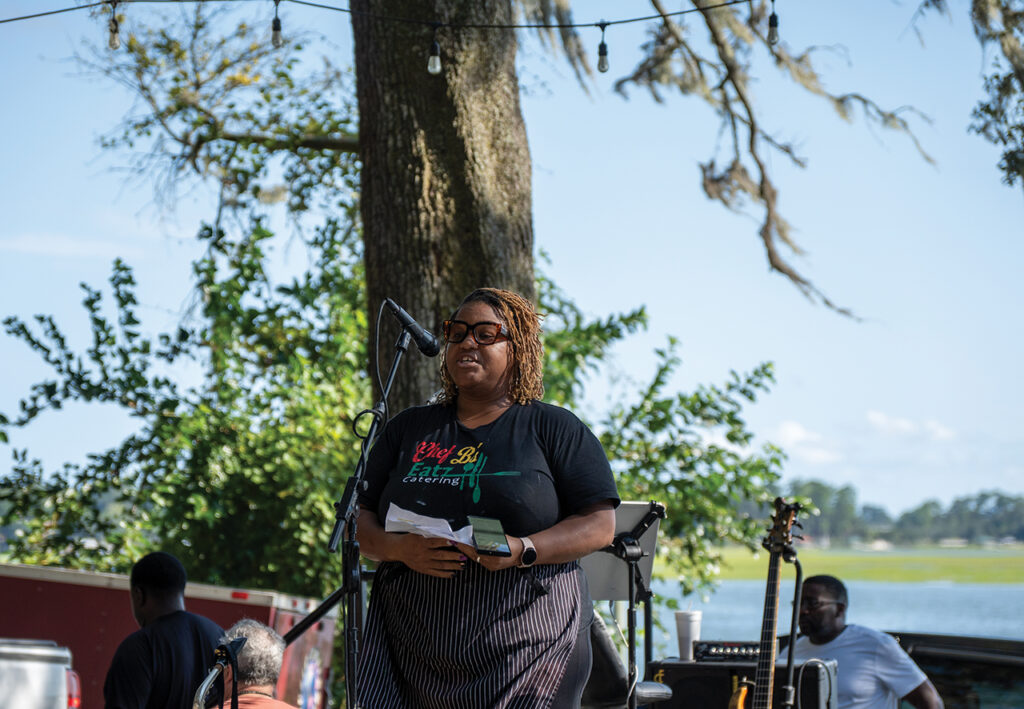
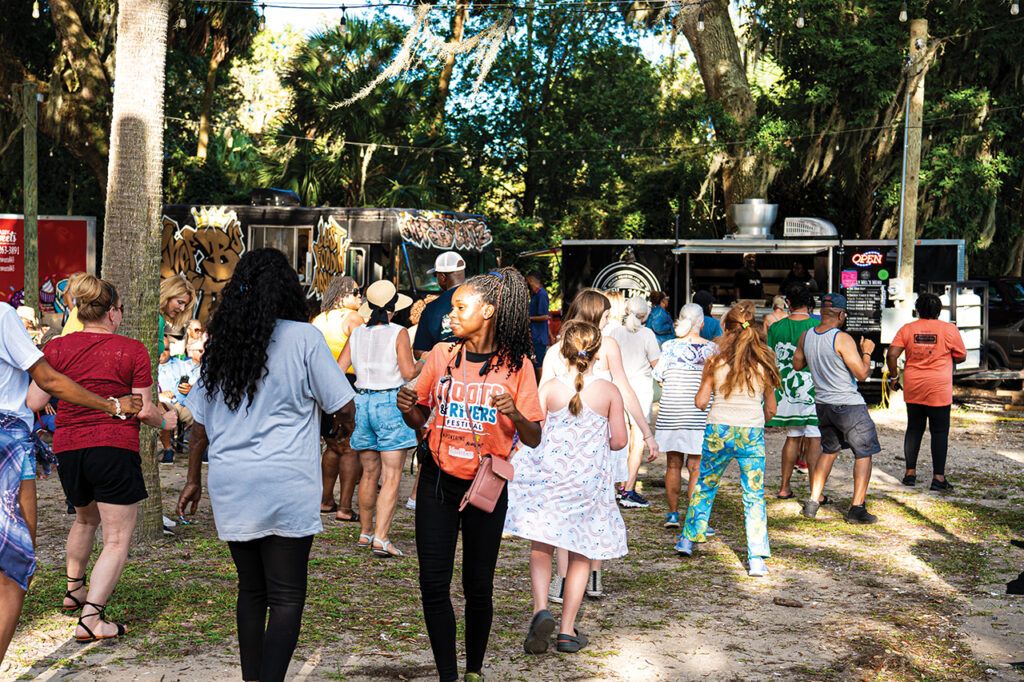
In 2023, BlacQuity introduced its inaugural Roots & Rivers Festival. The festival’s name signifies the deep cultural ties of people from the African diaspora. “The river has been a life source for many things. We are the roots. We’ve been at the core of every restaurant in this area,” Frazier says. “We’ve been the midwives to any and all families. We’ve been the fishermen in shucking houses. We are the teachers. And the health and sustainability of a community is how it waters and protects its roots.”
The second annual Roots & Rivers Festival will be held on Saturday, Sept. 14, 2024, from 2 to 8 p.m. at the Oyster Factory Park in Bluffton. The event will feature food trucks, a live band, a beer garden and various vendors. This festival furthers BlacQuity’s mission by promoting the organization and demonstrating its commitment to its values. Each vendor participating in the festival is a graduate of Black Equity University. One of the organization’s goals is to create a self-sustaining system where, as Chambers describes it, “graduates come back as coaches and mentors, pouring back into up-and-coming cohorts.”
Looking ahead, Frazier and Watterson are collaborating on the creation of Ma Daisy’s Porch on May River Road, which will be a gathering place, including a bar, restaurant and bakery, that celebrates the region’s rich Gullah culture year-round.
BlacQuity is also planning a pitch night similar to the ABC television show “Shark Tank,” where participants can compete for funding, and a networking mixer designed to connect attendees with valuable local resources, such as the Department of Commerce, Minority-Owned Business Enterprise Certifications and apprenticeships.
Expanding this network will be key to how the nonprofit fully realizes its long-term vision. “BlacQuity is continuing to evolve, and creating partnerships is the biggest thing for us. So we’re making connections now with the Beaufort Black Chamber, the Gullah Geechee Business Coalition, Black Charleston Professionals and more,” Frazier says. “We want this to grow beyond the Lowcountry, working with local governments and municipalities to create equity for more entrepreneurs to have the same type of economic footprint that others enjoy.”