




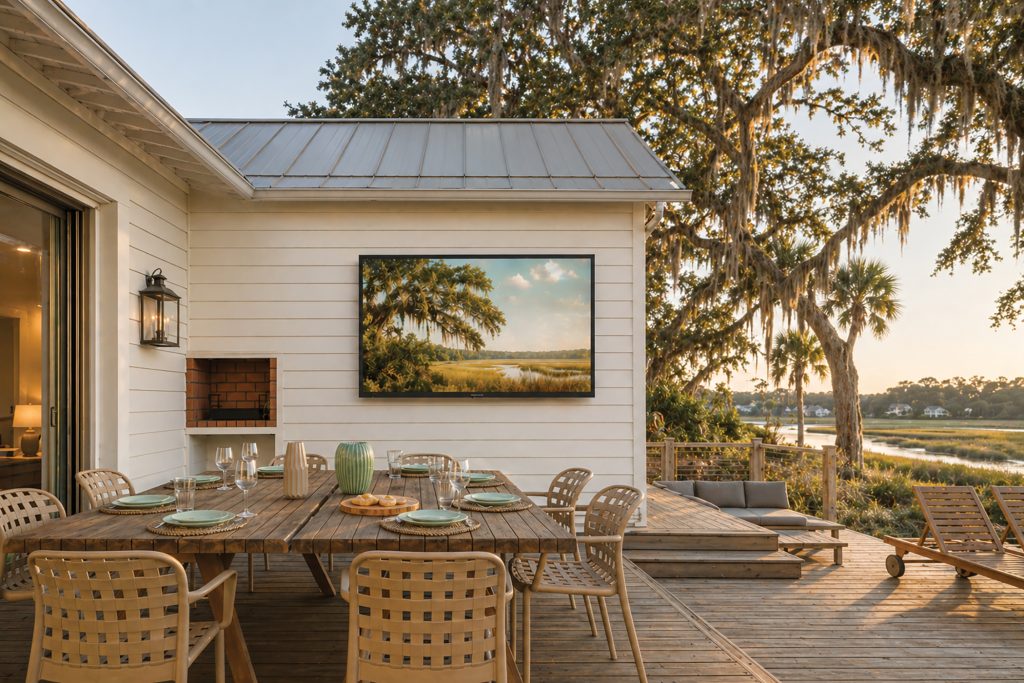
From weatherproof TVs to hidden speakers, audiovisual tech is blurring the lines between a home’s interior and exterior.
Written by Walinda P. West
Not long ago, outdoor living meant a grill, a few chairs, and maybe a portable speaker humming in the background. Today, that setup seems downright quaint. Technology has helped blur the line between indoors and outdoors so completely that patios, porches, and pool decks feel like true extensions of the home: comfortable, connected, and designed for everyday living. What used to be a simple gathering spot has evolved into a destination, a place where homeowners expect the same level of comfort, entertainment, and convenience they enjoy inside.
This shift didn’t happen all at once. As people began spending more time outdoors, they realized that the comforts they loved indoors didn’t need to stop at the back door. The idea of outdoor living has grown from a seasonal pastime to a year-round lifestyle. Whether it’s a shaded porch with a weatherproof TV or a poolside sound system built for weekend gatherings, outdoor audiovisual design is having its moment.
“Homeowners want to make the most of every square foot, and they want their outdoor spaces to feel just as inviting as their indoor spaces,” says Philip Perrie, owner of Savannah-based Rody’s Audio Warehouse. “People want to be outside without giving up comfort or convenience. They want the same experience they get indoors, just with a better view.”
The biggest change in outdoor AV isn’t the technology itself; it’s the way people think about their spaces. Instead of adding a random speaker here or a TV there, homeowners are designing the entire environment with intention. Weatherproof televisions built to handle glare and direct sunlight are paired with speakers that blend seamlessly into the landscape. Add lighting, motorized shades, and simple app-based controls, and the backyard begins to feel like a continuation of the home. The goal is not just entertainment but a vibe that feels cohesive and complete.
Perrie has seen this shift firsthand. “Customers don’t want to feel stuck inside,” he says. “They want to enjoy the outdoors while listening to music or watching a ballgame.” He recalls one project where the homeowners requested a screen that rose from the ground at the push of a button. A decade ago, that would’ve been a novelty. Today, it’s just another option.
Heard but Not Seen
One of the most noticeable trends in this new era of outdoor living is the rise of discreet, high-performance audio. Instead of relying on a pair of porch-mounted speakers, homeowners can opt for landscape audio systems designed to blend into their surroundings. These systems use multiple small satellite speakers tucked into planting beds, paired with in-ground subwoofers that deliver warm, even bass. The result is a sound that fills the space without overwhelming it, creating an immersive experience that feels natural rather than obvious.
This approach solves several problems at once. Guests can talk comfortably without raising their voices, and neighbors aren’t subjected to a backyard concert.
More importantly, the sound quality improves dramatically. More speakers at a lower volume tend to sound better than fewer speakers turned up loud. It’s clearer, more comfortable, and far more neighbor-friendly. Instead of relying on one or two speakers, professionals design systems in zones to ensure sound is evenly distributed throughout the space. The result is better clarity, better coverage, and a more enjoyable experience overall. As Perrie puts it, “When it’s done right, you don’t think about the system, you just enjoy it.”
For Savannah homeowners, many of whom invest heavily in landscaping, this discreet approach is especially appealing. The technology enhances the space without competing with it, allowing the natural beauty of the yard to remain the focal point.
Seamless Experiences
As outdoor AV systems have become more advanced, they’ve also become easier to use. Most setups are now connected to smart home platforms that give homeowners control of everything — television, music, lighting, even fire features — from an app.
“The goal is to make it easy,” says Rob Skuba, a nationally known expert in the home technology industry and founder of National Smart Home. “You shouldn’t have to juggle remotes or walk back inside to change something. It should all be right there on your phone.” That simplicity is a big reason outdoor AV has shifted from a “nice to have” to something homeowners quickly wonder how they lived without.
Priorities for Homeowners
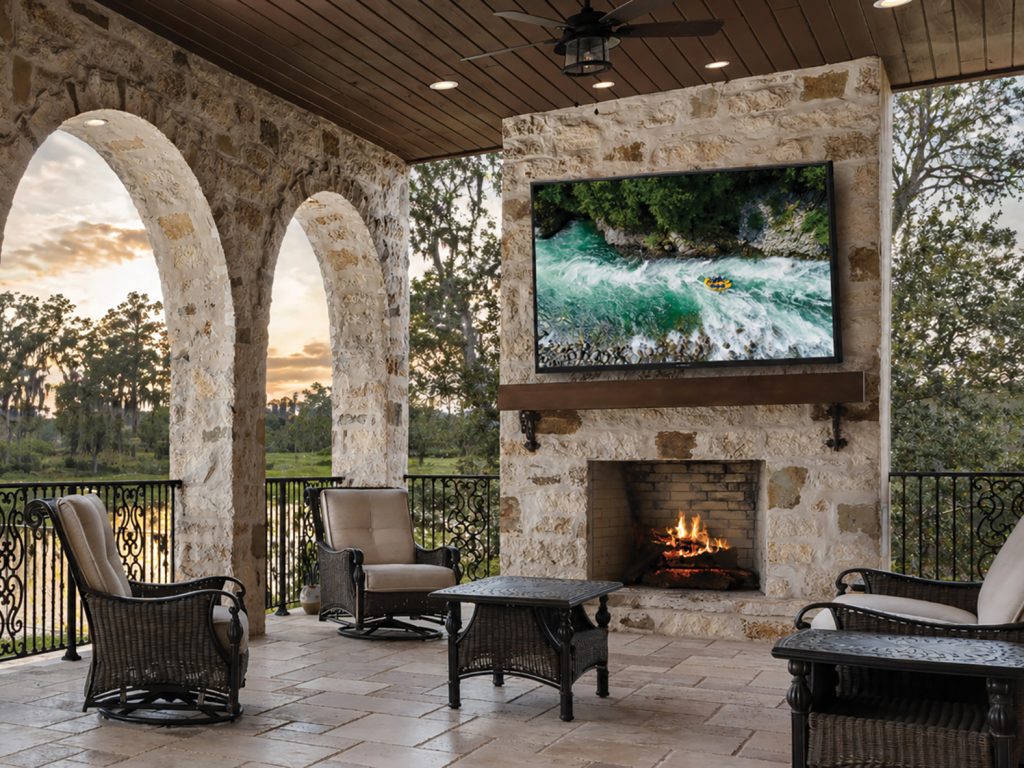
In general, demand tends to focus on a few key priorities: durable systems that stand up to heat, humidity, and salt air; screens that remain visible in bright or uncovered spaces; even sound coverage across patios, pools, and yards; clean design with hidden wiring and low-profile components; and seamless integration with the smart home systems they already use inside.
“Clients are looking for unique and enjoyable experiences when they entertain,” says Broad Street Interiors’ Mara Birrell. “There’s a strong desire to make outdoor areas just as comfortable and livable as indoor ones. Some clients prefer a cohesive look that flows seamlessly from inside to outside, while others like to have a little more fun and personality in their outdoor spaces.”
Ask any professional, and they’ll tell you that the biggest mistakes happen before installation even begins. One of the most common issues is not taking sunlight into consideration. A standard indoor television might look fine in a showroom, but outside it can quickly become difficult to see. Outdoor-rated TVs are specifically engineered for brightness and anti-glare performance, making them far more effective in real-world conditions.
In coastal areas like Savannah, outdoor AV systems face a unique challenge: salt air. Over time, it can corrode metal components, damage speaker grilles, and wear down electrical connections. Without the right materials, even high-quality equipment can fail sooner than expected.
To protect against the elements, experts recommend marine-grade materials such as stainless steel or powder-coated aluminum, sealed weather-rated components, protective coatings on wiring and hardware, and strategic placement to limit exposure. Even with the right setup, a little maintenance goes a long way. Rinsing equipment with fresh water, applying dielectric grease to connections, and covering components when not in use can significantly extend the life of a system.
Professionals recommend seasonal inspections of wiring, mounts, and seals; cleaning screens and speaker grilles to prevent buildup; and updating software and firmware for smart systems. It’s a simple yearly routine that protects both the investment and the experience.
From Luxury to Standard
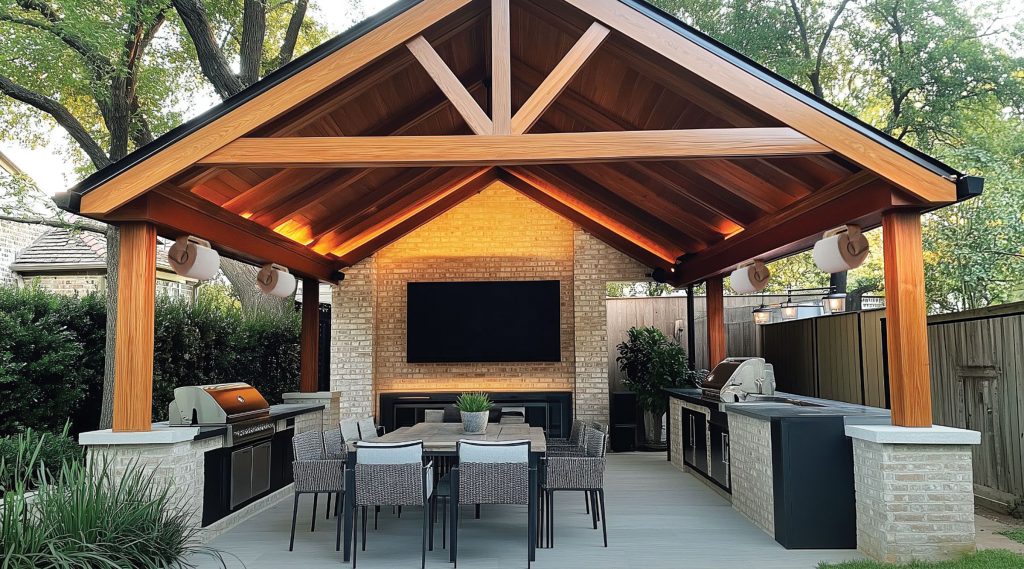
What’s perhaps most striking is how accessible outdoor AV has become. It’s no longer reserved for high-end homes. Instead it has become a standard part of thoughtful design, especially in coastal communities like ours, where outdoor living is central to daily life. As technology continues to evolve, the possibilities are expanding. Screens that disappear into cabinetry. Speakers that blend into stonework. Lighting that shifts with the sunset. Outdoor kitchens that function as fully as the ones inside. What once felt futuristic is now entirely achievable.
But the difference between a system that lasts and one that falls flat comes down to planning, materials, and an understanding of the environment. When outdoor AV is done right, it changes how a home is lived in, creating a space that feels intentional, comfortable, and deeply connected to the way people want to spend their time.
“When you listen to homeowners, you hear the same thing,” Skuba says. “They’re not chasing hardware; they’re chasing a feeling. It’s a space that feels like an escape the moment you step outside.” And in the end, that’s what outdoor living has always been about.