



A Savannah writer’s new podcast tracks an intriguing real-life art mystery through space and time.
Written by JESSICA LYNN CURTIS
Photography courtesy SAVANNAH SIDEWAYS
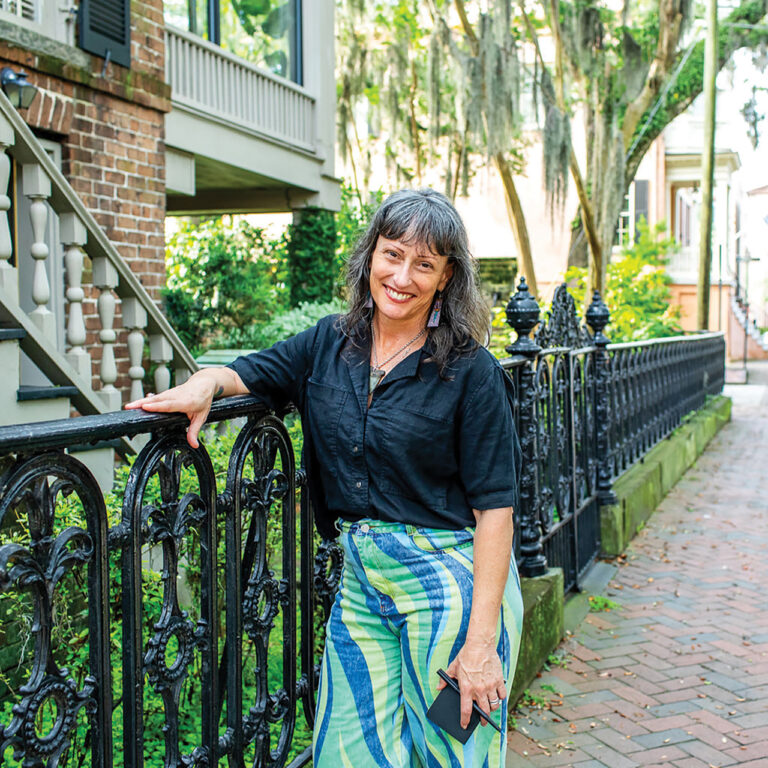
IN EARLY 2020, right at the beginning of lockdown, Savannah writer Jessica Leigh Lebos received an email from a friend.
“It contained a news story about how the City of Savannah had voted to sell off some Roman statuary,” says Lebos, who among her other endeavors pens a Substack called “Savannah Sideways” and has authored a book of the same title. Her friend had written, simply, “You should look into this.” It was just a brief clip, but Lebos’ reporter senses began tingling.
Over the past five years, Lebos dove down enough rabbit holes to make even Alice dizzy, and what she found was an incredible story of a Gilded Age robber baron so full of intrigue, twists, and turns that she decided to create a 10-episode podcast: Season 1 of the “Savannah Sideways” audio story.
“The statues themselves have led to so many different aspects, not just of history, but of society and culture,” says Lebos. “How did people become that wealthy in those times? There’s an exploration of that and all these different touch points — everything from soybeans to Casimir Pulaski to Sapelo Island to James Brown.”
While the podcast explores all the way back to Greenwich Plantation in the 1700s, the story of how the ancient Roman statuary (a group of statues regarded collectively) came to Savannah began in the late 1800s with a Canadian businessman named Spencer Proudfoot Shotter.
Shotter, who ran in social circles with the likes of the Vanderbilts and the Carnegies, had made his fortune in the pine forests of Georgia by producing turpentine (important in shipbuilding, as it helped make ships watertight and preserved their hemp rigging) out of pine sap. He established the American Naval Stores Co., based in Savannah. With the hundreds of jobs he provided, Savannah was able to rise from its post-Civil War depression and cement its role as a major port city.
In 1898, Shotter built Greenwich Place along a bend in the Wilmington River, accessed by a mile-long, tree-lined driveway to the left of the entrance of Bonaventure Cemetery. The opulent, three-story, 40-room Beaux-Arts mansion was referred to as “Savannah’s Biltmore” and became known as one of the most spectacular and luxurious Gilded Age mansions in the South. It had extensive English gardens, double colonnades, and 28 columns (each more than 20 feet tall and measuring 28 inches in diameter), and it was filled with priceless art.
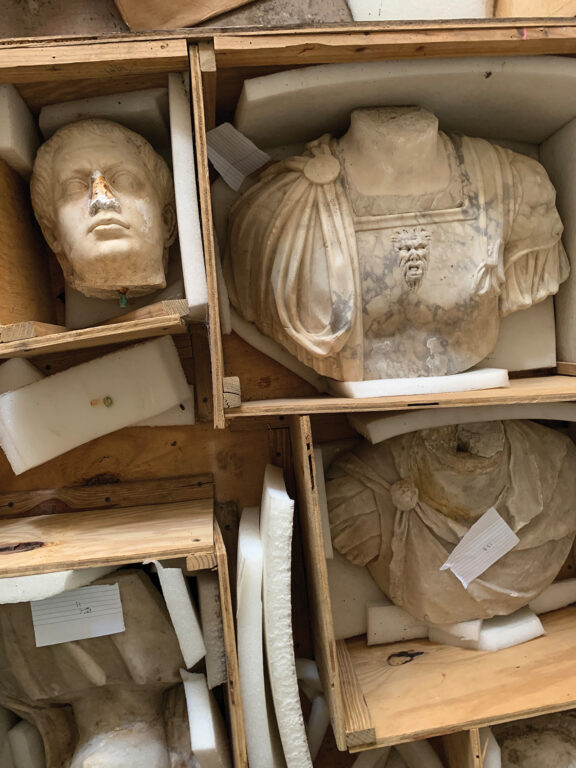
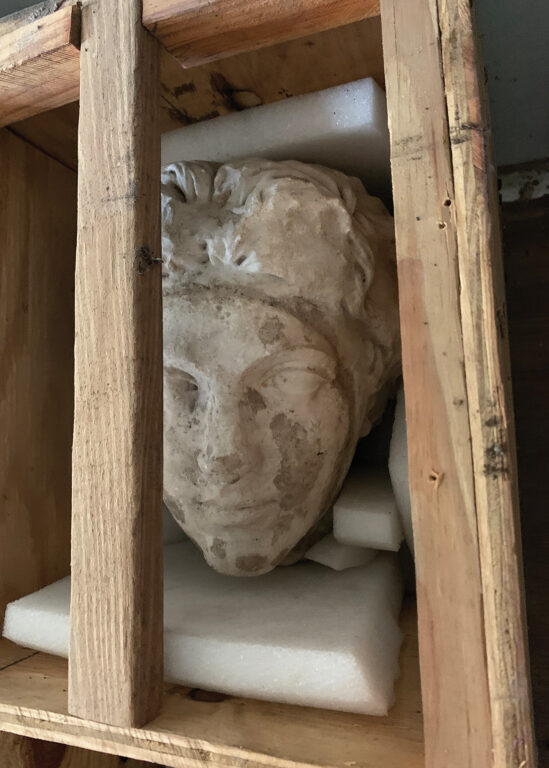
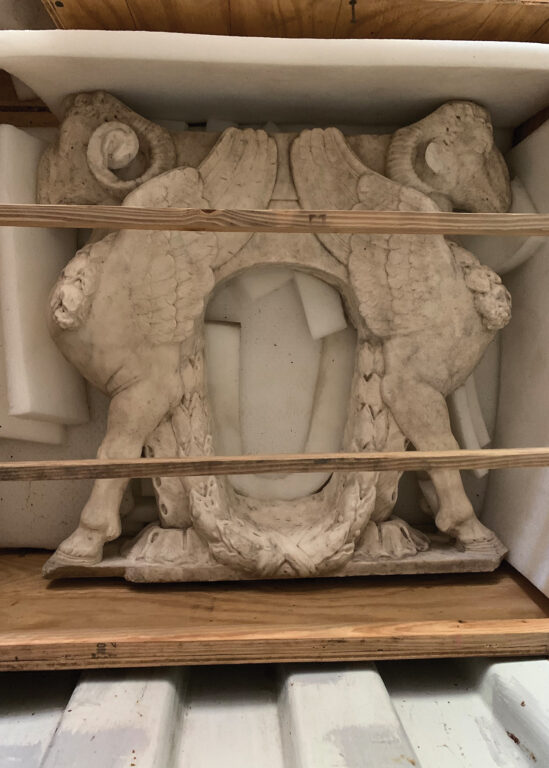
Eleven years later, in 1909, Shotter was jailed after an antitrust lawsuit, though the judgment against him was later reversed. This did not stop him from traveling to Rome in 1912. He returned to Savannah that July — along with several pieces of marble statuary. The incredible collection included two 7-foot-long sphinxes from 300 B.C.E.; statues of Janus, the Roman god of transitions, beginnings, and endings; herms (ancient Greek and Roman sculptures that consisted of a head and sometimes a torso atop a stone pillar) believed to be from Pompeii; and Roman portrait busts dating from around the first to third century B.C.E.
A few years later, Shotter had to liquidate his assets in order to pay his lawyers. Greenwich Place, along with its indoor and outdoor art collections, was sold to Dr. Henry Norton Torrey, a brain surgeon from Detroit. The Torrey family made great use of their splendid home, hosting balls and even inviting Hollywood to use it for movie sets. In the 1920s film “Stolen Moments,” we see stars Rudolph Valentino and Marguerite Namara moving among the statuary in the garden.
That family’s stay lasted just six years, because at around 3 a.m. on Jan. 27, 1923, an electrical fire began in the home’s second-floor sewing room. The magnificent estate burned to the ground, the art deco fountain now the only marker of where it once stood.
The Torreys made it out safely and lived aboard their 100-foot yacht until they received the insurance settlement, which they used to buy Ossabaw Island. (As Lebos explores further in the podcast, “If you had any kind of money at the time, you bought a barrier island off the coast of Georgia.”) The family’s 10-year-old daughter, Eleanor “Sandy” Torrey-West, would later transform the island into the artists’ retreat and ecological sanctuary that it is today.
And what became of the statuary?
In 1937, the City of Savannah purchased the ruins of Greenwich Place for $75,000 in order to expand Bonaventure Cemetery. The statues (minus the sphinxes, which were nowhere to be found — a mystery Lebos follows to its end in the podcast) were boxed up and kept in a cemetery warehouse until 1965, when the city turned the collection over to the Telfair Academy.
Some of the more well-kept pieces, including a bust of the Roman Emperor Trajan and two Janus statues from the first century B.C.E, have become part of the museum’s rotating exhibits. But lack of space forced the Telfair to return nine pieces to the city in 1988.
Aaron Appraisal Services in Atlanta calculated the replacement values of the statuary at $395,000 in 2012, and in 2020, with the lack of revenue associated with the pandemic, the city voted to sell the rare pieces (just those in storage — not those at the Telfair). Where will they end up? It remains a mystery … one Lebos is hoping will be wrapped up by Episode 10. Tune in to episodes of the “Savannah Sideways” podcast to follow along with Lebos’ quest.