

Local pharmacists do more than just fill prescriptions, they build relationships and make up for health care gaps.
Written by ETHAN MATHEWS
WALKING INTO A NEIGHBORHOOD PHARMACY can be a small but meaningful ritual. The soft chime of the door is followed by a quick greeting from the counter. The scanner beeps, paper bags rustle, and, often, a pharmacist chats with a patient about something entirely unrelated to their prescription. There’s no rush, no sterile formality — just the gentle rhythm of a business that runs on familiarity and trust. And although no sign states it outright, an unspoken standard is in place: by your second visit, we’ll know your name.
This kind of personal touch is what sets independent pharmacies apart. In Savannah, these locally owned spots aren’t just places to pick up a prescription — they’re fixtures in the community. As independent pharmacies close at a rate of more than one per day nationwide, according to a 2024 report from the National Community Pharmacists Association, the role they play in building relationships, offering personalized care, and filling vital health care gaps has never been more important.
All in the Family
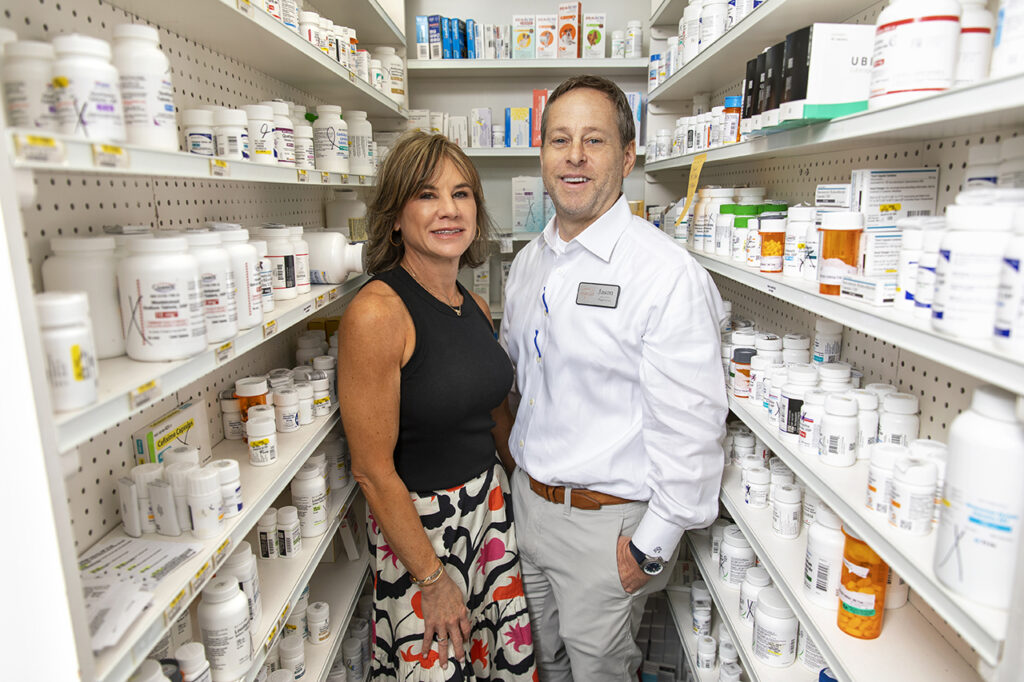
Drs. Jason and Susanne Conley, pharmacists and co-owners of Village Walk Pharmacy on Skidaway Island, have built their business on that promise of personalized care. The couple, who met on the first day of class at Mercer University School of Pharmacy, took ownership of Village Walk in 2000 and have worked side-by-side ever since.
“I’m here every day, and have been for 25 years, so we get to know our patients as well, or possibly better, than their doctor,” says Jason. “Being able to see the patients three or four times a month, rather than every six months, allows you to develop a relationship.”
Like many independent pharmacies across the country, Village Walk became a vital resource during the pandemic, stepping up at a time when healthcare workers were stretched thin and public health guidelines were in constant flux. “Everybody — pharmacists especially — were thrown into new activities during COVID,” says Jason.
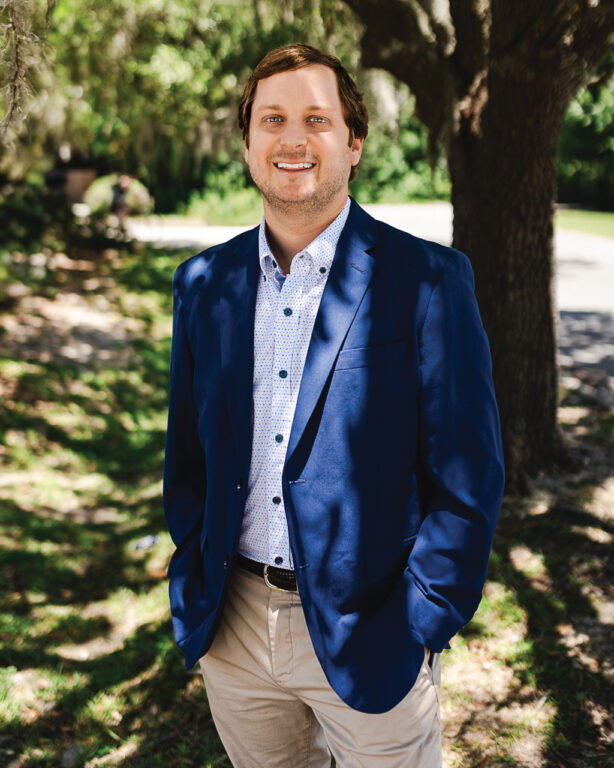
This moment called for reliable care throughout Savannah, and it played a pivotal role in June of 2020 when pharmacist Neal Hollis opened Georgetown Drug Company at the height of the pandemic. At a time marked by waning confidence in the healthcare system, Hollis says it was crucial to show the community pharmacists could be trusted for accurate information and reliable care.
In those early days, his pharmacy earned new patients by offering testing, free in-town delivery, and Saturday vaccine clinics — services that met a critical need in the community.
“It had nothing to do with what we were doing, but really how we were doing it. If we saw a patient a second time, we’d call them by their name,” says Hollis. “Small things like that, or even just having a conversation with a patient about anything at all — I love that.”
Getting Personal
It’s a simple but powerful approach that resonates with patients. According to a 2025 survey conducted by Lumicera Health Services, 75% of patients value having a pharmacist who knows them personally, affirming that human connection remains a powerful force in an increasingly virtual healthcare landscape.
The challenges of the pandemic prompted Savannah’s independent pharmacies to coordinate more closely in delivering clear, consistent guidance to their patients — a collaborative effort that continues today across a range of public health concerns.
“We have a really strong group in Savannah,” Hollis says. “For us to have the same outlook was important.”
Supporting this mission are organizations like the Georgia Pharmacy Association, which was founded in 1875 to empower and advocate for the state’s independent pharmacists, and the Independent Pharmacy Cooperative. These groups provide resources such as educational seminars, policy updates, and statewide networking opportunities.
It was at one such event in 2011 — a conference hosted by the IPC — that Dr. Kaushal Patel was inspired to open his own pharmacy. After nearly a decade with a nationally owned and operated pharmacy chain, he opened Apollo Pharmacy on Broughton Street in 2016, later expanding to a second location in Pooler the following year.
According to Patel, the value an independent pharmacy brings to its community becomes clear when people discover the range of underutilized services it can provide. “There are things that we can offer our local community that you cannot find at other places,” Patel says.
Beyond prescriptions, Patel says pharmacists frequently provide support in areas patients might not expect, like the often overwhelming world of vitamins and supplements. A pharmacist can recommend the right products, catch potentially dangerous interactions, and make sure dosages are safe and effective. Other lesser-known services include customizing pill planners for those who forget their medications, offering delivery for patients without transportation, and helping people choose the best over-the-counter treatments for common symptoms.
Sometimes, it’s as simple as stepping in when someone walks through the door in need of help.
“We get a lot of tourists, especially from up north, who aren’t accustomed to the humid, hot conditions,” Patel says. “They’ll come in and we can counsel them, give them proper education, and take their blood pressure. If they would have gone to any other place, they would have been charged for the services. Pharmacies are one of the few places out there that can provide lifesaving education at no cost.”
This kind of care speaks to a deeper priority: not profit, but people. For independent pharmacists like Patel, Hollis, and the Conleys, the goal isn’t just to fill prescriptions — it’s to make the neighborhood healthier, more informed, and more connected.