

The seven women who saved Savannah from the wrecking ball get their due, just in time for the organization’s 70th anniversary.
Written by JESSICA LYNN CURTIS
FOR THOSE LIVING IN SAVANNAH TODAY, it’s easy to take the city’s exquisite beauty, revered squares, and well-preserved charm for granted. But if not for seven determined women — Katharine Judkins Clark, Elinor Adler Dillard, Anna Colquitt Hunter, Lucy Barrow McIntire, Dorothy Ripley Roebling, Nola McEvoy Roos, and Jane Adair Wright — who saved much of Savannah from the wrecking ball in the 1950s and beyond, we would be living in a remarkably different city.
Savannah went through an economic slump after World War II. Many of the city’s historic downtown homes had fallen into disrepair, and several had been razed.
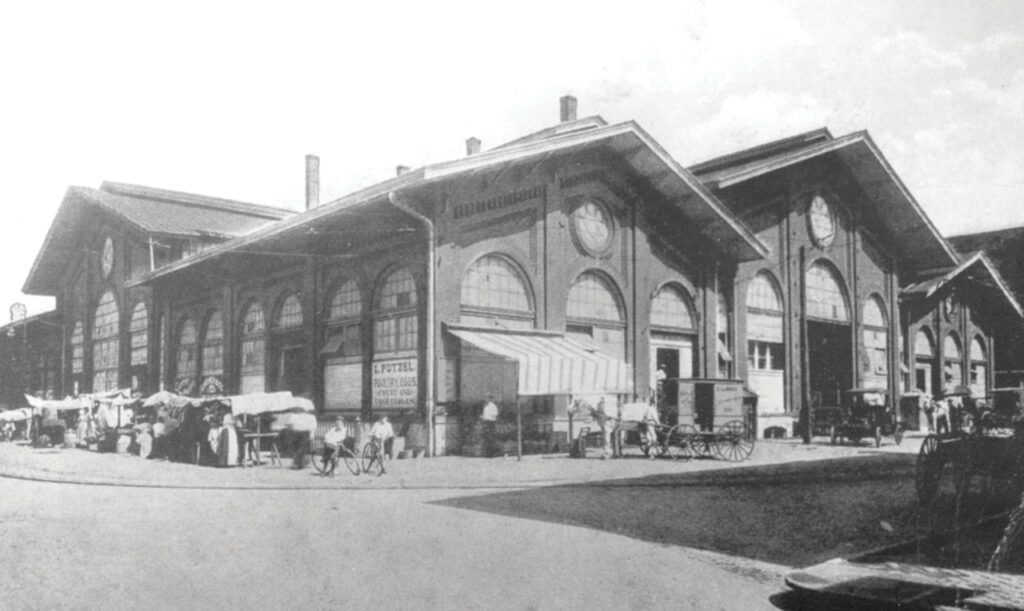
“Then in 1954, the old City Market was torn down,” says Catharine Varnedoe, granddaughter of Lucy Barrow McIntire. “I think that was the spark.” City Market, located on Ellis Square, had been Savannah’s first hub of commerce, shown on a map as early as 1757. Citizens had rallied to try to save this Savannah icon.
“But they were too late,” adds Lucy Brannen, another granddaughter of Lucy McIntire.
The market building was demolished, and a parking garage went up in its place.
Anna Hunter, who was then a reporter for the Savannah Morning News, decided residents needed a plan in place before the next historic building was threatened.
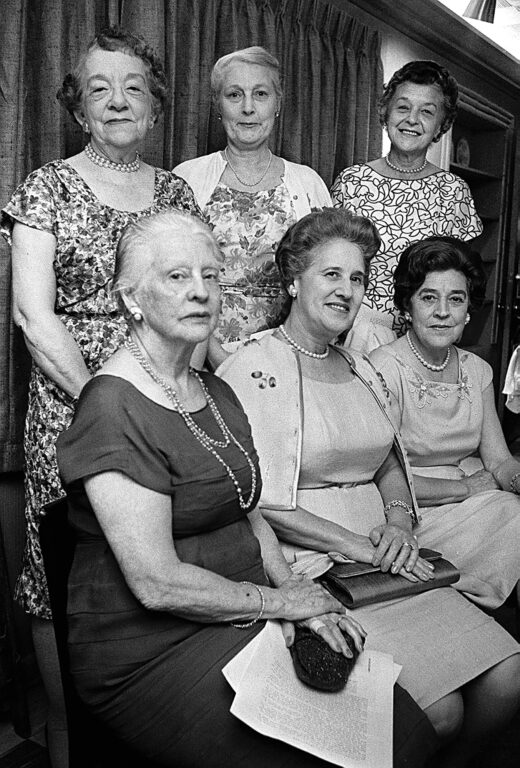
“So, she called together a group of seven like-minded women, including our grandmother,” says Brannen. Over a period of several months, they worked together, reaching out to influential community members, researching what had been done in other cities, recruiting local and national groups to back their efforts, and even drafting zoning measures and an in-depth survey of historic properties. “And in the midst of this,” continues Brannen, “came the bombshell.”
“I happened to be at my grandmother’s house when Anna Hunter came to see her,” Varnedoe recalls. “And Anna said, ‘Lucy, they want to tear down the Davenport House.’”
At the time, the 1820-built Davenport House served as a home to around 10 families. “There was laundry hanging from the light fixtures and up and down the beautiful banisters,” Brannen remembers. But the home was still a well-known treasure.
“It was a fine example of Federal architecture,” says Varnedoe. “And Isaiah Davenport was a master builder. That house was his masterpiece.”
Lucy McIntire also had a personal reason for wanting to save this house: Isaiah and Sarah Davenport were her great-grandparents.
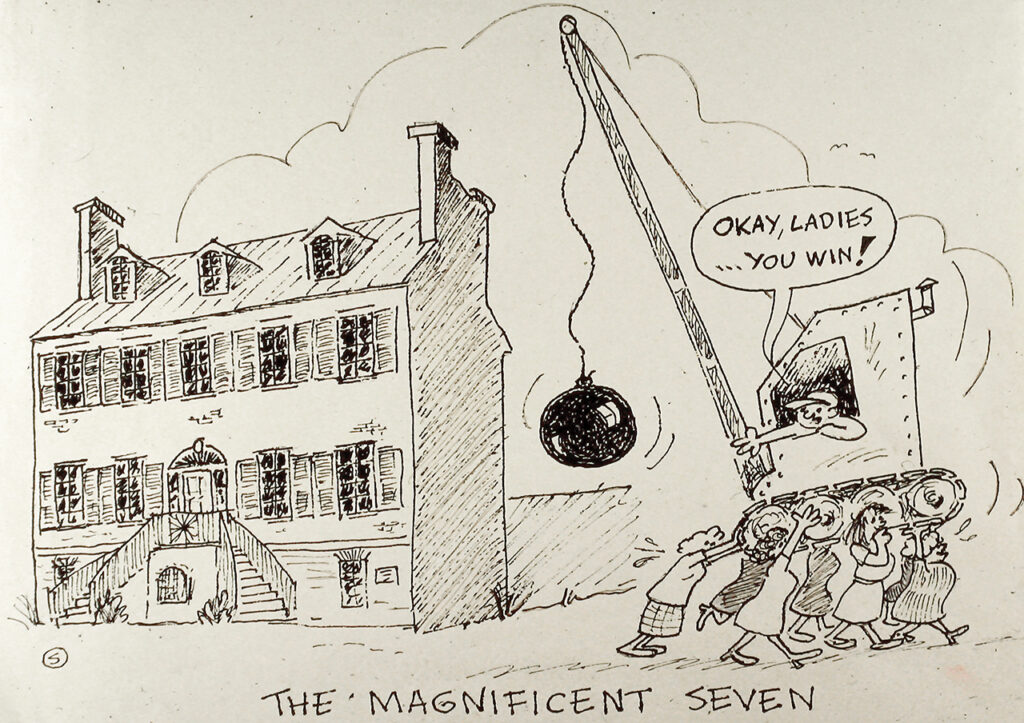
The home was set to be demolished, and the land was slated to become the Goette Funeral Home’s parking lot. But the group of seven women raised $22,500 via donations and loans and, with the help of the community, convinced the owners of the Davenport House and the funeral home to let them buy the house — and the Historic Savannah Foundation was born. Seventy years later, the organization, which includes Brannen and Varnedoe in its membership, has saved 420 historic structures, including the Owens-Thomas House and the Mercer Williams House.
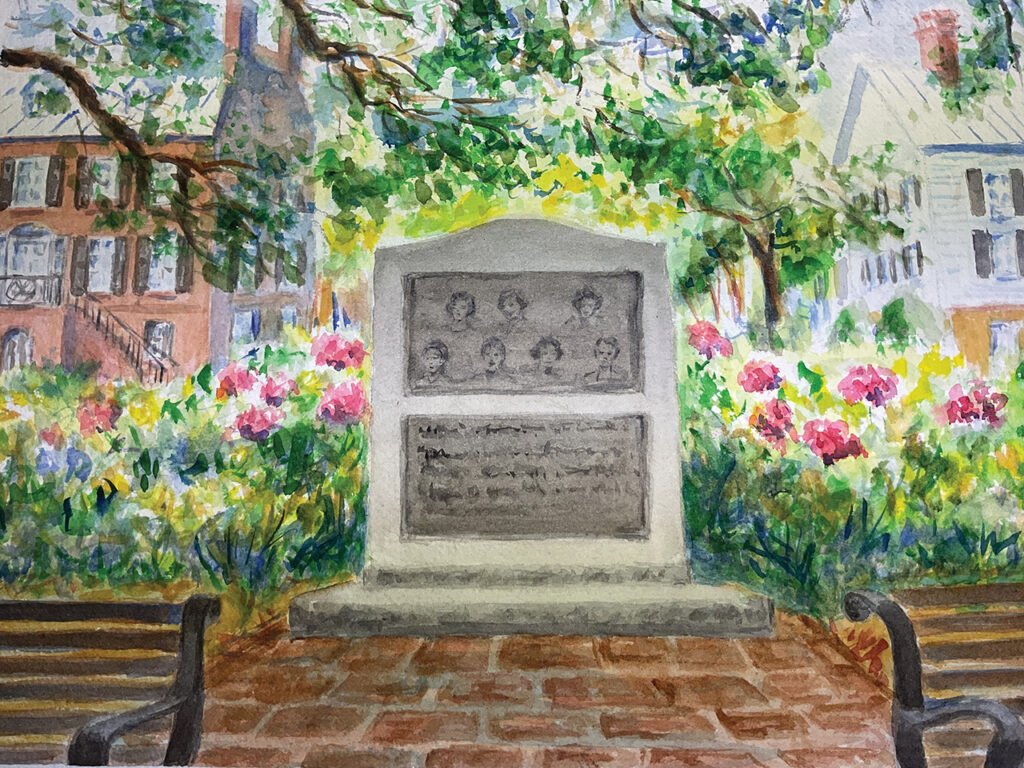
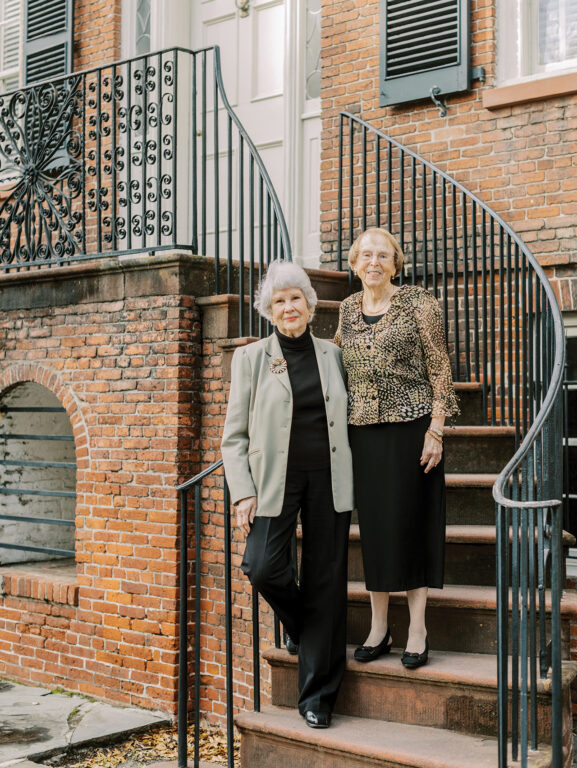
When the City of Savannah went through the process of renaming Calhoun Square in 2022, those representing the seven ladies were invited to apply. The square was ultimately renamed for educator Susie King Taylor, but Brannen and Varnedoe realized during the process that people no longer knew the story of their grandmother and the other six women who saved the soul of Savannah. The City Council encouraged them to keep pursuing a memorial, and someone suggested the ladies should receive a monument.
“At first, they were being called the hysterical society. Now, we have millions of tourists who come through here, and they’re the beneficiaries of the work of these seven ladies.”
— Catharine Varnedoe
Brannen and Varnedoe began the necessary legwork: They met with the Savannah Park and Tree Department and the Metropolitan Planning Commission and ultimately received a unanimous “yes” vote from the City Council to create a monument.
Brannen, Varnedoe (who is an artist), and other descendants of the seven original preservationists have been working with the Savannah-based DePue Monument Co. to design the bronze and granite monument, which will be unveiled this fall. It will be a slant monument, between 4 to 5 feet tall, and curved at the top, with the seven ladies’ likenesses in bas-relief. The monument will be situated just north of the fountain in Columbia Square, with a view of the Davenport House just behind it.
“What these ladies did is such an incredible gift and also a feat, because the leadership of Savannah was almost exclusively male at that time,” says Brannen.
“At first, they were being called the hysterical society,” Varnedoe adds. “Now, we have millions of tourists who come through here, and they’re the beneficiaries of the work of these seven ladies.”
Brannen adds, “We hope what they accomplished will be an inspiration for generations of young ladies to come.”
Adler Moving On: Now celebrating its 70th year, Historic Savannah Foundation continues to thrive — and evolve. After six years at the helm, CEO and president Sue Adler will be stepping down in June. Adler will be joining the nonprofit Savannah Historic Initiatives as its executive director. HSF has announced it will conduct a nationwide search for a new CEO.


