


In perfect timing for the centennial, some of the writer’s cherished belongings have made their way home to Savannah.
Written by KATHRYN DRURY WAGNER
Photography by JOHN ALEXANDER
QUIRKY AND WHIP SMART, MARY FLANNERY O’CONNOR has been one of Savannah’s most endearing characters and one of the best-known figures in Southern literature. She was born 100 years ago, a milestone that is being celebrated throughout this year.
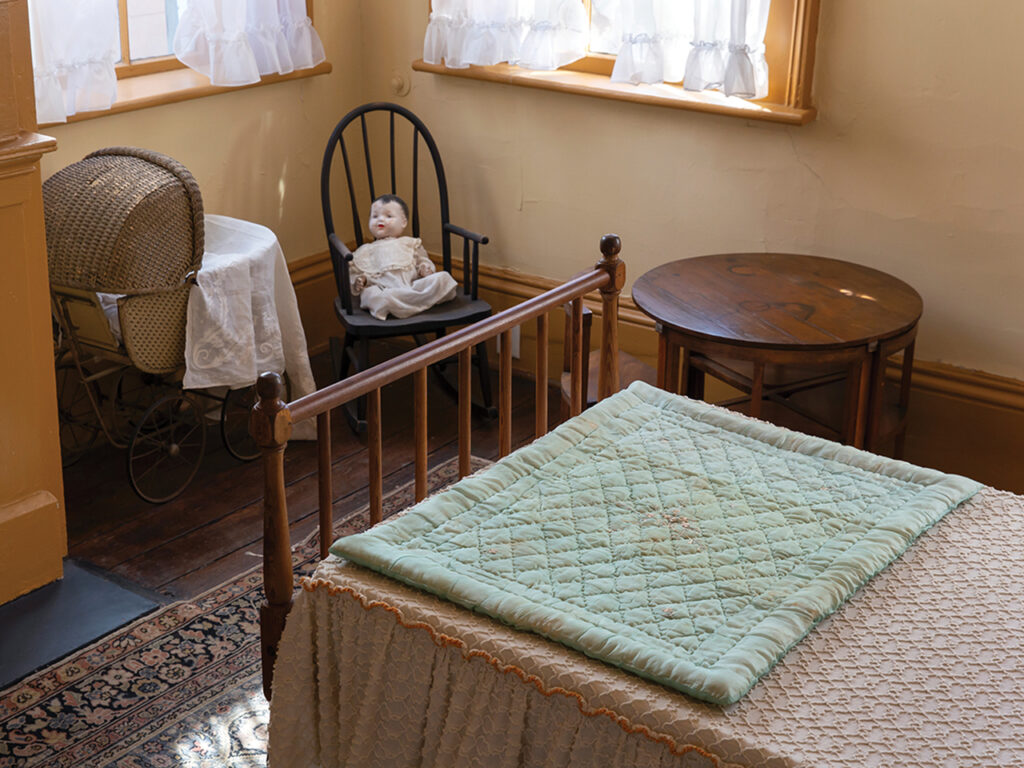
In perfect timing for the centennial, the Flannery O’Connor Childhood Home Museum has become the steward of some items, passed down through the author’s family and returned to Savannah since they are associated with Flannery’s youth.
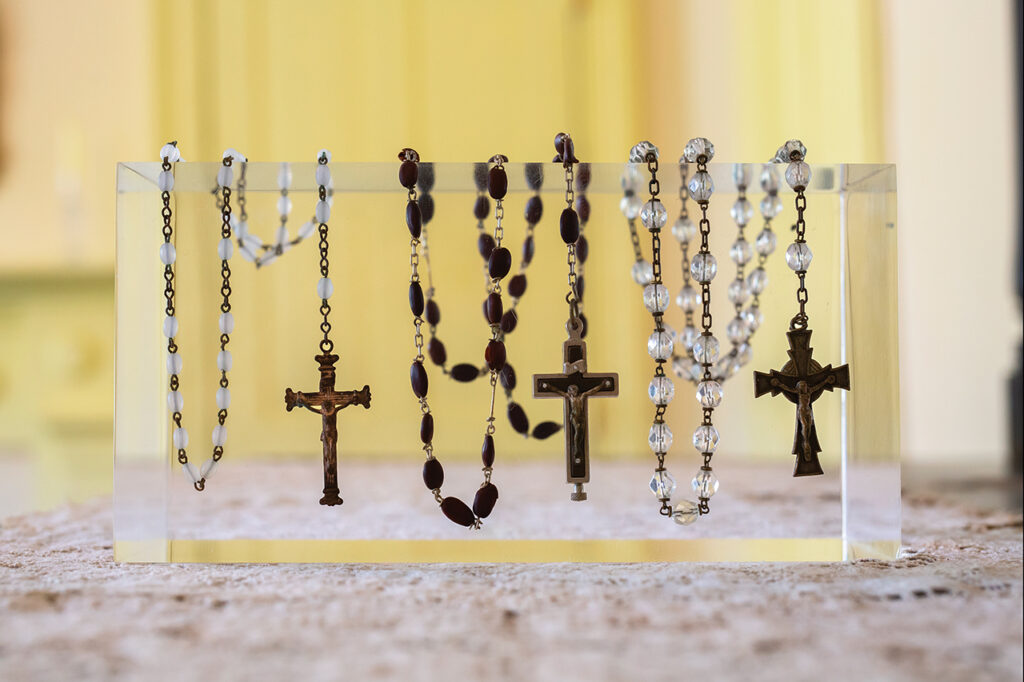
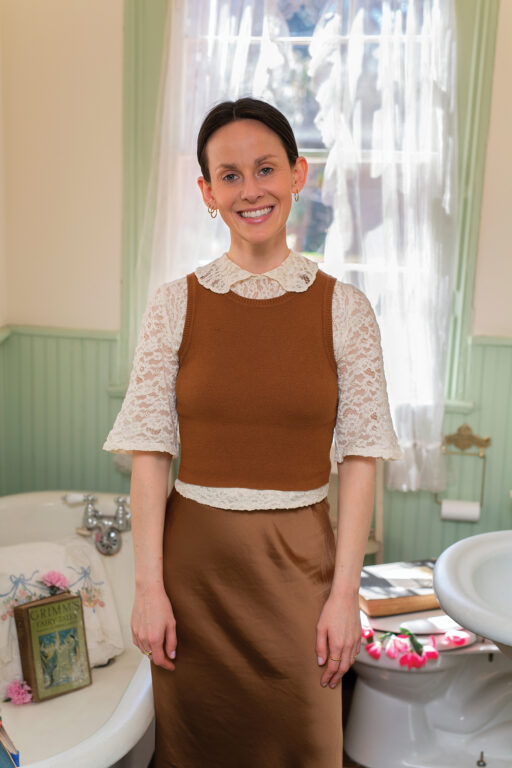

They are simple, intimate relics — baby blankets, a toy, and rosaries — and for decades, they’d been stashed in an attic in Milledgeville, Georgia, in a home that had belonged to Flannery’s mother’s side of the family. The Cline family were prominent in Milledgeville, and there was no shortage of relatives around: Regina Cline, Flannery’s mother, was one of 16 children.
Flannery herself had lived in that Milledgeville home while attending high school and college, after the O’Connors moved away from Savannah. It had most recently been occupied by Flannery’s first cousin, Louise Florencourt, until her death at age 97 in 2023.
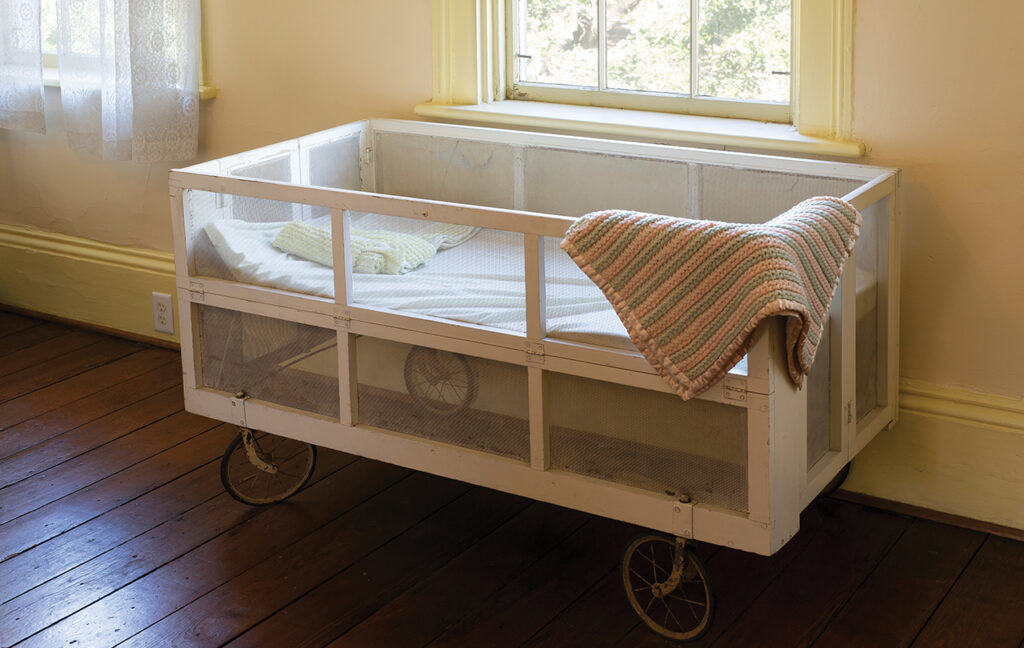
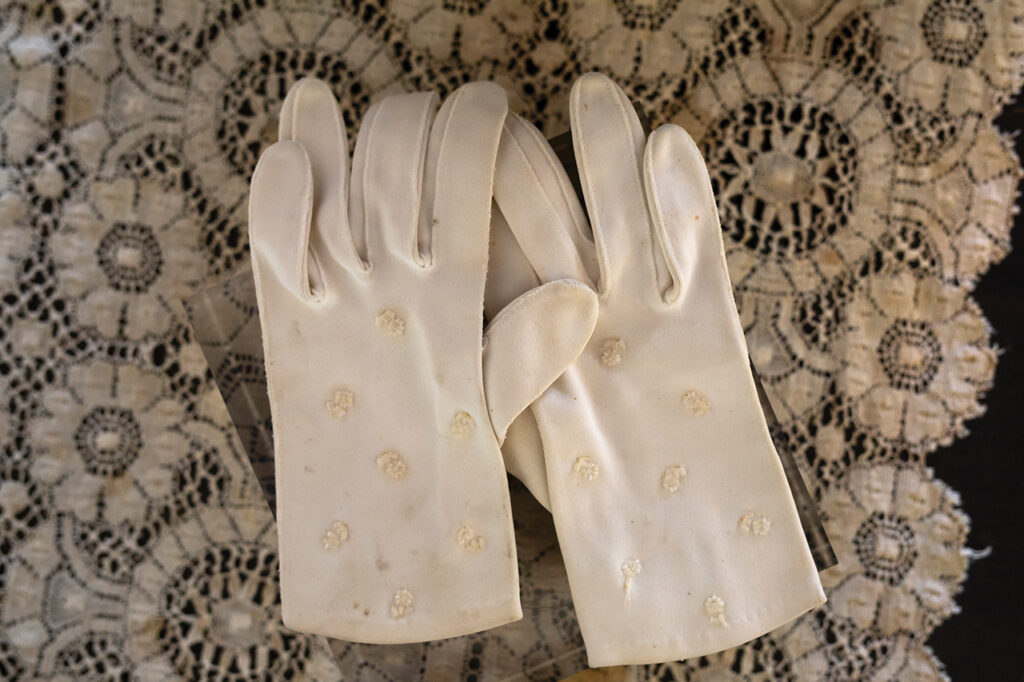
Janie Bragg, director of the nonprofit Flannery O’Connor Childhood Home and Foundation, says she is honored and delighted to have some of Flannery’s childhood items come back to Savannah.
Note: In consultation with archivists, Bragg allowed Savannah magazine to photograph the items in situ at the museum, but they will not be displayed this way for the general public; for example, the baby blanket will be in a display case.
Meanwhile, in Milledgeville…
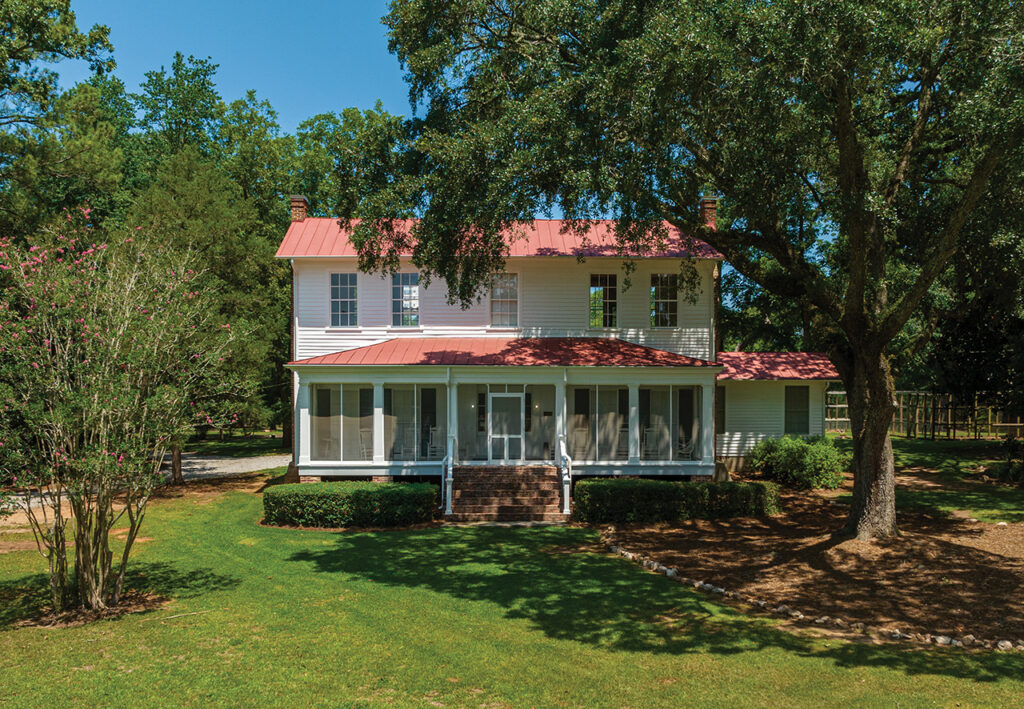
Many people have read Flannery O’Connor’s novels, short stories, and essays, but far fewer are familiar with her visual artwork.
“That was actually her ambition, to be a cartoonist for The New Yorker,” says Amanda Respess, director of public affairs at Georgia College & State University. Flannery attended the Milledgeville school, then known as Georgia State College for Women, for undergraduate work and was an accomplished cartoonist. “She did linoleum-block-prints, where you create an image in the negative and then print it, which is fairly advanced artistically,” says Respess.
In fact, it wasn’t until she was in graduate school at the University of Iowa Writers’ Workshop that Flannery committed to being a fiction writer.
After being diagnosed with lupus in 1951, Flannery went to stay with her mother on Andalusia Farm in Milledgeville and lived there until her death at age 39 in 1964.
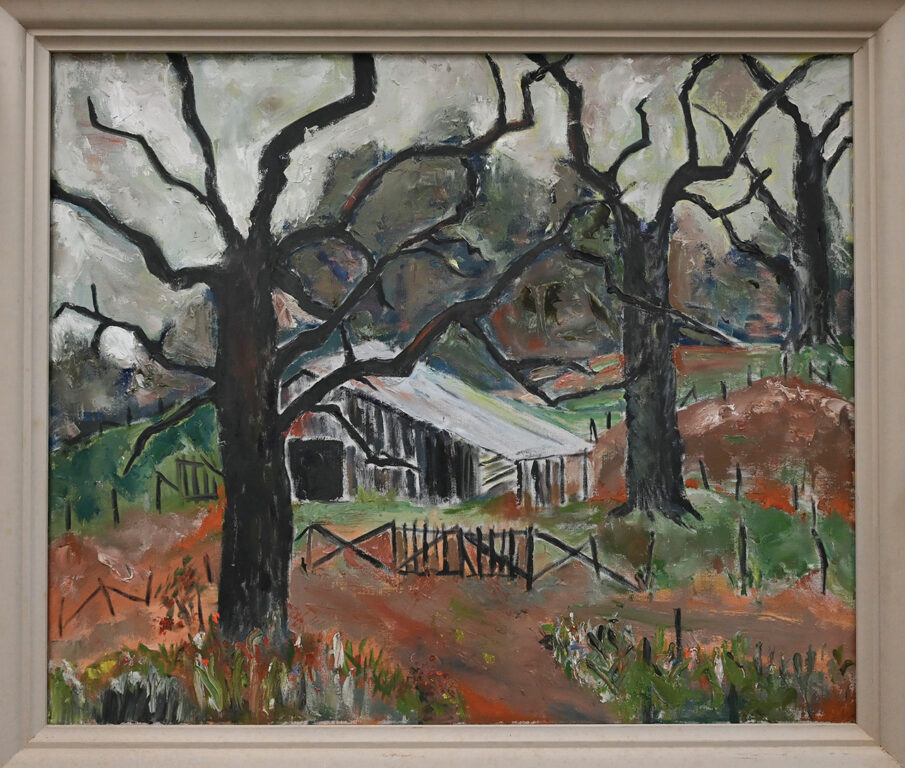
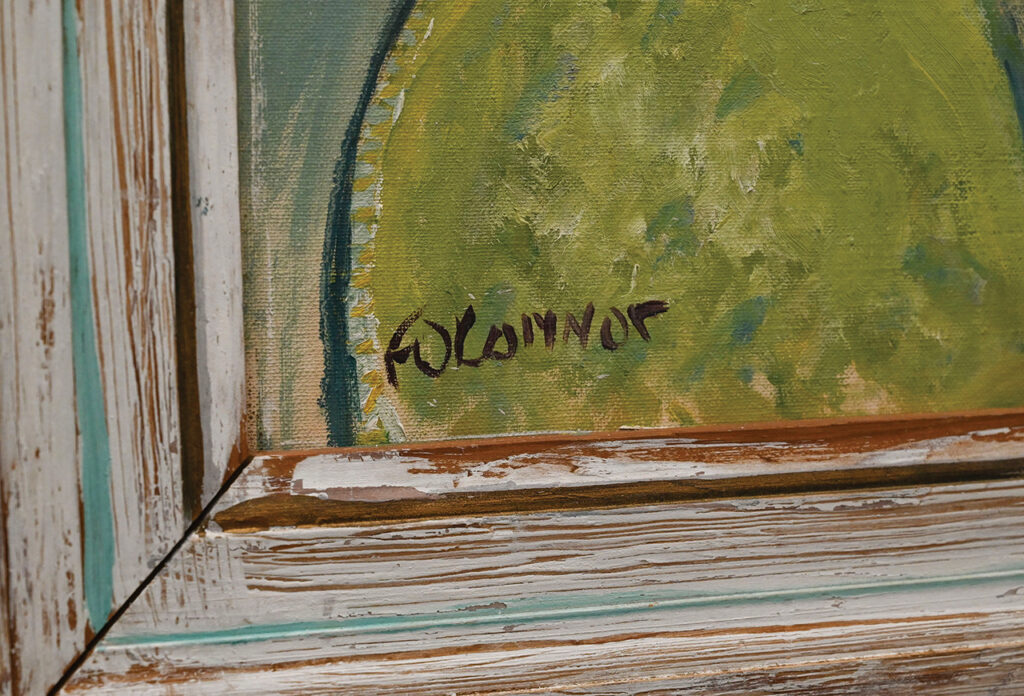
A few of her paintings were known about, though rarely exhibited, but recently, a stash of oil paintings was discovered in a box in a family storage unit in Milledgeville, “literally behind a fast food restaurant,” says Respess. “There are 22 of them, many more than we thought.”
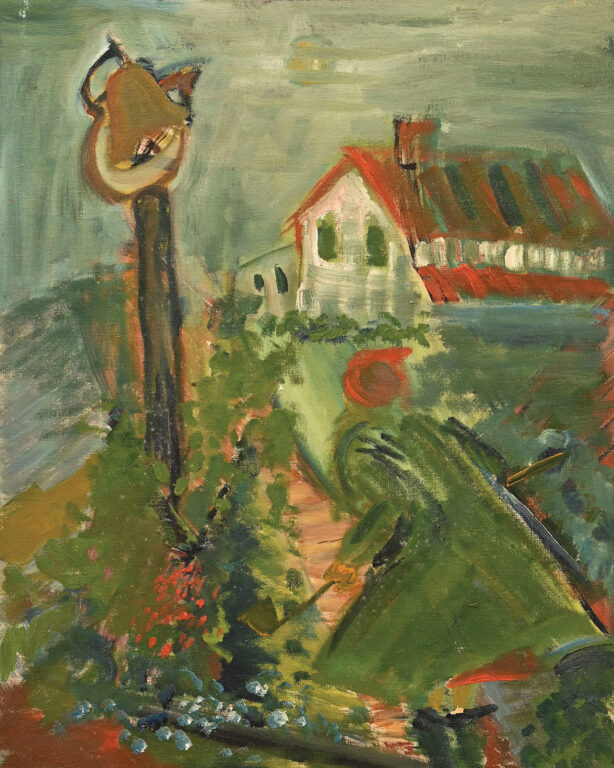
And even more paintings were found in the house on Greene Street, which was bequeathed to Georgia College upon Florencourt’s death. “That box was filled with what artists call juvenalia, her teenage works, so we can now see Flannery’s earlier iterations, and have the whole continuum of her art through adulthood.”
As part of the centennial celebration of Flannery’s life, some of the paintings will be on display at the interpretive center at Andalusia Farm through the end of 2025, and possibly into early 2026. Other institutes, such as art museums and universities, have expressed interest in having the exhibit travel, says Respess. “Scholars are just now getting to start studying this visual art in relation to her writing.”


